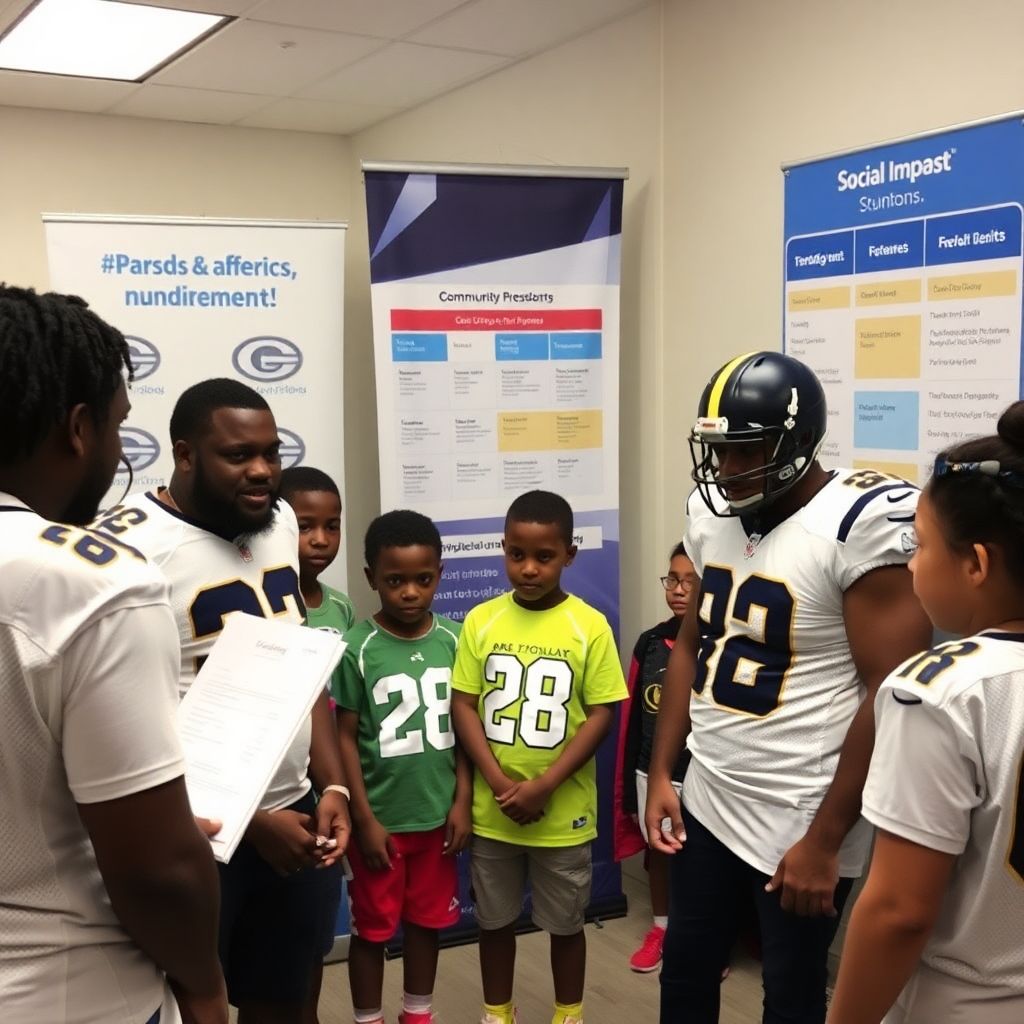
NFL players can turn visibility into real-world change by defining a clear cause, building a compliant structure, aligning with teams and sponsors, and tracking measurable outcomes. This guide explains how to design safe, sustainable social impact programs off the field, whether you are a player, advisor, team staffer, or partner organization.
Overview: Player-Driven Social Initiatives
- Start with a focused cause that connects authentically to the player’s story and community.
- Choose a safe operating model: partner with existing nonprofits, create a fund, or form a foundation.
- Coordinate early with the club, league offices, and legal counsel to avoid conflicts.
- Use transparent funding and simple reporting to build long-term trust.
- Define clear metrics before launching to measure outcomes, not just media impressions.
- Protect the player’s time, reputation, and mental health with realistic commitments and professional support.
Motivations Behind Players’ Activism
NFL player charity work usually grows from lived experience: hometown challenges, family health issues, or collegiate community service. It suits players who are ready to commit time, lend their name thoughtfully, and accept scrutiny about results and finances.
It is better to pause or scale back when a player is in serious legal trouble, facing unstable mental health, or cannot dedicate minimal time to governance. In these cases, supporting trusted NFL foundations and community programs quietly, or amplifying partners’ work without creating a new entity, is usually safer.
Strategies for Building Sustainable Programs
Before launching a player-driven initiative, assemble a minimal but solid toolkit.
Core people and governance
- Player-aligned advisor: agent or independent advisor who understands both football and nonprofit basics.
- Legal and tax counsel: to vet contracts, donation structures, and compliance requirements.
- Program partner: an experienced nonprofit or community group that already works in the chosen issue.
- Board or advisory group: a small, diverse group to give oversight and continuity beyond the player’s career.
Legal and structural options
- Donor-advised fund under a community foundation.
- Partner-branded campaign hosted by an existing 501(c)(3).
- New player foundation (higher complexity; only when capacity and advisors are in place).
Operational tools and systems
- Basic accounting and bookkeeping that can separate program costs, fundraising, and overhead.
- Secure donation platforms with clear terms and automated receipts.
- Simple CRM or spreadsheet to track donors, partners, and beneficiaries.
- Media and content plan for safe storytelling, especially for athletes using their platform for social justice.
Risk and reputation safeguards
- Clear conflict-of-interest policy, especially when family or close friends are paid staff or vendors.
- Media training for the player and spokespersons.
- Basic crisis plan for injuries, trades, or negative headlines that could impact the program.
Navigating League, Team, and Sponsor Relations
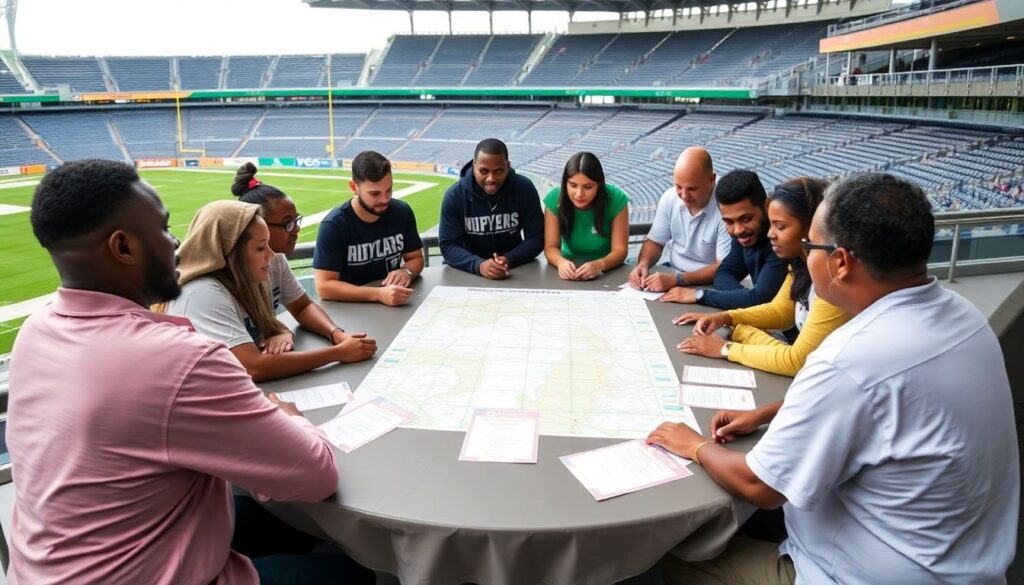
Coordinating with the league, club, and partners protects both the player and the initiative. Use the following steps as a practical roadmap.
- Clarify the mission and boundaries. Define the primary issue, target community, and typical activities (grants, events, scholarships, advocacy). Note what the initiative will not do, such as endorsing political candidates or lobbying.
- Engage team community relations staff early. Share a one-page overview of the idea before announcing anything. Ask about existing team programs, scheduling constraints, branding rules, and any required approvals for appearances or logo use.
- Coordinate with league programs and policies. Identify where the initiative fits with league-wide priorities, such as education, health, or justice-related work. Confirm restrictions around game-day activations, uniform messages, and on-field signage to keep activities compliant.
- Align with current and potential sponsors. Map out brands already connected to the player or team and look for values overlap. When exploring corporate sponsorship of athlete-led social impact campaigns, keep financial terms, logo placement, and messaging expectations in writing, and ensure charity content is clearly separated from product ads.
- Set clear roles with nonprofit partners. Decide who owns program design, who controls funds, and how decisions are made. Put agreements in plain-language contracts that describe reporting expectations, data sharing, and how the partner can use the player’s name and image.
- Plan for changes in team or career status. Assume trades, injuries, or retirement will happen. Structure the initiative so it can survive moves between markets, or gracefully sunset, without leaving commitments unfulfilled.
Fast-Track Mode: Quick Coordination Checklist
- Write a one-page description of the cause, activities, and desired community.
- Email or meet with team community relations and share the document.
- Confirm what you can and cannot do with team and league branding.
- Select one nonprofit partner and define roles in a short agreement.
- Loop in current sponsors only after the first safe, well-run event is complete.
Funding Models and Financial Transparency
Use this checklist to confirm that the funding side of your initiative is clear, safe, and trustworthy.
- The operating structure (partner campaign, fund, or foundation) is documented and explained in simple language on public materials.
- All donation links go to verified, secure pages that show who receives the money and for what purpose.
- There is a written budget separating program costs, administration, marketing, and player-related travel or appearances.
- Any fees paid to the player, family, or related businesses are disclosed to the board and consistent with legal advice.
- Regular financial summaries or annual reports are shared with donors in plain language, not just legal filings.
- Corporate contributions are labeled clearly as sponsorship, grants, or matching gifts, with no confusion for donors.
- There is a policy for handling surplus funds, canceled events, or shifting focus so donors understand what happens to their gifts.
- Audit or independent review is considered once the initiative reaches a meaningful scale or complexity.
- Fundraising tactics avoid high-pressure or misleading language and never promise personal benefits in exchange for donations.
Measuring Impact: Metrics and Evaluation
Common mistakes in impact measurement can quietly undermine even the best-run initiative. Watch for these pitfalls.
- Focusing only on vanity metrics like social media impressions while ignoring changes in people’s lives.
- Launching programs without a baseline understanding of the problem in the target community.
- Tracking too many indicators so staff are overwhelmed and data quality suffers.
- Failing to collect basic demographics and feedback from participants, making it hard to show who was reached.
- Changing goals mid-season without updating metrics or communicating the shift to donors and partners.
- Ignoring negative or mixed feedback instead of using it to refine programs.
- Not budgeting time or money for evaluation, leaving partners to guess about effectiveness.
- Under-sharing results with the public, which makes it harder for supporters to see why the work matters.
Case Studies: Successful Player-Led Campaigns
Many paths can deliver impact even without creating a standalone foundation. These alternatives are often safer and more sustainable.
- Issue-focused campaigns with existing nonprofits. A player joins a proven organization’s effort, lending name, time, and targeted funding instead of building a new structure from scratch. This works well if the nonprofit already understands how to manage high-profile partners.
- Hometown scholarship or grant funds. Partnering with a community foundation or school district allows a player to support students or youth programs with minimal administration. It is ideal for long-term, low-complexity commitments with clear selection criteria.
- League and team-aligned initiatives. Plugging into NFL foundations and community programs can amplify resources while staying aligned with league strategy. This approach suits players who prefer to share ownership and visibility rather than operating solo.
- Time-limited advocacy and awareness campaigns. For players passionate about social or justice issues, short, clearly defined campaigns reduce risk. Instead of continuous operations, they run for a season with specific messages, partners, and goals.
If you are wondering how to support NFL players’ social impact initiatives as a fan or corporate partner, look for efforts that use clear structures, transparent reporting, and credible organizations on the ground.
Practical Concerns and Quick Answers
Do NFL players need their own foundation to make an impact?
No. Partnering with established nonprofits or using a donor-advised fund is often simpler, safer, and faster than starting a new entity, especially early in a player’s career.
How can sponsors back social impact without over-commercializing it?
Define the social goals first, then structure sponsorships so that brand exposure supports, but does not dominate, the message. Keep clear lines between charitable storytelling and product promotion in any corporate sponsorship of athlete-led social impact campaigns.
What is the safest way to start a new player initiative?
Begin with one focused project in partnership with a reputable nonprofit, get legal and tax guidance, and keep commitments small enough to fulfill even if injuries, trades, or schedule changes occur.
How should players handle political or controversial topics?
Clarify personal boundaries, understand league and team policies, and work with experienced advocacy partners. Whenever possible, keep messages specific, fact-based, and tied to constructive actions that communities can take.
How can fans tell if a player’s charity is trustworthy?
Look for clear explanations of where money goes, visible partner organizations, simple financial summaries, and evidence of real programs or grants, not just events and photo opportunities.
What if a program grows faster than expected?
Pause expansion, strengthen governance and staffing, and review finances before adding new cities or programs. Scaling slowly with quality control protects both the community and the player’s reputation.
Are virtual events a good option for player-led initiatives?
Yes, virtual or hybrid events lower costs and scheduling stress, and they can expand reach beyond one market. They still require careful planning for security, accessibility, and donation processing.