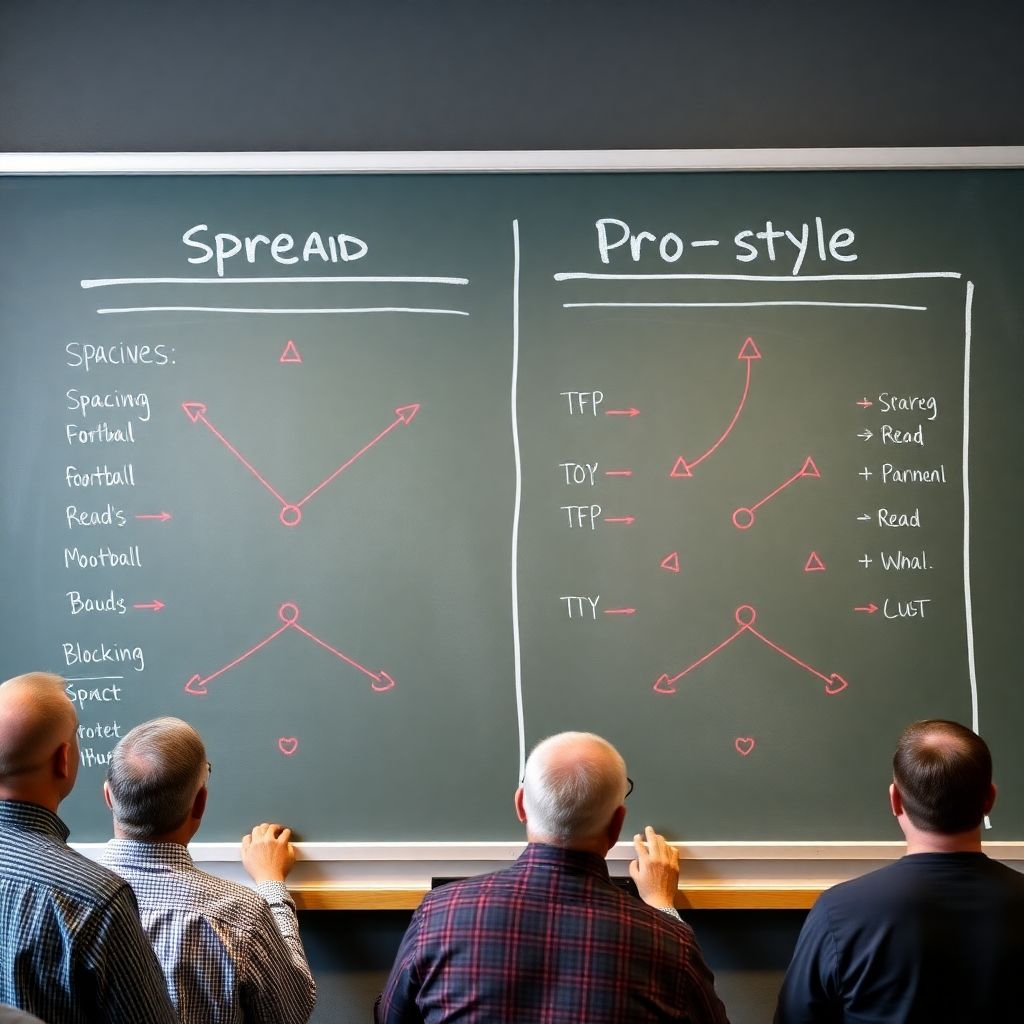
Spread offense emphasizes space, tempo, and simplified reads; pro-style offense emphasizes matchups, under-center mechanics, and full-field progressions. At most college levels, spread maximizes average personnel and recruiting range; at higher professional levels, pro-style (or hybrid multiple) schemes best prepare quarterbacks and linemen for NFL demands, protections, and complementary run-pass balance.
Schematic snapshot: high-level contrasts
- Spread offense vs pro style offense mainly splits on space/tempo (spread) versus matchups/precision (pro-style).
- Spread simplifies reads for QBs and can mask average offensive line play; pro-style demands more protection and progression skill.
- Spread typically suits college recruiting realities; pro-style better mirrors NFL offensive structures and terminology.
- Hybrid approaches can keep spread spacing while incorporating core pro-style concepts, protections, and under-center work.
- Transition plans, not diagrams, decide success: install pace, language, and protections before deep scheme layering.
Philosophy and objectives: spread versus pro-style
Use these criteria as a quick decision frame when choosing between spread and pro-style at college or when preparing players for NFL schemes.
- Quarterback profile: Athletic but still-developing passer usually benefits from spread; high-level processor with strong arm can leverage pro-style progressions.
- Offensive line quality and depth: If you cannot consistently pass protect on long-developing plays, lean spread with quick game and RPOs.
- Skill-position depth: If you are deeper and faster at WR/RB than on the OL, spread formations and pace maximize touches and mismatches.
- Defense and game-length strategy: If your defense needs rest and controlled possessions, a pro-style or slower hybrid structure is often safer.
- Recruiting footprint: Limited access to elite QBs and NFL-sized linemen favors college spread offense structures, even if you keep some pro elements.
- Staff expertise and teaching bandwidth: If assistants are younger or part-time, a streamlined spread package is easier to install and maintain than a full pro-style playbook.
- Player development targets: If your mission is pipeline-to-NFL, especially for QBs and OL, you should integrate substantial pro-style protections and concepts early.
- Program identity and constraints: Weather, conference style, and institutional history might push toward physical pro-style run games or wide-open spread systems.
Personnel profiles: what each scheme demands
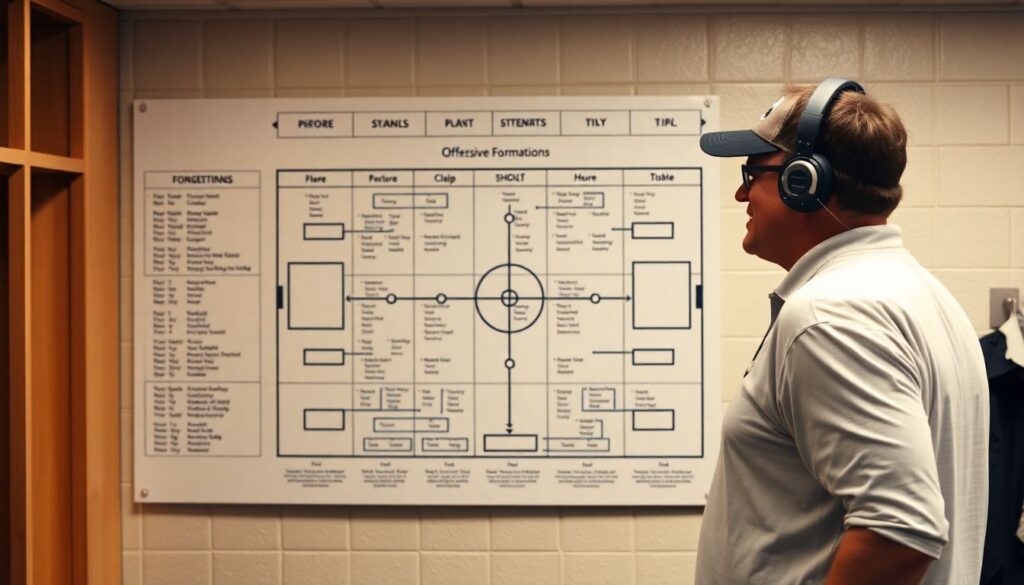
The table compares common structural choices, viewed as options on a continuum rather than rigid boxes.
| Variant | Best fit for | Advantages | Trade-offs | When to choose |
|---|---|---|---|---|
| Pure tempo spread | Mobile QB, light but athletic OL, deep WR room, average TE/FB personnel | Maximizes space and tempo; simpler reads; stresses vanilla college defenses; easier install from a college spread offense playbook pdf or similar resources. | Limited under-center work; fewer NFL-style protections; defense may be exposed by fast three-and-outs. | Smaller-budget programs that win with pace and space, especially vs heavier pro-style opponents. |
| Balanced spread (RPO/motion) | Dual-threat or rhythm passer, versatile RBs, at least one competent in-line TE/H-back | Flexible personnel groupings; can blend quick game, RPO, and play action; easier bridge toward pro-style route concepts. | Can become bloated if you add every RPO; requires good WR blocking and QB decision-making. | Ideal for most modern college programs wanting spread advantages without abandoning pro-style teaching. |
| Traditional pro-style | Strong-armed QB, big OL, true in-line TEs, reliable FB/H-back, patient backs | Directly mirrors many NFL offensive schemes; strong play-action game; controls tempo and clock effectively. | Higher install and teaching load; QBs and OL must handle complex protections and full-field reads. | Use when you recruit NFL-caliber size and want your identity tied to physical run and play-action football. |
| Multiple pro-style | Smart QB, flexible OL, hybrid TE/WRs, staff comfortable with weekly tailoring | Game-plan specific; can morph between spread offense vs pro style offense looks; best alignment with advanced scouting and self-scout. | Risk of scheme overload; demands high staff cohesion and strong practice organization. | Upper-level college or pro teams with experienced coaching and deep personnel. |
| Transitional hybrid | Roster recruited for one system but staff wants to move toward the other within 1-2 seasons | Allows gradual change; keeps familiar tags and formations while layering new concepts and protections. | If timeline is unclear, players can be stuck between identities; early-season inconsistency is common. | When a new staff inherits mismatched personnel yet must start installing more pro or more spread structure. |
For deeper self-study, coaches often pair this analysis with the best books on nfl offensive schemes, a targeted online course football offensive schemes module, and a quality coaching clinic spread offense vs pro style recording to see how top staffs solve similar personnel puzzles.
Formations, concepts and route structures
Use these if-then scenarios to align formations and concept families with your roster and development goals.
- If your QB is accurate in the quick game but struggles with deep full-field reads, then favor 2×2 and 3×1 spread sets with mirrored concepts, simplified RPO tags, and half-field reads from the gun.
- If your TEs are true mismatch players, then mix pro-style 12-personnel (two TE) formations with spread splits, using them in Y-iso, slot fades, and play-action crossers to create clear one-on-ones.
- If your WR room lacks top-end speed but runs precise routes, then lean into pro-style option routes, choice concepts, and compressed formations where leverage and spacing wins more than raw speed.
- If your OL struggles with twist games and simulated pressures, then keep protections simple: use more 5-man half-slide in spread, quick perimeter screens, and defined launch points instead of long-developing seven-step concepts.
- If you face opponents that major in man coverage, then build a route tree with bunch, stacks, and motion (spread or pro) to generate picks, rubs, and free releases as a core part of the weekly plan.
- If you want a college-to-NFL bridge offense, then combine shotgun spread formations with pro-style route structures (dagger, levels, drive, sail, scissors) and full-field progression teaching.
Tempo, playcalling frameworks and situational use
Apply this checklist to decide how fast to play and how structured your call sheet should be.
- Define your defense’s needs: if they require rest and possession control, cap tempo spikes and borrow more pro-style huddle or pseudo-huddle mechanics.
- Identify your QB’s processing speed: faster mental processors can handle pro-style shifts, motions, and kill/check systems; developing QBs benefit from no-huddle spread with limited tags.
- Segment your game plan: dedicate tempo spread packages for end-of-half and momentum swings, while using pro-style groupings for four-minute, backed-up, and red-zone situations.
- Standardize language: keep a single, stable core of formation and motion terms, whether you are calling pure spread or multiple pro-style, to minimize cognitive load.
- Build “answers” into calls: pair every staple concept with a built-in check or companion (e.g., screen away from a heavy pressure look) instead of expanding the playbook horizontally.
- Script early downs: regardless of scheme, script your first 10-15 plays to test how the defense handles your primary formations, motions, and tempos before fully committing to a spread or pro-style heavy plan.
- Review between series: track which tempos, personnel, and concepts stress the opponent most and narrow the call sheet over the course of the game.
Blocking, protection schemes and rushing strategies
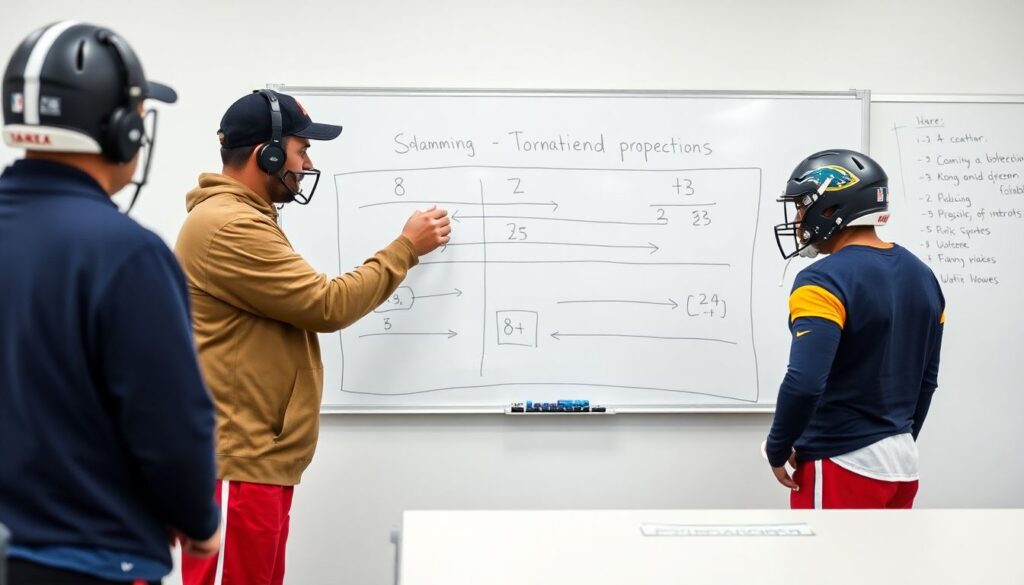
Common mistakes when aligning run game and protection with your chosen structure:
- Installing complex NFL protection schemes in a tempo spread offense without enough meeting time for full slide rules, hot answers, and sight adjustments.
- Relying on long-developing play-action shots with an OL that was recruited for light, lateral spread zone play instead of vertical displacement in a pro-style run game.
- Running heavy gap/power from spread splits while your WRs cannot or will not block safeties, leading to unblocked defenders in the alley.
- Building your pass pro menu around five- and six-man protections without realistic answers for simulated pressures and creepers that modern defenses run vs spread looks.
- Mismatching screen package and OL skill: asking slower, mauling linemen to execute perimeter spread screens at tempo instead of inside screen and draw complements.
- Overloading young players with both spread RPO tags and full pro-style run checks, producing hesitation in mesh points and missed IDs vs movement fronts.
- Ignoring short-yardage identity: toggling between spread and pro-style in 3rd-and-1 without a clearly repped “get-a-yard” family of QB sneaks, duo, or power concepts.
- Failing to build protections and run schemes off similar initial pictures, which tips your intentions and makes defensive game-planning easier.
Player development and coaching implications for transitions
- If your roster is undersized in the box but athletic on the perimeter, prioritize spread structures now and layer pro-style concepts gradually for long-term development.
- If you consistently sign NFL-caliber linemen, QBs, and TEs, invest heavily in pro-style protections and under-center mechanics while keeping a modest spread package.
- If you expect frequent staff turnover, simplify to a core spread or balanced hybrid package that new assistants can adapt without wholesale terminology changes.
- If your institutional goal is producing NFL-ready QBs and OL, choose schemes and teaching progressions that mirror how pro teams coach progressions, protections, and huddle operations.
- If your immediate goal is winning with the current roster, bias toward what your players already understand, then build a clear two-year plan to transition toward your ideal identity.
For a practical transition example: a college staff moving from a pure spread to a multiple pro-style might keep shotgun 10/11 personnel on base downs in year one, add heavier 12-personnel and under-center packages in short yardage and red zone, and use off-season study (film, clinics, and an online course football offensive schemes module) to deepen protections and play-action in year two. Along the way, they could study a detailed college spread offense playbook pdf to preserve their best spread concepts while slowly incorporating more NFL-style structure.
Spread-centric systems tend to be best for maximizing current college talent and recruiting range, while pro-style and multiple schemes tend to be best for preparing QBs, OL, and TEs for the next level. Neither is universally “better”; the right answer depends on your roster profile, developmental mission, and staff capacity to teach and adjust.
Targeted clarifications and edge cases
Is a hybrid spread-pro offense realistic for smaller college programs?
Yes, if you are disciplined with volume. Keep a core spread package for base downs and layer in a limited set of pro-style protections, play-action concepts, and under-center short-yardage plays rather than building two full systems.
How should a high school QB choose between playing in a spread or pro-style system?
If your priority is immediate production and using your legs, a spread system can showcase you quickly. If you are targeting long-term QB development for the NFL, choose a program that teaches protections, full-field reads, and some pro-style structure, even if the stats look smaller early.
Does running spread hurt a lineman’s chances of adapting to the NFL?
Not automatically. Linemen from spread backgrounds can transition well if they are taught sound hand usage, footwork, and protection rules. Adding some pro-style sets, under-center work, and more traditional run schemes can make that transition smoother.
What learning resources help coaches master scheme comparisons?
Combine all-22 film study with the best books on nfl offensive schemes, targeted online course football offensive schemes content, and at least one in-person or virtual coaching clinic spread offense vs pro style to see how experts solve real problems with different structures.
How fast can a team realistically switch from spread to pro-style?
Plan on multiple off-seasons if you want a deep, sustainable change. You can adjust terminology and a few core concepts quickly, but protections, under-center mechanics, and situational packages require patient layering and heavy practice reps.
Is pure pro-style still viable against modern college defenses overloaded for spread?
Yes, especially if you recruit big OL and multiple TEs. Being different can be an advantage, but you should still borrow spread elements-motions, bunches, and spacing tools-to avoid becoming predictable.
Should a low-budget college program copy an NFL playbook?
Usually no. NFL systems assume far more meeting time and veteran players. It is better to adapt a smaller set of NFL concepts and protections into a college-friendly framework that fits your practice and teaching constraints.