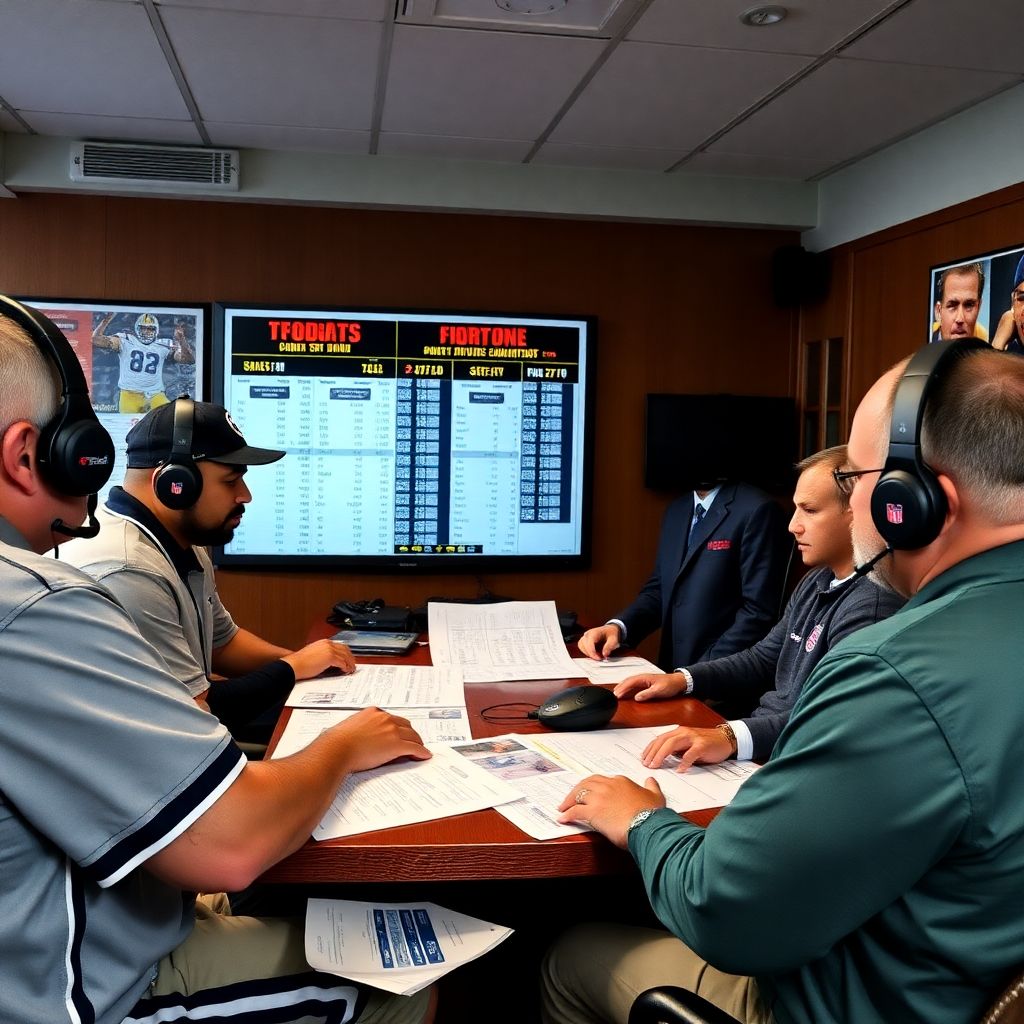
The NFL salary cap shapes rosters and game strategy by limiting total spending, forcing teams to trade off stars vs depth, veterans vs rookies, and short‑term pushes vs long‑term flexibility. Cap dynamics influence who gets extended, cut, or traded, which positions teams prioritize, and how staffs manage injuries and late‑season pushes.
Core salary-cap mechanics that reshape rosters
- The cap is a hard annual spending limit, but cap hits can be shifted across years with structure and bonuses.
- Signing bonuses, guarantees, and void years control when money counts, not just how much is paid.
- Veteran contracts compete directly with rookie deals for scarce cap room at each position.
- Injuries trigger replacement costs and dead money that squeeze in-season flexibility.
- Draft strategy, practice-squad use, and extensions are all tools to arbitrage cheap years vs expensive ones.
- Trades, releases, and restructures convert future flexibility into present talent-or the reverse.
How the cap is calculated and projected
The NFL salary cap is a league-wide, hard limit on how much each team can allocate to player salaries and bonuses in a given league year. While the league sets a single cap number, every club manages its own internal cap sheet, balancing current charges, future obligations, and dead money.
For practical decision-making, front offices care less about the single-year cap number and more about a multi-year cap forecast. They project incoming rookie pools, expected extensions for core players, and expiring contracts to estimate how much room is realistically available for veterans at each position group.
At a basic level, team decision-makers track three buckets:
- Current cap charges (active roster, practice squad, injured lists).
- Future committed charges (prorated bonuses and guarantees for players under contract).
- Dead money (charges for players no longer on the roster).
A simple illustration: if a team has an adjusted cap of X and existing cap commitments of X − 20, its workable room is about 20, but part of that must be reserved for in-season injury replacements and a buffer for emergencies. This is where NFL roster construction analytics tools and salary cap management software for sports teams help simulate best- and worst-case futures instead of relying on static spreadsheets.
Contract structures: guarantees, bonuses, and cap-hit timing

Contract structure determines when money hits the cap, which often matters more than the headline total. Here are the core mechanics teams and sports agency salary cap strategy services work with:
- Signing bonus and proration
A signing bonus is paid quickly but spread evenly over up to five years for cap purposes. Example: a 4-year deal with a 20 bonus creates 5 per year in prorated cap charge, independent of base salary. - Base salary and guarantees
Base salary counts fully in that year's cap. If it is guaranteed for skill, cap, or injury, cutting the player can accelerate or preserve that obligation as dead money, depending on timing. - Roster bonuses vs option bonuses
A roster bonus due on a specific date usually hits that year's cap in full, while an option bonus can often be treated like a signing bonus and prorated. Teams use this to front-load cash while smoothing cap hits. - Incentives: Likely vs Not Likely To Be Earned
Likely incentives count on the current year's cap; not-likely incentives do not and instead hit next year's cap if earned. This is a flexible way to tie cap charges to performance outcomes. - Void years
Void years are dummy years added solely to spread bonus proration. When the contract voids, remaining proration accelerates as dead money. This tool lets teams lower today's cap hits at the cost of future flexibility. - Simple cap math example
Player signs 4 years, 20 signing bonus, 4 base each year. Annual cap hit before any tweaks: 5 (bonus) + 4 (salary) = 9 per year. A restructure converting 8 of that year's base to bonus could add new proration and reduce the current hit while increasing future years.
In practice, both teams and agents lean on NFL salary cap consulting services to model these structures, ensuring that contracts align with cash budgets, competitive windows, and long-term roster plans.
Roster construction strategies under cap pressure
Cap-aware roster building is about turning limited dollars into the most effective combination of starters, depth, and developmental players. Several recurring strategies show up when clubs face cap pressure.
- Leaning on rookie contracts at expensive positions
Quarterback, edge rusher, and cornerback can dominate the cap. Teams often prefer drafting these positions early so they get starter-level play on rookie-scale deals, freeing cap room for veterans at more stable positions like interior offensive line. - Stars-and-scrubs vs balanced depth
Some teams load the cap into a small core of elite players while filling other spots with minimum deals. Others spread investment across the lineup. The right approach depends on scheme, injury tolerance, and how accurately the front office can identify mid-tier value. - Timing of extensions vs free agency
Extending homegrown talent a year early can secure a discount and allow for lower early cap hits via bonuses. Waiting might mean paying full market value or losing the player. Good timing requires NFL contract negotiation and cap optimization expertise and realistic projections of future cap growth. - Structuring positional spending tiers
Teams often set internal "bands" for positions-e.g., one high-priced corner, one mid-tier, and rookie deals behind them. When a player's expected market exceeds that band, the team prepares a succession plan through the draft or cheaper free agency options. - Planning for injury and regression risk
Cap-savvy clubs avoid tying too much guaranteed money into aging, high-impact positions without clear exit ramps. Shorter deals, lower guarantees, and staggered contract end dates reduce the chance that one misstep traps a position room for years.
Operationally, front offices rely on internal models, public data, and specialized NFL roster construction analytics tools to evaluate how different roster builds affect both performance and cap sustainability across multiple seasons.
In-game and season tactics driven by cap realities
Cap dynamics may feel like an offseason concern, but they influence game-day and in-season tactics once the schedule starts. A club's cap health affects how aggressively it can react to injuries, performance swings, and playoff odds.
Situational advantages created by cap flexibility
- Ability to sign impact free agents after injuries
Teams with in-season cap room can add proven veterans when injuries strike, rather than relying solely on practice-squad call-ups. - Midseason trades for difference-makers
If a contender has space and expiring deals, it can absorb midseason trades to patch weak spots for a playoff push. - Managing snap counts for incentive triggers
Coaches and cap staff monitor playing time incentives; sometimes snap counts around thresholds are adjusted to avoid or intentionally trigger payouts tied to cap charges. - Flexible game-day elevations
Practice-squad elevations allow strategic depth without full-year cap commitments, especially at running back, special teams, or depth corner.
Constraints that limit strategic options

- Capped-out teams forced into suboptimal replacements
Lack of space means replacing injured starters with minimum contracts only, reducing schematic flexibility and matchup options. - Delayed or impossible trades
Even if a trade makes football sense, cap constraints can block it unless contracts are restructured or salary is eaten by the sending team. - Inflexible roster spots locked by guarantees
Heavily guaranteed contracts can keep underperforming players on the active roster longer than ideal because cutting them would create unmanageable dead money. - Limited ability to reward breakout players midseason
Without spare room, extending an emergent starter in-season may be impossible, increasing the risk of losing them in free agency.
Cap-aware coaching staffs coordinate with front offices weekly, aligning game-day roster decisions and injury contingency plans with ongoing cap forecasts generated by internal tools or external salary cap management software for sports teams.
Cap implications for drafting, development, and practice-squad use
Draft and development strategies are tightly linked to the cap because rookie deals offer multi-year cost certainty. Misunderstanding this relationship leads to common, expensive errors.
- Mistake: Treating rookies purely as backups
Underutilizing rookie contracts wastes their best value years. Good teams design pathways for day-two and day-three picks to become cheap starters by year two or three. - Mistake: Overpaying veterans to block young talent
Signing mid-tier veterans to multi-year deals when a capable rookie is ready can create logjams and dead money. The better play is often a shorter veteran deal that bridges to the young player. - Mistake: Ignoring practice-squad as a cap valve
The practice squad allows teams to carry developmental depth at lower overall cost, with flexible elevations. Mismanaging this pipeline forces costly veteran signings each time injuries spike. - Myth: Cheap rookies always solve cap problems
Rookie contracts are inexpensive, but misses carry opportunity cost: repeated misses at one position force overspending on veterans later. Drafting is a cap tool only if evaluation and development are strong. - Myth: First-round picks are always better cap value
First-rounders have higher salaries and fifth-year options; mid-round starters can deliver better cap efficiency. Teams must weigh probability of elite production vs total cost across the contract. - Myth: Development timelines are independent of cap
In reality, teams often aim for players to peak before their second contracts. Aligning coaching, scheme, and playing time with this timeline maximizes the leverage of rookie years.
Many front offices and agencies work with sports agency salary cap strategy services to calibrate draft boards, extension timing, and practice-squad churn so the pipeline of cheap, functional talent is continuous rather than sporadic.
Trades, releases and restructures: emergency and proactive tools
Cap moves often appear reactive, but the best-run teams use trades, releases, and restructures according to a clear, multi-year plan. These tools shift when money hits, who receives it, and how much flexibility remains for the next move.
- Trades
Trading a player can create cap room now but often accelerates remaining bonus proration as dead money. Acquiring a player means inheriting salary, guarantees, and sometimes prorated bonuses depending on structure. A contender might absorb a high cap hit this year if the player has minimal guarantees beyond the current season. - Releases (with or without post-designations)
Releasing a player early accelerates remaining bonus. Using a special designation can spread the dead money across multiple years, freeing space for immediate needs while accepting longer-term drag. - Restructures
Restructuring typically converts salary into bonus, lowering this year's cap hit while increasing future years' proration. It is essentially borrowing cap room from the future; repeated restructures without exits can trap a roster in a cycle of mounting dead money.
Mini-scenario: a team needs 6 in space to sign a midseason replacement and extend a breakout corner. It converts 8 of a veteran's salary to bonus, spreading that over four remaining years (2 per year). Result: this year's cap hit drops by 6, future years rise by 2 each.
Both teams and agents lean on NFL salary cap consulting services and NFL contract negotiation and cap optimization expertise to simulate these chains of moves, ensuring that an "emergency" restructure today does not close the door on a critical signing next offseason.
Practical answers to common cap-driven dilemmas
How far ahead should an NFL team plan its salary cap?
Most cap staffs work on a rolling multi-year window, with detailed projections at least three to four seasons out. That horizon allows them to time extensions, manage dead money, and anticipate when key rookie classes will reach their second contracts.
When does it make sense to restructure a veteran contract?
Restructures make sense when a team is in a clear contention window and the player is expected to remain productive through most of the new proration period. If performance or health is uncertain, pushing money forward can create bigger problems later.
Is it better to cut a player early or ride out a bad contract?

The answer depends on dead money vs savings and the availability of a replacement. If cutting creates manageable dead money and there's a viable cheaper option, getting out early preserves flexibility. If the dead money crushes cap space, a phased exit is safer.
How do incentives affect in-season roster decisions?
Incentive thresholds tied to snaps, stats, or team results can trigger additional cap charges. Cap-aware staffs monitor these closely, sometimes adjusting usage when an incentive would meaningfully impact current or future cap space without significantly changing win probability.
Why do some teams avoid big free-agent deals even with cap room?
Cap room today can vanish quickly once extensions for core players and upcoming draft classes are modeled. Some teams prefer to preserve flexibility and invest in their own players rather than chase external free agents at full market prices.
How can smaller-market teams compete under the same cap?
Because the cap is hard and equal, smaller-market teams compete by drafting well, extending core talent efficiently, and avoiding cap-draining mistakes. Discipline with guarantees, contract length, and timing often matters more than raw cash spending capacity.
Do analytics tools really change cap decisions?
Modern analytics and software help teams simulate many more roster and contract scenarios than manual methods. This improves the odds of catching long-term cap traps, quantifying trade-offs, and aligning contract structure with realistic on-field expectations.