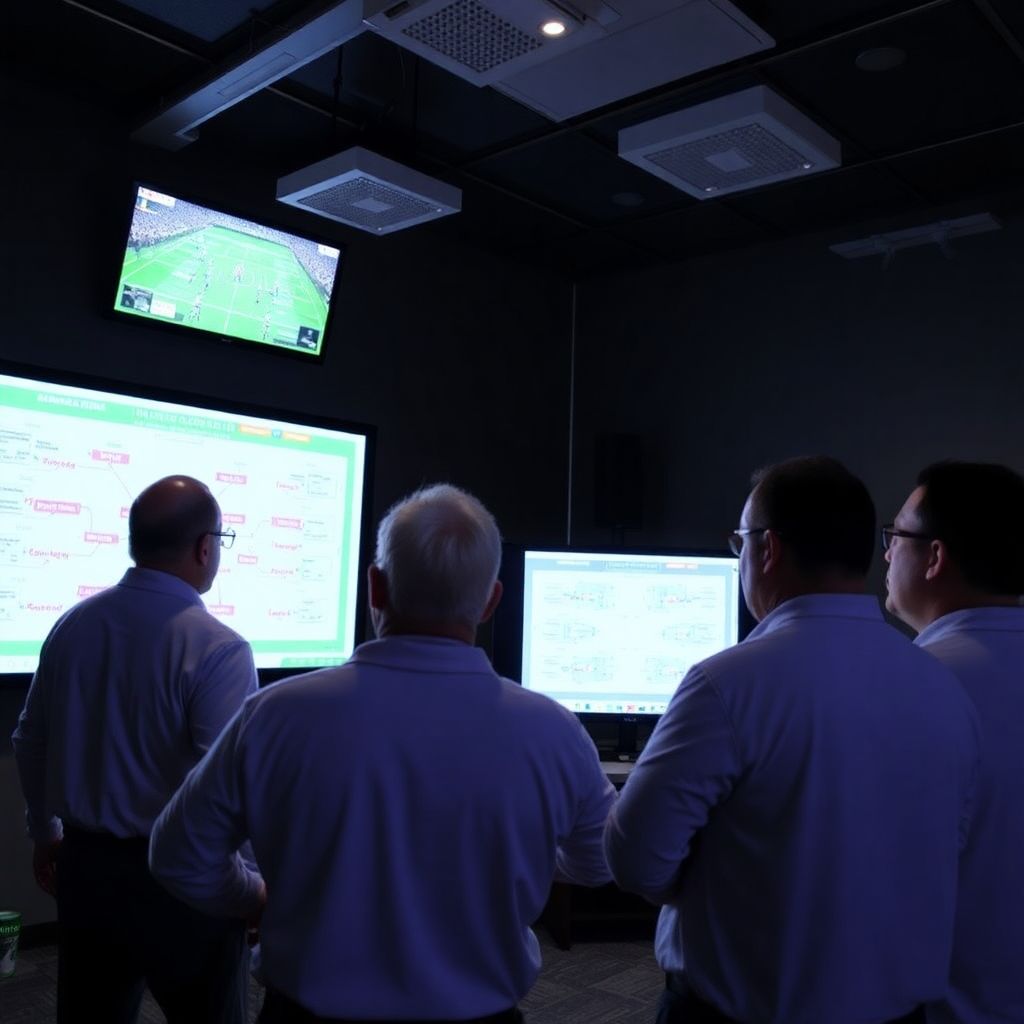
Modern defenses adapt to high-powered offenses by tightening pre- and post-snap communication, disguising pressure and coverage, and using hybrid personnel to match spread speed without sacrificing run integrity. If you study film with clear questions, then tendencies emerge; if you script specific if‑then rules from those tendencies, then your game plans become repeatable and adjustable.
Summary of Defensive Trends Against Modern Offenses
- If the offense lives in spread/RPO, then defenses shift to simulated pressure and split-safety structures instead of constant heavy blitz.
- If QBs get the ball out fast, then defenses prioritize rush lanes, batted balls, and coverage rotation over sack hunting.
- If offenses hunt mismatches in space, then defenses respond with nickel/dime packages and hybrid linebackers.
- If motion and misdirection stress eyes, then defenses tighten run fits with clear gap and QB/mesh rules.
- If film reveals clear down-and-distance tendencies, then defensive calls become more situation-specific and opponent-specific.
Pressure Packages: Rationale and Alignment Changes
Pressure packages against high-powered offenses are no longer just about sending more bodies than the offense can block. They are about threatening pressure from multiple levels, then selectively bringing four or five while maintaining solid coverage. The core goal: if the offense is protection-check driven, then your look must create doubt and late decisions.
Modern fronts tilt toward flexibility. You see odd spacing (3-down looks) from even personnel, mugged linebackers, and simulated pressures where a second-level player rushes while a defensive lineman drops. If an offense uses full-slide or half-slide protections based on obvious fronts, then changing your alignment picture forces them into less comfortable rules and communication.
From a film-study lens, pressure design starts with protection rules. If you see on tape that the RB always scans inside-out or that the center always slides to the field, then you can align a potential rusher in the RB’s conflict area or away from the center’s slide. That lets you attack the weakest link without selling out the structure.
Pressure Package Application Checklist
- If the offense relies on simple six-man protections, then major in simulated pressures from mugged looks against their favorite third-down concepts.
- If the RB consistently helps to one side on film, then build at least two pressures stressing his opposite-side pickup.
- If your base front gives away the rush, then introduce one adjustable alignment (e.g., mint/odd spacing) that you can use with both pressure and drop-eight calls.
Coverage Adjustments vs. Spread and RPO Concepts
Coverage versus spread and RPO-heavy systems centers on stress points. If the offense reads a specific defender (e.g., overhang or backside LB), then your coverage must either remove him from the read or narrow his assignment so he can play fast.
- If the offense tags glance or skinny posts behind run action, then lean on split-safety structures (quarters, two-read) and rotate a safety down late to close the window.
- If the QB reads the conflict defender in the flat, then use buzz or trap rotations so that the supposed conflict player becomes a late insert rather than a static flat player.
- If they constantly throw bubbles and quick screens into space, then apex your nickel and adjust corner leverage (off-inside) so you can play the run with the box and rally outside with speed.
- If the offense uses boundary X isolations with RPOs away, then allocate help to the X (bracket, press-bail with inside shade) and fit the RPO side with overhangs who are not primary read defenders.
- If they attack with vertical switch and cross concepts, then use pattern-match rules (e.g., banjo calls) to avoid pure spot drops that create huge voids.
- If tempo is a major weapon, then call family-based coverages (same rules from multiple shells) so the defense can align quickly without mental busts.
Coverage Adjustment Implementation Checklist
- If an RPO uses you as the conflict player on film, then change your pre-snap alignment or post-snap responsibility to make the QB wrong.
- If your corners struggle in true man, then shift toward match coverages that give them leverage and inside help on key downs.
- If the offense wins with bubbles and quick outs, then practice trigger-and-leverage drills for nickel and corners every practice period.
Linebacker Role Evolution: Nickelations and Hybrid Responsibilities
Linebackers now serve as the hinge between base and sub packages. Nickelations (living in nickel versus 11 personnel) force linebackers to handle both box and space duties. If the offense spreads the field but still runs inside zone and power, then linebackers must be able to fit like box players while matching routes like safeties.
Hybrid backers (SAM/nickel types) are particularly important. If the slot is a primary target in the opponent’s high-powered passing game, then your hybrid must handle pattern-match rules, carry vertical routes, and still fit the C-gap when needed. That player’s film study load is higher, so using football coaching film study software to tag his key reads (formations, motions, backfield sets) helps simplify his week.
Typical Scenarios for Modern Linebacker Use
- If the offense is in 11 personnel with a strong run identity, then live in nickel but keep your best run-fitting linebacker on the field as the weak or strong inside backer, depending on their favorite schemes.
- If they attack your base backers with option routes from the back or tight end, then use dime or big-nickel packages and replace a traditional LB with a safety-type hybrid.
- If motion is used to ID coverage and find mismatches, then give linebackers simple travel rules (e.g., bump with motion only across the ball) so you avoid over-rotating.
- If the QB is a major designed-run threat, then assign one LB as a primary QB player on specific downs and live with lighter box numbers elsewhere.
- If your personnel lacks a true hybrid player, then spin coverages so safeties carry more route responsibility, allowing LBs to focus on interior fits.
Linebacker Usage Checklist
- If your linebackers are consistently out-leveraged in space on film, then shift to more nickel/dime snaps and simplify their coverage rules.
- If offenses isolate your worst cover LB, then sub him out on known passing downs and rotate in a hybrid or safety.
- If run fits break down with nickel, then clearly define which LB is plus-one in the box against each major offensive formation.
Pass-Rush Techniques for Neutralizing Quick-Release QB Play
Against high-powered offenses that emphasize quick game and RPOs, traditional pass-rush metrics (sack totals) become less relevant. The focus shifts to affecting throwing lanes, timing, and launch points. If the QB gets the ball out in rhythm, then your rush must disrupt that rhythm instead of chasing sacks that rarely materialize.
Film clips paired with football analytics tools for defensive game planning show where the QB prefers to set up, which side he escapes to, and his most common hot throws. If the data says he rarely holds the ball longer than two seconds, then your emphasis is hands up in throwing lanes, interior push, and coordinated edges that cage the pocket, not wide, looping rushes.
Advantages of Modern Pass-Rush Approaches
- If the offense features quick-game timing, then teaching rushers to anticipate set points and get hands into windows leads to more batted balls and forced double clutches.
- If the QB is a spot thrower, then interior push collapses his platform and moves him off his landmark, making even completed passes more contested.
- If you tie stunts and games to coverage rotations, then the QB must process both moving rushers and rotating defenders post-snap, increasing mistake chances.
- If you can rush four effectively with simulated pressure looks, then you preserve coverage integrity while still stressing the protection scheme.
Limitations and Trade-Offs in Pass-Rush Strategy
- If you overuse exotic stunts, then run lanes widen and mobile QBs can exploit vacated gaps for explosives.
- If edges rush past the QB, then you lose contain and create scramble drill explosives downfield.
- If interior rushers constantly jump for passes instead of converting power to push, then the QB steps up and attacks open seams.
- If you design rushes without considering coverage leverage, then you may force throws exactly where your coverage is weakest.
Pass-Rush Technique Checklist
- If film shows a quick-release QB, then coach rushers to hit a specific spot on the QB’s drop point and transition hands to the throwing lane by his third step.
- If the QB escapes one direction more often, then angle your contain rusher inside that escape path and use a spy on key downs.
- If screens punish your aggression, then tag at least one rusher per call as a screen-alert player responsible for throttling down.
Run-Defense Counters to Zone Reads, RPOs, and Misdirections
Run defense against modern spread offenses is built on rules more than static fronts. If the offense majors in zone read and RPO, then each defender must know exactly what he is responsible for: dive, QB, pitch, bubble, or glance, independent of window dressing like motion and shifts.
Many staffs now organize their defensive football playbook high powered offenses section around these rule-based fits rather than traditional front names. If you teach fits by gap only and ignore option structure, then eye violations and explosive plays follow. Online football coaching courses for defensive coordinators often emphasize combining gap rules with clear option rules to reduce mental overload.
Common Errors and Misconceptions in Modern Run Defense
- If you assume that more defenders in the box automatically stops the run, then you overlook how poorly defined QB/mesh rules can still create huge creases.
- If you chase every motion and shift with full defensive movement, then you create alignment confusion and slow eyes, which zone-read and RPO teams exploit.
- If you treat RPO slants and glances as pure pass, then your overhangs play on their heels and neither fit the run nor contest the throw effectively.
- If you over-blitz into zone schemes without fitting gaps behind the blitz, then cutback lanes and bounce paths become uncontrolled.
- If you ask the same defender to be both primary force and primary QB player versus read schemes, then you stress his rules and invite busts.
Run-Defense Adjustment Checklist
- If the offense uses a lot of read schemes, then label your defenders as dive, QB, or pitch/bubble players in every call and drill those roles.
- If misdirection and split-flow hurt you on film, then emphasize backside discipline and teach second-level defenders to read guards, not window dressing.
- If RPOs target your overhangs, then adjust their alignment and safety support so they can trigger decisively on either run or pass.
Film-Study Workflow: How to Isolate and Exploit Offensive Tendencies
Film study is where these adaptations are born. If you simply watch tape, then you only get impressions; if you chart specific situations and responses, then you get tendencies you can attack. Football coaching film study software and an NFL defensive schemes breakdown subscription can streamline this work by tagging concepts, formations, and outcomes consistently.
Think in if‑then chains. For example: if the offense aligns in 3×1 to the field with a tight split boundary X on second-and-medium, then they call boundary isolation routes or field-side glance RPOs. That pattern becomes the anchor for coverage and pressure calls in those situations.
Example Film-Study Pseudocode for a Game Plan
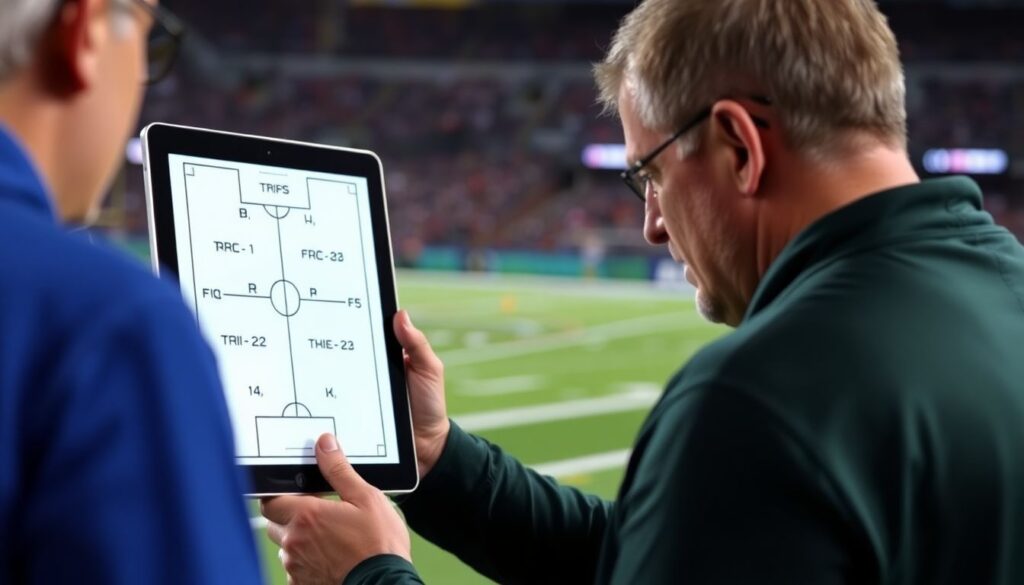
Conceptually, your workflow can look like this:
If down_distance == 3rd_and_5_to_7
  and formation == 3x1
  and RB_alignment == weak
then
  expect "trips flood" or "weak-side choice"
  call simulated pressure from weak
  rotate coverage to trips with bracket on #3
If you have football analytics tools for defensive game planning, then you can automatically surface these patterns across games instead of relying on manual tallies. The key is making sure every discovered tendency becomes a clear, communicated if‑then rule in your call sheet and practice plan.
Film-Study Workflow Checklist
- If a tendency shows up repeatedly on film, then write it as an explicit if‑then rule and match it with a specific call or adjustment.
- If you notice your players busting in the same situations, then re-tag those clips and refine your rules, not just your motivation speeches.
- If your opponent changes tempo or personnel, then update your if‑then rules midweek or at halftime using clearly defined sideline communication.
End-of-Plan Self-Review Checklist
- If your game plan includes multiple exotic looks, then verify that every player’s if‑then rule fits on a single, simple line he can recall under pressure.
- If you add new pressures or coverages, then confirm they directly answer a filmed offensive tendency, not just a generic threat.
- If your personnel package changes (nickel, dime, hybrid), then re-check run fits and option rules for every major offensive formation.
- If your staff uses external resources (courses, software, subscriptions), then ensure all insights are translated into practice scripts and call-sheet notes.
Addressing Common Implementation Concerns
How do I avoid overloading players with too many if‑then rules?
If players seem overwhelmed, then group calls into small families that share the same base rules and only tweak one variable (front, pressure, or rotation). Limit each position group to a few core if‑then rules per situation and drill them with high reps instead of expanding the call sheet.
What if my personnel does not fit ideal nickel or hybrid structures?
If you lack true hybrids, then use more two-high shells and spin safeties late to help in coverage, letting linebackers stay run-focused. Adjust spacing (wider LBs, tighter safeties) so you can survive in space without asking players to do jobs they are not built for.
How much should I rely on analytics tools and film software?
If football coaching film study software and analytics tools are available, then use them to tag and sort, but still verify key cutups manually. The most valuable output is clear, human-readable if‑then rules that your players can execute, not just charts and dashboards.
How do I keep pressures from exposing my secondary?
If explosive passes follow your pressures, then reduce all-out blitz and lean on simulated pressure tied to safe coverage families. Make sure every pressure has a coverage twin that looks similar pre-snap so the offense cannot easily identify when the secondary is stressed.
What is the best way to practice RPO and option fits?
If your defense struggles with RPOs and option, then schedule dedicated mesh and read periods where defenders announce their dive/QB/pitch responsibilities pre-snap. Rotate through the opponent’s top formations so players see their rules in the same pictures they will face on game day.
How do I evaluate whether my adjustments are working during the season?
If you want to evaluate impact, then track explosives allowed, third-down stops, and red-zone efficiency by call family, not just overall stats. Compare pre- and post-adjustment film to see if the specific offensive concepts you targeted are now less efficient or disappearing from the opponent’s plan.
Are online courses and scheme breakdowns worth the time for busy coordinators?
If you are short on time, then targeted online football coaching courses for defensive coordinators or an NFL defensive schemes breakdown subscription can accelerate learning. Focus on modules that directly address problems you see on film, and immediately translate ideas into your existing terminology to avoid confusion.