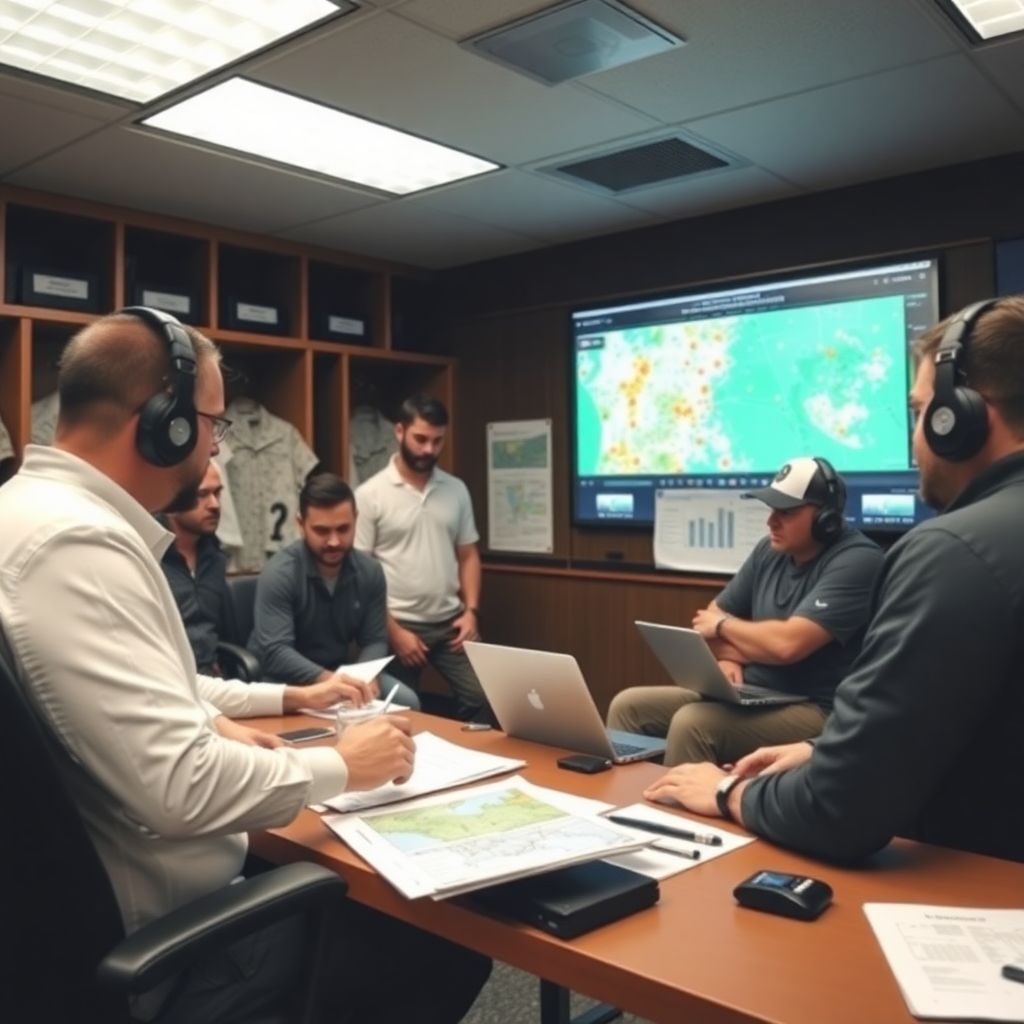
Weather should be treated like a weekly opponent: it shapes game plans, position usage, and risk tolerance. Systematically factoring forecast, field, and temperature into calls helps you protect players, protect the ball, and exploit mismatches. Build simple rules for wind, wet, heat, and cold so the whole staff adjusts consistently.
Weather Impact Synopsis
- Strong wind reshapes passing depth, field-goal range, punt strategy, and sideline management more than casual fans expect.
- Rain and snow turn the game into a traction and ball-security test; inside runs and quick-game concepts usually gain value.
- Heat and cold drive substitution patterns, hydration plans, and tempo more than scheme; fatigue management becomes a primary lever.
- Field surface and visibility determine which routes, coverages, and pass-rush plans are realistic without unnecessary injury risk.
- Special teams are hyper-sensitive to weather; kick direction, return calls, and rush/hold mechanics must be adjusted pregame.
- Clear, simple sideline rules for each weather type prevent panic and keep communication short in high-pressure moments.
Integrating Forecasts into Game Planning
For any staff that cares how american football weather conditions impact performance, forecasts should enter planning as early as the first opponent breakdown. Identify likely wind, precipitation, and temperature ranges and tag concepts in your call sheet as better, neutral, or worse for those conditions.
This is ideal for intermediate to advanced coaching staffs with at least basic self-scouting and situational reports. It is less useful if you have no flexibility in system, extremely limited roster depth, or rules that require a fixed offensive and defensive script regardless of conditions.
Use internal cut-ups plus league trends when considering how weather affects NFL game strategy, even if you coach high school or college. The principles transfer: wind punishes long throws and kicks, slick surfaces punish slow-developing plays, and extreme temperatures punish poor rotation and conditioning.
Wind Effects on Passing, Kicking and Sideline Strategy
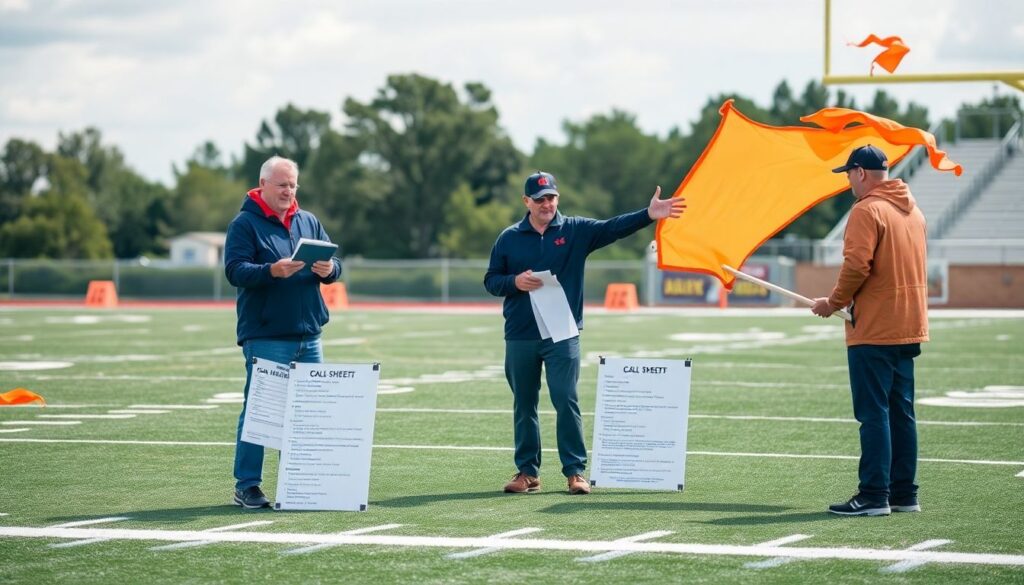
Prepare simple tools and information flows so your staff can read and react to wind in real time.
- Reliable forecast access (hourly wind speed and direction).
- Field-level wind check markers (flags, streamers, or tape on the uprights and at midfield).
- A pre-labeled call sheet: wind at back, wind in face, crosswind columns for offense, defense, and special teams.
- Clear kicker and punter range charts for each direction, updated after pregame warmup.
- Sideline communication plan: one coach owns wind updates each change of quarter and each special-teams situation.
Operationally, treat wind as a constraint on distance and hang time. Into a strong wind, shrink your vertical passing tree, favor crossers and shallow routes, and be cautious with wide, floating throws toward the sideline. With wind at your back, selectively call deeper shots and longer field goals, but only after verifying ball flight in warmups.
On the sideline, manage the clock and field position around quarters: if you have the wind now and not next quarter, be aggressive using timeouts and tempo to maximize drives in the “good” direction, then play more conservatively into the wind.
Rain and Snow: Traction, Ball Security and Equipment Choices
- Confirm forecast and surface type. Clarify whether you expect light rain, heavy rain, wet snow, or accumulating snow, and whether the field is natural grass, older turf, or modern drainage turf.
- Ask grounds crew about drainage history and trouble spots.
- Walk the field pregame to feel footing in different areas.
- Optimize footwear and gloves. Choose the best football gear for cold weather games that also supports traction and grip in moisture.
- Grass: longer studs or screw-ins where allowed; check for mud build-up.
- Turf: molded cleats with a stable base; avoid overly long studs that can “grab.”
- Receivers/DBs: test multiple glove types and bare-hand catching in warmups.
- Design a ball-security plan. Tighten your risk profile as precipitation increases.
- Favor inside runs over long-developing perimeter plays.
- Use more 2-hand ball carriage through traffic and in contact.
- Assign a coach to towel and ball rotation with officials every series.
- Restructure the passing game. Shorten routes, reduce multi-break patterns, and emphasize high-percentage throws.
- Use slants, hitches, quick outs, and stick concepts over deep comebacks and long-developing posts.
- Move the launch point with controlled rollouts to give the QB better footing and vision.
- Include simple screen packages where linemen can control footing and landmarks.
- Adjust protection rules and splits. Poor traction punishes over-extended pass sets and wide splits.
- Narrow some line splits to help double teams in slippery conditions.
- Favor 6- and 7-man protections on obvious passing downs when footing is poor.
- Coach shorter, more controlled pass sets instead of aggressive vertical sets.
- Recalibrate special teams. Kicks, snaps, and holds become more fragile with wet balls and slick spots.
- Identify firm patches for plant feet on field goals and kickoffs.
- Consider more directional punts to minimize big returns on slick surfaces.
- Simplify fake packages; focus on clean operations first.
- Script early “feel” calls. In your opening sequences, include plays that sample footing and ball handling.
- One inside run, one perimeter run, one quick pass, one screen.
- Evaluate traction by position group and adjust the plan after the first series.
Fast-track wet-weather adjustment sequence
- Pre-game: walk the field, test cleats and gloves, and confirm which areas have worst footing.
- Opening drive: call inside runs and quick passes only; avoid long-developing perimeter plays.
- Between series: tighten ball-security coaching (two hands in traffic) and confirm any slip issues by position.
- All game: simplify special teams, prioritize clean snaps/holds, and avoid risky reverses or long-developing fakes.
Heat and Cold: Physiology, Hydration and Rotation Strategies
Use this checklist to verify that your plan for extreme temperatures is functional and safe.
- Hydration schedule is defined by time (e.g., every change of possession or TV timeout), not by whether players feel thirsty.
- Position groups have rotation plans on paper for heat and for cold, including contingency if a key backup is unavailable.
- Coaches and athletic trainers share simple warning signs for heat illness and cold-related issues and know escalation steps.
- Tempo plans are linked to weather: you know when to slow the game to preserve players and when to speed it up to tire the opponent.
- Sideline gear is ready: shade, towels, and cooling resources for heat; coats, hand warmers, and extra layers for cold.
- QBs, centers, and holders have a routine to keep hands functional in cold without over-relying on bulky gloves.
- Practice-week periods simulate conditions where possible (time of day, equipment used, and rotation pattern).
- Play calls in extreme heat lean toward quick decisions and shorter plays to reduce sustained chase and long scramble drills.
- Play calls in extreme cold protect the QB’s hands early (more runs and screens) until grip and feel are established.
- Every captain understands the weather plan and can reinforce smart behavior in huddles and on the sideline.
Field Surface and Visibility: Risk Mitigation and Tactical Advantages
Sloppy surfaces and poor visibility invite avoidable mistakes. These are the most common ones to avoid.
- Calling double-move routes on muddy or uneven grass where receivers cannot safely sell the first break.
- Using aggressive, wide pass-rush angles on slick turf that leave huge rush lanes when defenders slip.
- Playing heavy off-man coverage on poor footing, where breaking and driving on routes becomes nearly impossible.
- Ignoring painted or re-sodded areas that are more slippery, especially around numbers and logos.
- Failing to adjust pre-snap landmarks for DBs and WRs when yard lines or hash marks are obscured by snow.
- Keeping the same punt and kickoff return depth despite reduced ball carry on wet or soft surfaces.
- Overloading trick plays that require precise timing and ball-handling when visibility is reduced by fog or heavy snow.
- Under-communicating with officials about ball changes and spot conditions, missing chances for safer placements.
- Not coaching QB and center on small footwork adjustments to account for unstable ground in the pocket.
- Running full-speed tackling and pursuit drills in warmups on dangerously slick spots instead of using controlled tempos.
Real-time Adjustments: Playcalling, Clock and Special Teams Decisions
Different game states and risk profiles call for different weather responses. Consider these alternative approaches.
- Conservative ball-control mode. When you lead in poor conditions, emphasize low-risk runs, high-percentage passes, and field position. Bleed the clock, punt away from danger, and call defenses that keep the ball in front of you.
- Calculated aggressive mode. When trailing and weather limits possessions, selectively increase fourth-down attempts and shot plays aligned with the “good” direction (wind or slope). Script a few aggressive calls you trust and repeat them rather than inventing on the fly.
- Special-teams leverage mode. When your specialists handle conditions better than the opponent, lean into long field goals with the wind, directional punts, and return calls that attack their weaker units. This can be a hidden edge in nfl betting tips weather conditions discussions, but for coaches it is about repeatable matchups.
- Weather-neutral simplification mode. If your roster is inexperienced, default to a small, well-repped subset of the playbook that works “okay” in all conditions, instead of over-adjusting. This pairs well with straightforward football coaching strategies for bad weather: protect the ball, control the line of scrimmage, and tackle.
Practical Clarifications for Coaches
How early in the week should I adjust my plan for weather?
Begin considering weather on the first full practice day, but only lock major changes 24-36 hours before kickoff. Use early forecasts for “what if” lists and finalize concrete adjustments once the forecast stabilizes and you can confirm field conditions.
Should I ever ignore the forecast and stick to my base plan?
Yes, when the weather is mild or your opponent’s weaknesses are too significant to pass up. In borderline cases, keep your base plan but tag a smaller subset of plays as weather-friendly and emphasize them in critical downs and red-zone situations.
How does wind usually influence fourth-down decisions?
Into a strong wind, you may go for it more often in fringe field-goal range and avoid low net punts. With wind at your back, field-goal attempts become more attractive and long punts can flip the field, making conservative choices more viable.
What is the simplest sideline rule for wet-ball passing?
Favor quick, on-time throws between the numbers and limit long, wide throws toward the sideline. Combine that with a firm rule that any high-risk pass concept must be preceded by at least one clean short completion in the same series.
How do I practice for extreme heat or cold if our climate is mild?
Simulate the stress rather than the exact temperature. Use slightly longer drives, controlled no-huddle, and tighter rotations to train fatigue and focus. Practice with the same sideline gear and hand-care routines you will use in real heat or cold.
Is it worth building separate playbooks for different weather types?
Instead of full playbooks, build weather tags onto your existing system. Mark plays as wind-strong, rain-safe, or heat-friendly. This keeps language consistent while giving you a ready-made subset for each condition.
How should I explain weather adjustments to players without overloading them?
Use three to five simple rules per phase (offense, defense, special teams) and repeat them all week. Frame each rule as a clear behavior change, like “two hands in traffic” or “no deep outs into the wind,” and reinforce with film.
Комментарии