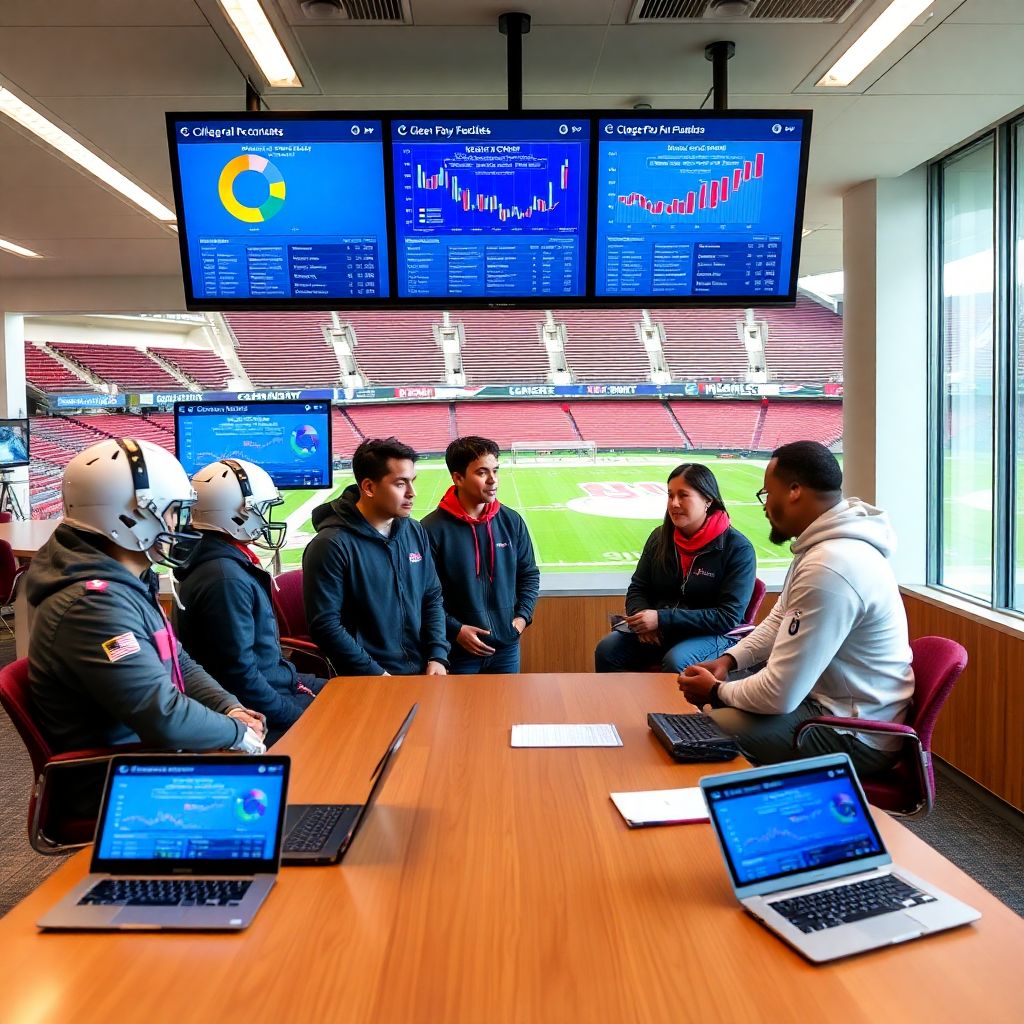
NIL deals are reshaping college football recruiting by adding marketability, brand fit, and off-field earning potential to traditional evaluations of talent and character. To compete, programs must update scouting metrics, align with compliant collectives and agencies, price prospects realistically, manage eligibility risk, and negotiate clear, education-first arrangements with families and advisors.
Immediate Impacts on Recruiting Strategy
- Evaluations now blend on-field grades with social reach, personality, and local market influence.
- Staffs coordinate closely with NIL collectives, agents, and college football NIL marketing agencies.
- Prospects and families expect transparent NIL education and realistic earning projections.
- Compliance offices review NIL language before coaches make firm recruiting promises.
- Smaller programs differentiate by building strong local and niche-brand NIL opportunities.
- Recruits increasingly compare schools based on organization of their NIL ecosystem.
How NIL Changed Talent Evaluation Metrics
NIL deals in college football recruiting are best leveraged by programs with basic compliance processes, staff bandwidth, and a clear identity (e.g., regional powerhouse, positional pipeline, or media-savvy brand). They are a poor fit for staffs that cannot monitor state laws, school policy, or third-party promises made around their program.
The core shift: talent still comes first, but you now grade how much value that talent can capture and create through NIL. That includes social media, local roots, personality, and alignment with the school’s brand narrative.
Side‑by‑Side KPIs: Before vs After NIL
| Recruiting KPI | Pre‑NIL Emphasis | Post‑NIL Emphasis |
|---|---|---|
| Player Rating & Film | Star ranking, measurables, and tape dominated decisions. | Still primary, but cross-checked with NIL earning and exposure upside. |
| Production & Consistency | Stats and game impact vs. competition level. | Same foundation, plus storylines that help brands market those stats. |
| Visibility & Audience | Occasional note about media attention or local fame. | Follower counts, engagement, and on-camera presence are tracked formally. |
| Off‑Field Reputation | Basic character check and academic risk review. | Brand safety, professionalism, and sponsor fit become NIL-critical. |
| Program Fit | Schematic and cultural fit with existing roster and staff. | Adds fit with collectives, donors, and markets that can support NIL. |
When NIL-Enhanced Evaluation Makes Sense
- You recruit in media-heavy or football-obsessed markets where local sponsors care about high school stars.
- Your program already partners with at least one organized collective or external NIL recruiting services for high school football players.
- You have staff members (or a consultant) who can monitor NIL rules and screen basic contract language.
When to Slow Down on NIL-Driven Decisions
- Your staff is already overextended handling traditional recruiting operations.
- Your school has strict policy gaps or unresolved questions about NIL activities.
- Key donors are divided or confused about how NIL should function alongside regular fundraising.
- Families are chasing unrealistic numbers, and you lack data to reset expectations safely.
Structuring Recruiter-Influencer Partnerships
Modern staffs must manage relationships not only with players, but also with collectives, agencies, and influencers who shape the NIL ecosystem around recruiting.
Core Requirements and Tools
- Defined NIL Operating Map
Document what your school can and cannot do in NIL, including how coaches may speak about potential deals and what must be routed through independent entities. - Trusted NIL Collective Relationships
Identify the best NIL collectives for college football players connected to your program. Ensure they understand recruiting rules, avoid offering pay-for-play, and coordinate messaging with your staff. - External Expert Network
Build a vetted list of:- College football NIL marketing agencies that can design compliant campaigns.
- Local attorneys who understand contracts and state NIL laws.
- Financial educators to speak with recruits and parents.
- Basic Social and Data Tools
Use social analytics platforms to track a prospect’s audience and engagement. A simple CRM or recruiting database should capture NIL-relevant notes: hometown brands, content interests, and any existing sponsorships. - Clear Communication Scripts
Prepare language for coaches explaining how to get NIL sponsorship college athletes legally: emphasizing third-party deals, no guarantees, and the separation between athletic aid and NIL income.
Practical Example: Local Market Partnership

A regional program might coordinate with a local collective and a marketing agency to place a highly followed quarterback into community-focused campaigns with car dealers and restaurants. Coaches highlight the opportunity, but the collective and agency structure and fund the actual NIL agreements.
Practical Example: Influencer-Style Specialist
A punter with modest on-field profile but viral trick-shot content could be positioned for niche brand campaigns. Your staff can connect him with an NIL collective and a small digital agency to sequence content deals after enrollment, without promising specific dollar amounts during recruiting.
Analyzing Market Valuations for High School Prospects
Valuing a recruit’s NIL potential is part art, part pattern recognition. Use a consistent, transparent process so you can talk families through your reasoning without overpromising.
- Map the Prospect’s Audience and Reach
Start by auditing social media and real-world influence.- Review follower counts, engagement rates, and content quality on major platforms.
- Note local fame: packed high school games, local news coverage, and community presence.
- Flag any existing NIL deals or informal arrangements already in place.
- Profile the Local and School-Linked Market
Evaluate which sponsors might realistically care about this player.- List categories with strong school or regional presence (auto, restaurants, healthcare, tech).
- Identify brands already partnering with your program or collective.
- Estimate whether their marketing budgets could support small, medium, or flagship NIL campaigns.
- Segment NIL Opportunity Types
Break potential activity into buckets instead of chasing one headline number.- Local appearances (signings, meet-and-greets, camps).
- Social posts and content series linked to sponsors.
- Licensing campaigns (jerseys, video games, merch) where allowed.
- Team-wide or position-group deals organized by collectives.
- Benchmark Against Similar Athletes
Compare your prospect to past or current players of similar role and profile.- Look at previous NIL structures in your program (ranges, not exact amounts).
- Ask trusted NIL recruiting services for high school football players for anonymized benchmarks.
- Factor in changes in state law or school policy since those earlier deals.
- Assign a Conservative Value Range
Convert your analysis into a simple low-baseline-upside range.- Base the baseline on realistic, low-stress deals (team campaigns, small socials).
- Include upside only if the athlete sustains performance and content output.
- Share the range with compliance before you communicate it externally.
- Stress-Test for Eligibility and Optics
Before sharing numbers, ensure they are free from pay-for-play implications.- Confirm all activity is clearly tied to name, image, and likeness, not enrollment promises.
- Check whether language could be misread as guaranteed pay for attending your school.
- Adjust your talking points so they emphasize opportunity, not guarantees.
- Communicate in Education-First Language
When speaking with families, position NIL valuations as guidance, not contracts.- Explain what your current players in similar roles have done, in general terms.
- Clarify that deals are signed with third parties, not the coaching staff.
- Invite them to meet with the collective or an independent advisor for more detail.
Fast-Track Valuation Checklist
Use this quick version when time is short but you still want a structured view:
- Rate the prospect’s on-field role and projected impact at your school.
- Score social reach and content quality on a simple low/medium/high scale.
- List two to four realistic sponsor categories likely to engage.
- Place the athlete into a conservative NIL range (e.g., low, moderate, high upside).
- Run the scenario past compliance or legal before sharing anything with the family.
Compliance and Eligibility Risk Management
Compliance is where NIL deals in college football recruiting can quickly go wrong. A repeatable checklist minimizes risk for players, families, and programs.
Pre-Commitment NIL Compliance Checklist
- Verify that all NIL discussions are clearly separated from scholarship and playing-time promises.
- Confirm every third-party entity (collective, agency, brand) understands and signs off on school policies.
- Require written documentation of any NIL offers made before enrollment and route them to compliance.
- Review state law, conference rules, and NCAA guidance for any new restrictions or disclosures.
- Prohibit staff from quoting guaranteed NIL dollar amounts during recruiting presentations.
- Ensure contracts compensate for real NIL deliverables (content, appearances, licenses), not roster status.
- Check whether boosters involved in NIL have received updated education on contact and tampering rules.
- Educate families that signing with representation or a marketing agent must comply with state and school rules.
- Set up a simple reporting channel for athletes to submit NIL agreements for review before signing.
- Document every education session and compliance review in case of later investigation.
Program Brand Building to Win NIL Battles
Strong programs win NIL battles long before individual negotiations. The most common mistakes are strategic, not legal.
Frequent Strategic Missteps
- Trying to be everything: no clear message on what kinds of players and brands fit your culture.
- Ignoring storytelling: failing to highlight past players who used NIL to build long-term careers, not just quick cash.
- Overpromising power: treating your collective as an unlimited bank account instead of a strategic partner.
- Underusing media: not collaborating with college football NIL marketing agencies to showcase safe, successful case studies.
- Neglecting non-stars: building NIL narratives only around five-star recruits instead of whole-position or team campaigns.
- Weak internal alignment: coaches, collectives, and donors sending mixed or conflicting messages to recruits.
- No education track: offering NIL hype without structured sessions on taxes, savings, and legal basics.
- Late digital presence: not preparing players to act like professionals on social channels before NIL offers appear.
- Ignoring women’s and non-revenue sports: missing chances to build a reputation as a school that supports all athletes.
- Reacting, not planning: waiting for recruits to ask about NIL instead of proactively explaining your system.
Negotiation Playbook: Families, Advisors and Schools
Not every family wants the same NIL path. Offering clear, compliant alternatives can reduce tension and keep negotiations grounded.
Alternative NIL Pathways to Offer
- Education-First, Delayed NIL Focus
For risk-averse families, emphasize academic support, development, and baseline team-wide NIL opportunities. Explain that targeted individual deals can grow naturally if the athlete performs and stays eligible. - Content-Centric Personal Brand Plan
For highly creative or social-savvy recruits, outline a plan to work with collectives and agencies on building channels and storytelling, with NIL layered in through organic sponsors over time. - Local-Market Anchor Strategy
For hometown heroes, propose a path centered on regional sponsors and appearances, managed via the collective. This fits recruits who prioritize staying near family and community-driven NIL over national campaigns. - Professional Advisory Team Model
For families already working with agents or marketing reps, focus your role on education, access to your ecosystem, and transparency. Encourage them to vet offers with independent counsel while your staff stays within recruiting rules.
Practical Questions on NIL Implementation
How are NIL deals actually influencing where prospects commit?
NIL deals shape perception of opportunity rather than functioning as official offers from schools. Recruits often compare the organization and track record of each program’s collectives and partners, along with realistic earning paths, before choosing where to commit.
Can coaches work directly with brands to set up NIL for recruits?
In most frameworks, coaches cannot arrange or guarantee specific NIL deals for recruits. They can explain the ecosystem, connect prospects with independent collectives or agencies, and share general examples, but contracts and payments must stay with third parties.
What is the safest way to talk numbers with families?

Use conservative ranges, tied to actual past outcomes, and frame them as possibilities, not promises. Always run talking points by compliance, and state clearly that any NIL earnings will come from independent entities based on real NIL activities.
How should small programs compete with bigger NIL budgets?
Smaller programs can emphasize clear development plans, strong local sponsor relationships, and organized collectives focused on stability and education. A transparent, well-run system often appeals more to families than vague claims of large but unstructured money.
Do recruits need an agent before they sign any NIL deals?
Not always. Some players use NIL-specific advisors or attorneys on a limited basis instead of full-time agents. Whatever they choose, representation must comply with state law and school policy, and contracts should be reviewed by a qualified professional.
Where do external services fit into the recruiting process?
External services like NIL recruiting services for high school football players can provide education, valuation benchmarks, and brand introductions. Programs should treat them as independent partners, not as extensions of the coaching staff, to avoid tampering or pay-for-play concerns.
How can a family verify whether a collective is trustworthy?
Families should ask about governance, legal counsel, past deals completed, and how the collective coordinates with school compliance. Reputable groups can explain their process and often work in tandem with established collectives or agencies at other schools.