
Offensive linemen are the structural core of modern offenses, turning Xs and Os into real yardage. They create run lanes, protect the quarterback, dictate tempo, and determine which plays are even possible to call. When you understand their roles and tools, every concept on the play sheet finally makes tactical sense.
Fundamental Roles of Offensive Linemen in Modern Schemes
- Build and maintain the pocket so the quarterback can execute full-field progressions.
- Create horizontal and vertical displacement to open run lanes in zone and gap schemes.
- Set protection calls and adjust to blitzes, stunts, and simulated pressures.
- Control tempo and disguise by using consistent stances, splits, and get-off.
- Enable perimeter concepts (screens, RPOs, option) with timing, angles, and downfield blocks.
- Translate the offensive line playbook into on-field communication that keeps all five in phase.
How the Offensive Line Has Evolved: From Power to Space and Versatility
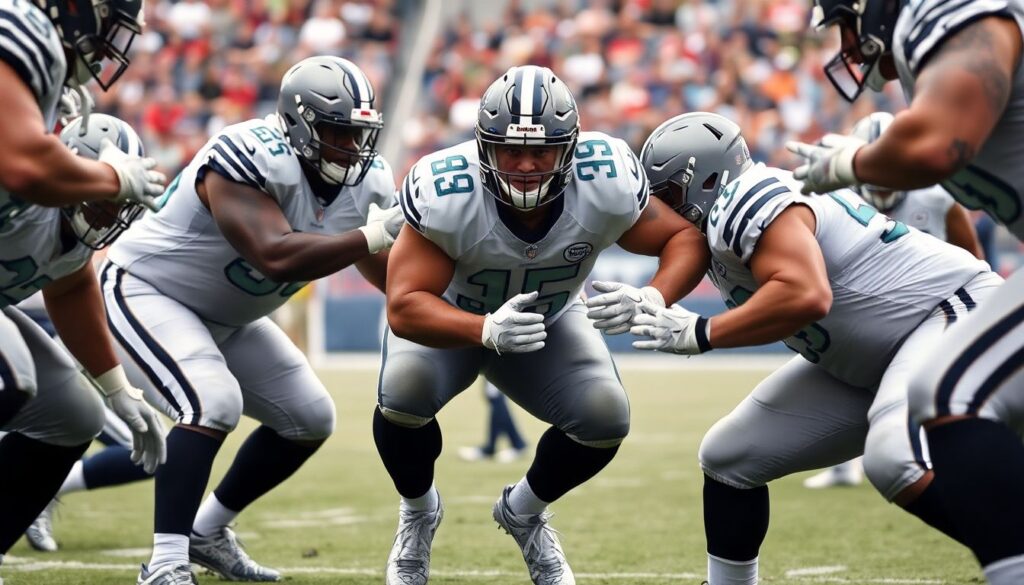
The offensive line used to be defined mostly by size and brute force: double teams, iso, and downhill power. Today, linemen operate in space as much as in tight quarters. They must handle tempo offenses, spread sets, RPOs, and complex pressures without losing physical dominance in the box.
Modern offensive linemen combine power, lateral quickness, and processing speed. In wide splits and shotgun formations, they block for inside zone one play and a perimeter screen the next, then pick up a five-man pressure on third down. The same five players have to handle radically different pictures snap to snap.
This shift changed how we coach and train. An effective offensive line training program now blends traditional sled and board work with movement patterns that mirror space play: screens, wide-zone tracks, and second-level adjustments. Film study focuses not just on “who did we block?” but “how did our calls and combinations stress the defense?”
For practice, a simple evolution-aware drill is a half-line inside zone circuit: run inside zone from 11 personnel one rep, then from a bunch look the next, but keep the same line rules. Emphasize that their communication and footwork must hold up no matter how the formation window dresses the picture.
Physical and Mental Profile: Metrics, Traits, and Position-Specific Skills
Different offensive line positions share core traits but apply them in different spaces and timings. Instead of chasing body types only, think in terms of measurable skills, reliable behaviors, and clear benchmarks you can track over a season or within an online offensive line coaching course.
-
Tackle profile (space protectors and edge setters)
- Physical: length, lateral quickness, recovery speed vs speed-to-power and inside counters.
- Mental: calm vs wide-9 and simulated pressures, ability to set vertical or 45-degree sets on command.
- Track: pressures allowed vs edge rushers, sacks allowed, and how often they require chip help.
- Coaching cue: “Set the launch point” – tackle determines where the QB can safely plant on five- and seven-step concepts.
- Drill: mirror drill vs two-direction counter (speed outside to spin or inside move); this belongs in any list of best offensive lineman drills for coaches building edge protection skills.
-
Guard profile (interior combat and combination specialists)
- Physical: strike power, short-area change of direction, ability to redirect vs games (T-E, E-T stunts).
- Mental: recognition of front stems, blitz patterns, and how that alters double-team and climb rules.
- Track: run-block efficiency on duo/power/inside zone, pressures surrendered to interior rushers.
- Coaching cue: “Eyes on the level above your hands” – see LB movement while engaging the down lineman.
- Drill: combo-to-backers on bags, then vs live backers, emphasizing eyes and hip torque through the down lineman.
-
Center profile (communicators and traffic controllers)
- Physical: anchor vs nose tackles, snap consistency from multiple cadences and in noise.
- Mental: protection ID, front recognition, and adjusting the MIKE point based on pressure threats.
- Track: communication errors (free runners, mis-ID’d fronts), bad snaps, and penalties.
- Coaching cue: “Win the picture pre-snap” – center must own the front and get all five on the same plan.
- Drill: protection walk-throughs where the center calls fronts and slides vs constantly shifting looks from the scout team.
-
Universal offensive line traits
- Balance: no waist-bending, constant base under hips.
- Hand timing: independent hands, patient punch, never reaching.
- Play speed: from huddle to whistle; ability to reset on tempo or sudden change.
- Track: penalties (holding, false starts), assignment busts on film, and technique breakdowns under stress.
- Drill: “post-practice truth period” – 10 minutes of focused footwork, punches, or sets tied to that day’s film corrections.
Run Game Mechanics: Zone vs Power, Contact Point, and Second-Level Play
Run concepts define how offensive linemen create and manipulate space. Zone schemes prioritize horizontal flow and leverage. Power and gap schemes prioritize vertical displacement and down-block angles. Most modern offenses blend both, so linemen must think in terms of tracks, aiming points, and who owns the play-side number of each defender.
-
Inside zone: reading leverage and staying square
Linemen work combo blocks on down linemen, climbing to linebackers based on movement. The key is keeping shoulders square and running their track, not chasing defenders. Centers and guards must feel whether the first level is secured before leaving for the second level.
-
Wide zone and stretch: winning the race to the corner
Here, offensive linemen run with wider tracks, emphasizing reach blocks, cutoff angles, and force displacement. The back presses the aiming point, then cuts based on the first down lineman outside the center. Linemen must avoid overrun angles that open cutback lanes for unblocked defenders.
-
Power and counter: down-blocks and kick-out timing
In gap concepts, double teams and down-blocks create a wall while pullers kick out or wrap. Guards and tackles must understand which defender their angle “belongs” to and how motion or formation shifts change the box count. Good power teams rarely whiff on the play-side linebacker.
-
RPO and option run fits: blocking where the ball might not go
On RPOs and read options, the offensive line often blocks a base run look while the ball ends up on the perimeter or behind them. They must avoid downfield penalties while still creating movement at the line, working on controlled aggression and timing with the quarterback’s mesh.
-
Second-level and perimeter blocking: finishing the explosives
Big runs rarely happen without linemen arriving on safeties or overhang players. That requires angles, body control in space, and understanding how the receiver’s block and the back’s track change your aiming point.
Useful mini-scenarios:
- Short yardage, heavy box: Call gap schemes (power/duo). Emphasize double teams and vertical push; coach linemen to “own the A and B gaps” and accept tight surfaces.
- Against fast-flow linebackers: Lean on inside zone and split zone. Teach linemen to let linebackers overrun their fits, then displace them with climb timing and backside cuts.
- Versus a dominant nose: Use wide zone and pin-pull. Move the point of attack and avoid giving that nose repeated straight-ahead double-team chances.
One simple run-game drill: half-line inside/outside zone vs a shaded front. Call the same play from different formations and motions. Between reps, have linemen verbally state their track, combo partner, and second-level responsibility.
Pass Protection Principles: Footwork, Hand Placement, and Communication
In the pass game, offensive linemen turn chaos into a controlled working space. They protect a point in the backfield, not just “block a man,” and must anticipate twists, simulated pressures, and overloaded sides. Footwork and hands matter, but communication is what keeps the pocket from cracking.
- Footwork fundamentals
- Consistent set angle based on protection (quick, half-slide, full-slide, play-action).
- Independent feet: post foot for power, set foot to gain width or depth without crossing over.
- Inside-out leverage: never give up the inside in most protections unless scheme dictates a different rule.
- Hand placement and punch timing
- Strike through the breastplate, thumbs up, elbows tight; avoid wide “hug” hands that draw flags.
- Independent hands to counter swipes and chops; reload rather than grab when beaten initially.
- Patient punch vs speed rushers; short, violent fits vs power rushers.
- Communication and protection IDs
- Centers identify the MIKE and set the slide; guards and tackles echo calls and confirm hot side.
- Adjustments vs five- and six-man pressures, plus simulated pressures with drop-out linemen.
- Back and tight end must hear and react to changes in the protection count.
Mini-scenarios that clarify how this works in-game:
- 3rd-and-long vs double A-gap mug: Center sets the slide; guards adjust for potential drop-outs. Tackles must anchor vs wide-9s without chasing upfield, keeping a firm inside edge.
- Empty protection vs nickel pressure: Line identifies the most dangerous inside threats. Tackles may “fan” with guards to handle overload forces while the QB knows where the free rusher would come from.
- Play-action vs aggressive linebackers: Linemen sell run first without losing track of their pass responsibility. Guards and tackles maintain low pad level, then anchor when the backers stop their flow.
Benefits of strong pass protection fundamentals:
- Allows deeper route concepts and full-field progressions to develop on schedule.
- Reduces hits on the quarterback, which preserves health and confidence.
- Forces defenses to blitz to create pressure, simplifying coverage pictures for the QB.
- Creates trust between coordinator and offensive line, expanding the call sheet in key moments.
Common limitations and stress points in pass protection:
- Heavy vertical-set schemes can expose interior linemen to twist games if communication is weak.
- Wide splits and spread sets increase edge space and demand tackles who can truly protect in space.
- Running backs in protection can be a mismatch vs edge or interior blitzers if technique is poor.
- Tempo offenses may reduce the time available for pre-snap IDs and protection adjustments.
A practical drill: three-on-three twist pickup (center, guard, tackle vs two DL and one LB). Run multiple stunt patterns on the clock and grade each rep by assignment (no free runners) and posture (no oversets, no panic turns).
Tactical Integration: How Linemen Influence Play Design and Defensive Matchups
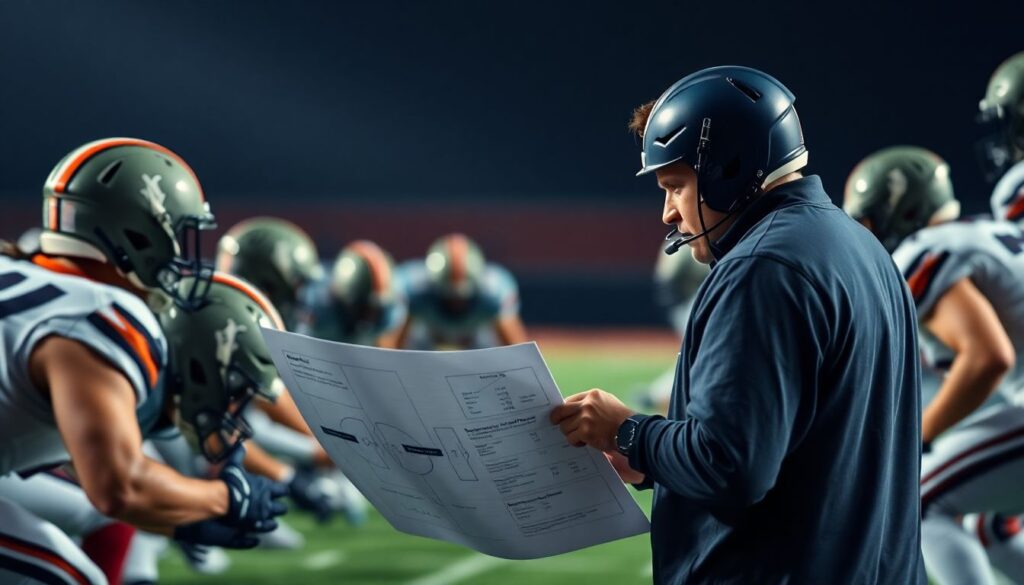
Offensive coordinators can only call what their line can handle. The best offenses build their menu around what the five up front do well, using formations, motions, and cadences to help them. Misunderstanding how offensive linemen shape matchups leads to frustrated play callers and inconsistent performance.
-
Mistake: Assuming the line can handle every dropback concept
Calling long-developing, five-man protections behind a young line invites free rushers and hurried throws. Smart coaches pair the call sheet with the line’s ability to sort pressures and win one-on-ones, adding chips and six-man protections when needed.
-
Mistake: Ignoring how splits, motion, and tempo change the defensive front
Condensed sets, bunch, and motion can force defenses to declare or simplify fronts. When you ignore these tools, you make your line’s job harder, especially vs odd fronts and simulated pressures that disguise the real rushers.
-
Mistake: Treating run and pass protections as unrelated buckets
A coherent system marries run game rules with protections, so line calls feel consistent. If duo, inside zone, and play-action protections all use different language and IDs, your line slows down and makes assignment errors.
-
Mistake: Overloading the line with new tags instead of mastering core rules
Endless tags and “one-off” calls lead to confusion in big games. Better to master a smaller menu of core schemes with clear rules, then tweak formations and motions around those schemes.
-
Myth: Great offensive lines are just “tough guys who want it more”
Toughness matters, but elite lines are defined by communication, repeatable technique, and smart usage within the offense. Film shows that the best units look boringly consistent snap after snap because their rules are clean and understood.
To connect tactics to practice, design your offensive line training program from the call sheet backward: start with your top 5-7 run and pass concepts, then build weekly drills and a focused football offensive line coaching clinic around those patterns, not generic “toughness” work.
Evaluating Performance: Film, Advanced Stats, and Coaching Indicators
Evaluating offensive line play means going beyond “we rushed for a lot of yards” or “we gave up a few sacks.” You need to know who actually won up front, how well the unit communicated, and whether your schemes are putting them in favorable positions or constantly asking them to survive bad matchups.
Simple evaluation pillars you can track, with or without advanced data services:
- Assignment and communication: Count free rushers, unblocked defenders in the run game, and obvious busts. Frequent busts often point to unclear rules, not just poor effort.
- Individual technique: Grade footwork, posture, and hands snap to snap. A lineman may “win” a block on the stat sheet but with sloppy technique that will fail vs better competition.
- Pressure and disruption trends: Track which defenders and which concepts give your line trouble (e.g., interior twist games, edge speed rushers, overload fronts). Adjust your weekly plan accordingly.
- Penalties and negative plays: Holding, false starts, and TFLs often show where linemen are out of position or losing early in the down.
- Scheme fit: Ask whether your favorite calls align with what your line is actually good at. A heavy gap scheme with undersized, athletic linemen may be fighting their nature.
Mini case example:
Suppose you install more wide zone and notice that your left guard’s run blocking “grade” improves on film – better pad level, more consistent reach blocks – but your pressures allowed spike on the left side. On closer review, your vertical-set play-action protections off wide zone ask that same guard to handle more space vs interior stunts without help.
Actionable response:
- Adjust your protections so that play-action off wide zone uses more half-slide toward the weak interior spot.
- Emphasize daily twist-pickup work for that guard-center pair during indy and group periods.
- Update your offensive line playbook download and cut-ups so coaches and players see the connection between call, technique, and result.
To structure this process for a staff, build an internal “online offensive line coaching course” using your own film: short modules on base runs, protections, and common errors, each with coaching points and example clips. Revisit it every offseason to reflect what you actually major in on game days.
Practical answers to common concerns about offensive line play
How do I explain the offensive line’s importance to skill players?
Show cut-ups where great route concepts fail because of pressure and where modest plays become explosives thanks to second-level blocks. Emphasize that every big play starts with the line giving the quarterback and backs time and space.
What should be the first priority in an offensive line training program?
Start with clear rules and communication, then drill base footwork and hand placement. Without shared language and reliable technique, no scheme or playbook change will fix protection busts or inconsistent run fits.
How many core run schemes should a high school or small-college team carry?
Most intermediate-level programs are better off majoring in a small menu of zone and gap schemes they can block vs every front. Master 3-5 concepts with tags before expanding; depth comes from formations and motions, not endless new schemes.
What are the best offensive lineman drills for coaches with limited practice time?
Prioritize combo-to-linebacker drills for the run game and twist-pickup work for pass protection. Add a daily mirror set drill for tackles. These three categories solve most real game problems without overloading players.
How can a coach on a budget improve their offensive line teaching?
Use your own film as your primary resource. Create short teaching cut-ups, attend at least one football offensive line coaching clinic or online clinic each year, and trade film and ideas with local programs instead of chasing expensive systems.
How detailed should an offensive line playbook download be for players?
Keep it simple and visual. Focus on base rules, pictures of fronts, and a few clear examples per concept. Save advanced tags and situational adjustments for in-person meetings, walk-throughs, and film sessions.
How do I measure individual offensive lineman progress during the season?
Track pressures and penalties, plus a weekly technique grade on footwork, pad level, and hands. Compare early-season film to late-season reps to see whether corrections are sticking under real game pressure.