
Clutch performance is the ability to execute at or above your usual level precisely when the stakes, pressure, and consequences are highest. It combines stable skills, pressure-tolerant attention, and emotional regulation into repeatable responses. Clutch is not magic or luck; it is a trainable pattern of cognition, emotion, and behavior under stress.
Core Concepts of Clutch Performance
- Clutch is performing at or slightly above baseline when pressure, consequences, and attention spike.
- It depends on pre-built skills; pressure reveals preparation more than it creates new abilities.
- Cognitive focus narrows onto task-relevant cues while filtering noise and fear-based thoughts.
- Emotional arousal is high but regulated into a productive, not panic, zone.
- Decision-making becomes faster and simpler, using practiced heuristics and clear priorities.
- Clutch reliability can be increased through structured mental training, not just experience.
- Environment, leadership, and team norms either support or sabotage big-moment execution.
Defining ‘Clutch’: Operational Criteria and Common Misconceptions
In practical terms, an action is clutch when three conditions are met: the situation is high stakes, the performer feels real pressure, and the outcome is executed at or above their normal standard. If any of these pieces are missing, you may be seeing something impressive, but it is not truly clutch.
Clutch is different from simple peak performance. Peak performances can happen in low-pressure contexts, like practice or early-season games. Clutch performances are specifically about reproducing or elevating that level when a missed shot, a turnover, or a mistake may decide the season, scholarship, or contract.
Several misconceptions get in the way of training clutch behavior. One myth is that clutch is a fixed personality trait: you are either a big-game player or you are not. Another is that clutch means playing wildly above your normal abilities. In reality, most elite clutch moments are athletes doing what they usually do, just without letting pressure distort their mechanics, decisions, or timing.
A useful operational definition for coaches and anyone building a mental training program for athletes is: “Clutch performance is stable skill expression under unstable conditions.” This shifts focus from mystique to mechanisms you can train: consistency of routines, clarity of cues, and practiced responses to stress.
Mini-scenario: A soccer midfielder normally completes short passes accurately. In a cup final, last minute, same pass, same distance, but the crowd is roaring and fatigue is high. If they still choose the right target and execute cleanly, that is clutch, even if it looks ordinary on video.
Cognitive Mechanisms Activated Under Game Pressure
Under pressure, several cognitive processes become central to whether performance becomes clutch or collapses.
- Attentional narrowing onto relevant cues
Clutch moments reward athletes who can lock onto simple, controllable cues (e.g., “see the rim,” “hit the seam,” “eyes on the ball”). Instead of thinking about the scoreboard or crowd, attention anchors to the next action. Drills that link a single cue to each skill (breath plus visual target) help automate this. - Working memory load and skill automaticity
When athletes overthink mechanics under pressure, they overload working memory and disrupt automatic skills. Clutch performers keep complex motor patterns “offline” by using external focuses (“drive through the line”) rather than internal ones (“move my ankle like this”). A focused sports psychology course online often teaches athletes to shift toward external focus with self-talk scripts. - Threat vs. challenge appraisal
The same situation can be appraised as a threat (“If I miss, I will let everyone down”) or a challenge (“I get to show what I can do”). Clutch performers tend to appraise as challenge, which changes hormonal and attentional responses. Simple reframe scripts before big plays train this tilt toward challenge. - Use of simple decision rules (heuristics)
In big moments, complex analysis is too slow. Clutch athletes rely on 1-2 clear rules per role: “If single coverage, attack; if help comes, kick to corner.” A mental performance coach for athletes will often work with staff to reduce playbooks to a handful of if-then rules specific to late-game situations. - Short pre-action routines
Micro-routines (breath, cue phrase, visual focus) provide a cognitive anchor between chaos and execution. They compress pressure into a simple sequence the athlete controls. Rehearsing these routines under fatigue and simulated noise makes them more robust in real playoff settings.
Mini-scenario: A volleyball setter in a tie-break set repeats the same two-word cue and single breath before each serve receive. The scoreboard changes, but their mental script does not; this cognitive consistency supports clutch execution.
Emotional Regulation, Arousal Curves and Performance Zones

Clutch performance is not about removing emotion; it is about steering arousal into a productive range where focus, speed, and coordination are optimal. Too low and the athlete is flat; too high and they are jittery, rigid, or impulsive.
One practical idea is the “personal performance zone” rather than a generic curve. Each athlete has a different preferred intensity for big moments. Some need to calm down, others need to fire up. Assessing this zone can be part of a structured mental training program for athletes, using heart-rate awareness, subjective reports, and performance video under varying stress.
Clutch emotional regulation often uses three tools: breathing patterns to modulate physiological arousal, self-talk to direct interpretation (“This is exciting” vs “This is terrifying”), and imagery to normalize the situation (“I have been here before” visualizations). These strategies are more effective when rehearsed months before playoffs, not invented in the tunnel before a final.
Below are several typical high-pressure scenarios with matching regulation strategies.
- Late-game free throw with crowd noise
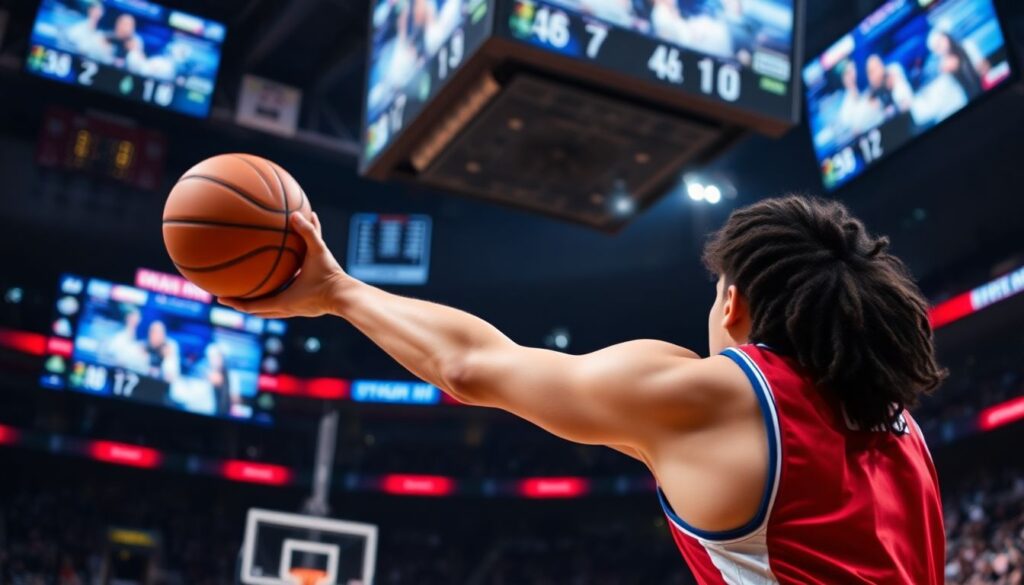
Scenario: Basketball player stepping to the line in a hostile arena, final seconds. Emotion: Heart racing, hands shaky, intrusive thoughts about missing.
Application: One cleansing exhale, two-count inhale, four-count exhale; eyes to back rim; cue phrase like “smooth and high”; commit to routine, not result. - Penalty shootout in soccer
Scenario: Decisive kick in knockout tournament. Emotion: Fear of being the villain, replaying past misses.
Application: Pre-decided target (no last-second changes), quick breath pattern, “see it, feel it, do it” imagery during walk-up; focus on contact quality, not keeper movement. - Gymnast on balance beam in championship
Scenario: Final routine with team score on the line. Emotion: Tight muscles, fear of falling in front of judges and cameras.
Application: Grounding with feet sensation on beam before mount, quiet “one skill at a time” self-talk, rhythm focus (counting internally), imagery of previous clean routines. - Pitcher protecting a one-run lead
Scenario: Runners on base, tying run in scoring position. Emotion: Anger at prior mistake, anxiety about next pitch.
Application: Use rubber as reset line, full exhale before stepping on, focus on glove target and pitch shape; replace outcome thoughts with simple command like “down in zone.” - Esports player in elimination map
Scenario: Best-of series, final map, online audience, and teammates on voice chat. Emotion: Over-alert, over-communicating, hands tense on mouse.
Application: Pre-round breathing, limited key phrases in comms, focus on next objective (site, angle, cooldown timing), post-death reset mantra.
Mini-scenario: A tennis player arrives at a tiebreak feeling panicked. Their coach has them use a between-point routine: walk to back fence, one deep breath, repeat a short phrase, choose a serve target. Over time, this turns the tiebreak into familiar territory instead of a crisis.
Decision-Making, Biases and Rapid Information Processing
Clutch is not just about mechanics; it is also about the quality and speed of decisions when cognitive load is maximal.
Decision strengths in clutch performers
- Prioritization under time pressure: They know which information truly matters in the moment (matchups, time, spacing) and ignore irrelevant data (crowd reactions, prior mistake).
- Use of pre-planned options: They choose from a small menu of rehearsed actions instead of inventing new plays on the spot.
- Trust in trained instincts: They allow automatic pattern recognition to guide choices rather than second-guessing every option.
- Role clarity: They decide in line with role (“create,” “space,” “defend”), reducing conflict and hesitation.
Common decision-making pitfalls under pressure
- Outcome bias: Dwelling on what a miss would mean, instead of what a successful execution requires.
- Loss aversion: Playing not to lose the lead, leading to overly conservative choices that deviate from the team’s identity.
- Hero ball bias: Forcing difficult shots or plays to be the hero, ignoring better-positioned teammates.
- Recency bias: Overweighting the last mistake or last made shot, and changing strategy based on emotion rather than plan.
- Paralysis by analysis: Adding extra options in crucial moments, overwhelming working memory and slowing reactions.
Mini-scenario: In an American football two-minute drill, the quarterback has a pre-established rule: if primary read is covered, immediately hit check-down to the flat and stop the clock. Training this rule in practice turns a complex decision tree into a simple, clutch-capable sequence under game pressure.
Evidence-Based Training Protocols to Cultivate Clutch Reliability
Several practical training methods help athletes become more clutch without turning training into artificial theatrics. These protocols can be layered into normal practice design and individual routines.
- Pressure repetition drills
Structure drills where consequences are meaningful (extra conditioning, unit wins or losses, filmed and reviewed) and success criteria are clear. For example, “team must make 8 of 10 free throws at the end of practice or repeat the final drill.” The aim is to simulate the stress of “this attempt matters” in a controlled space. - Scripted big-moment simulations
Regularly rehearse end-of-game scenarios with time, score, and context (“down two, no timeouts, baseline out-of-bounds”) rather than saving them for playoffs. Debrief afterward: What did you feel? What worked mentally? What will you change? This builds a mental archive to draw from in real games. - Personal clutch routines
Help each athlete design a simple routine for the 30-60 seconds before likely clutch events (e.g., penalty, final serve, last possession). Include breathing, cue words, and a targeted piece of imagery. A sports psychologist near me or remotely can guide athletes in tailoring these routines to their personality and sport. - Reflection and pattern tracking
Have athletes review big moments from film and journal emotions, thoughts, and behaviors. Look for patterns: do they rush, hold back, shift technique? Use this data to refine cues and routines. Over time, the athlete sees clutch not as magic, but as a predictable, improvable skill set. - Coaching education and alignment
Clutch training works best when staff are aligned. Coaches benefit from continuing education, including an online sports psychology degree or shorter specialized modules, to understand how language, practice design, and feedback influence big-moment behavior.
Mini-scenario: A college coach builds a monthly “clutch lab” session: short, intense scrimmages starting with a playoff-like scenario. Athletes must execute pre-planned routines before key plays. Over a season, the same situations feel less novel and more like another version of practice.
Leadership, Team Processes and Environmental Triggers in Big Moments
Clutch performance is not only an individual property. Team dynamics, leadership behaviors, and the environment either scaffold or sabotage clutch responses. Leaders shape how pressure is interpreted: as exposure and danger or as opportunity and expression.
Helpful leadership behaviors in big moments include: communicating in short, concrete phrases; reinforcing process goals (“same defensive rules”) rather than outcome goals; modeling calm body language; and directing attention to the next play instead of lingering on the last mistake. Team norms around blame, risk-taking, and emotional expression also determine whether athletes feel free to commit fully when it matters most.
Environment design includes everything from timeout huddles to locker-room messaging. Consistent rituals (same warm-up track for decisive sets, same pre-game meeting structure) create familiarity that reduces perceived chaos. In the digital age, many staffs even coordinate with a mental performance coach for athletes via remote sessions to align leadership messages before tournaments.
Mini-scenario (team case): A women’s basketball team repeatedly collapses in conference finals. Staff review film and notice frantic, conflicting instructions in late timeouts. They redesign their approach: in all high-pressure situations, only one coach speaks; messages are capped at three points; one player leader repeats the main cue. Over time, late-game execution stabilizes, and what was once a “curse” looks more like improved clutch structure.
Practical Clarifications for Applying Concepts
How can amateur athletes start training clutch without a specialist?
Begin by adding small pressure elements to normal drills: scorekeeping, public accountability, or simple consequences. Pair these with a repeatable pre-action routine and a single focus cue. Reflect afterward on what you felt and what helped, then adjust. Consistency matters more than intensity.
Is it worth paying for a sports psychologist near me versus learning online?
Working with a local specialist offers tailored assessment, in-person observation, and collaboration with your coaches. However, many athletes benefit from hybrid models that combine occasional in-person sessions with structured digital tools or a sports psychology course online. Choose the option that you will actually use consistently.
What is the difference between being clutch and being lucky?
Luck is about uncontrollable events breaking your way; clutch is about your response when they do not. Over time, clutch performers show a pattern of stable execution across many high-pressure situations, whereas luck fluctuates without pattern. Video and stats over seasons reveal the difference.
Can younger athletes develop clutch skills, or is it too early?
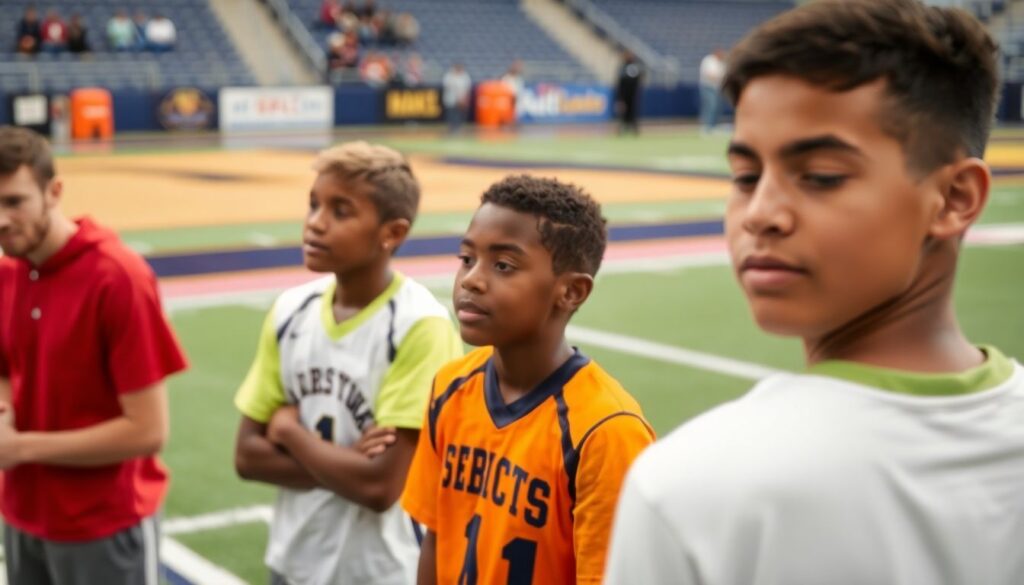
Younger athletes can absolutely learn basic clutch tools: simple routines, breathing, and challenge-framing. The key is to keep scenarios age-appropriate and avoid dramatizing pressure. Introducing these skills early makes playoffs and showcases feel like an extension of normal training, not a completely new world.
How much of clutch performance is mental versus physical conditioning?
Both are tightly linked. Poor conditioning magnifies pressure because fatigue disrupts mechanics and decision-making. Meanwhile, mental skills allow athletes to use their physical capacity when it matters most. Treat clutch training as an integration of physical preparation, tactical clarity, and psychological tools.
Do online sports psychology degree programs help coaches with clutch training?
An online sports psychology degree can give coaches a strong theoretical base and practical tools for designing pressure practices, communication strategies, and mental routines. Many programs include modules on performance under stress and decision-making, which translate directly into more intentional clutch-development work.
How do I know if my mental training program for athletes is actually improving clutch?
Track specific behaviors and outcomes in defined high-pressure situations over time: free-throw percentage in last two minutes, turnovers in close games, or execution of set plays. Combine this data with athlete self-reports about confidence and clarity. Look for gradual trends, not single-game proof.
Action Checklist for Coaches and Practitioners
- Define clutch for your team with simple, observable criteria tied to your sport and roles.
- Install short, individualized pre-action routines for your athletes and rehearse them under mild pressure.
- Design recurring practice scenarios that mimic end-of-game context, then debrief emotions and decisions.
- Align staff communication for big moments: who speaks, what is said, and how long it takes.
- Educate yourself (courses, workshops, or an online sports psychology degree) to keep refining your pressure-training design.