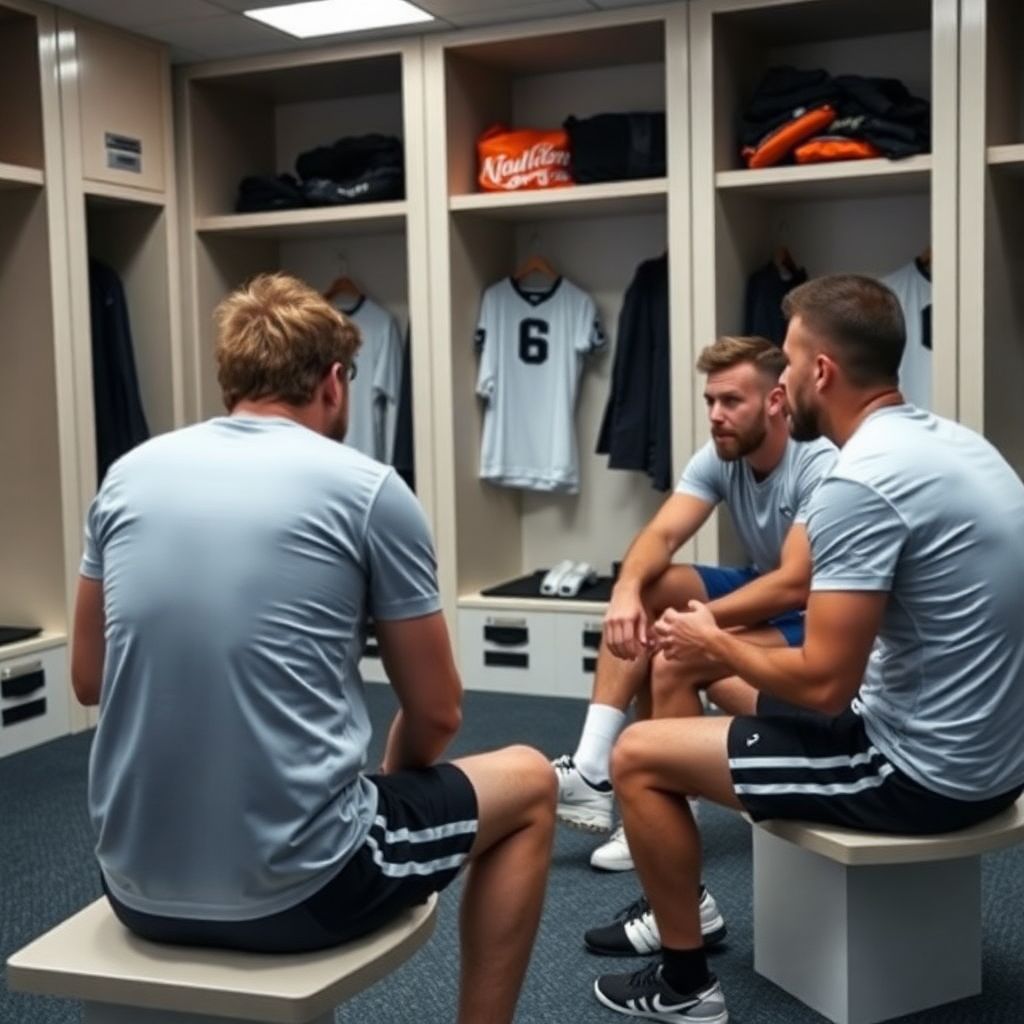
Mental performance under pressure improves when players use simple, repeatable routines: clear pre-game plans, in-competition reset tools, structured slump reviews, and firm social media boundaries. Combine self-monitoring with basic communication scripts, then add professional support such as sports psychology for athletes under pressure when issues persist or interfere with daily life.
Core Mental Skills to Monitor

- Ability to reset quickly after mistakes or bad calls.
- Consistency of focus from start to finish, not just at key moments.
- Response to pressure: tightening up versus staying committed and aggressive.
- Self-talk tone when tired, trailing, or playing poorly.
- Emotional swings related to social media feedback or public opinion.
- Willingness to communicate needs to coaches, staff, and teammates.
- Regular tracking of mood, sleep, and confidence across training cycles.
Pre-Game Routines That Reduce Performance Anxiety
These routines suit athletes who know their skills in practice but struggle to perform on demand, especially when expectations or cameras are present. They are not a replacement for medical or psychological treatment; if you experience panic symptoms, self-harm thoughts, or functional impairment, seek an online sports psychologist for anxiety and confidence or local clinician immediately.
Simple Pre-Game Checklist (15-30 minutes)
- Clarify today’s job, not your identity
Write a one-line role for this game, for example: “Win first contacts and communicate early.” Avoid outcome goals like “I must score” and keep focus on controllable actions. - Use a short, repeatable breathing routine
For 2-3 minutes, inhale through the nose, exhale slightly longer through the mouth. Count breaths to 6-10. If you feel dizzy or uncomfortable, return to normal breathing and simply notice sensations without judgment. - Run a mental walk-through
Close your eyes and picture 3-5 common situations you will face today: early nerves, a mistake, a great play, a hostile crowd. See yourself using your reset cue (word, breath, body action) and returning to the next play. - Lock in a “when-then” script
Choose one sentence for today: “When I feel tight, then I exhale, look up, and pick one aggressive play.” Repeat it quietly a few times to make it automatic under pressure. - Decide your social media window
Commit to no social media from a set time before the game (for example, during travel and warm-up) until after your post-game debrief. If needed, ask staff or family to help you hold this boundary.
In-Match Strategies for Staying Present Under Pressure
To apply sports psychology for athletes under pressure in real time, you need only your body, a few pre-chosen words, and simple awareness habits. No special devices are required, but having a notebook and support staff who understand your routines helps you repeat these strategies from match to match.
Tools and Conditions That Help
- One reset cue for your body (for example, shaking out hands, adjusting jersey, or tapping your leg).
- One reset cue for your mind (a short phrase such as “Next play” or “See it, trust it”).
- Knowledge that coaches and key teammates support your routine and do not misread it as disengagement.
- Agreement with staff that timeouts, breaks, or substitutions can be used for quick breathing resets when needed.
- A shared language with any mental performance coaching for professional athletes on your staff, so everyone reinforces the same tools.
In-Match Focus Actions
- Use a three-part between-play script
After each play: (1) Notice the result without judgment; (2) Take one breath plus your physical reset cue; (3) Ask, “What now?” and pick a single next-action focus. - Break pressure into tiny targets
In big moments, shrink your focus to one simple cue: your target, your first step, or your contact point. Avoid thinking about score, crowd, or reputation. - Handle mistakes with a fixed response
When you error: say your reset word, do your physical cue, briefly review what to adjust, then face forward. The response stays the same whether the mistake is small or huge. - Anchor to sensory details
If your mind races, notice three things you can see, two you can feel (feet, grip, jersey), and one you can hear. This keeps you in the present instead of in worries about outcomes. - Use brief “micro-timeouts”
At natural breaks, lower your shoulders, exhale, and re-commit to your next-action cue. Keep it under ten seconds so it fits the flow of play.
Breaking Slumps: Assessment and Structured Recovery Plan
Before following the step-by-step plan for how to overcome performance slumps in sports, prepare safely with this short checklist so you do not overload yourself mentally or physically.
Pre-Work Checklist Before Addressing a Slump
- Confirm you are medically cleared to train and play; if not, prioritize medical guidance.
- Write down how long the slump has felt present and the specific situations where it shows most.
- Inform a trusted coach or staff member that you are working a structured plan and want their observations.
- Decide in advance a minimum time window you will test this plan before judging yourself again.
- Identify one support person outside sport (family, friend, counselor) to check in with weekly.
Step-by-Step Slump Recovery Plan
- Define the slump in concrete terms
Describe what has changed: confidence, decision speed, mechanics, or energy. Keep it behavioral, not about your worth as a person or player.- Write 3-5 specific patterns, such as “hesitating on open shots” or “avoiding big swings late in sets.”
- Separate controllable and uncontrollable factors
List what you can directly influence (sleep, effort, shot selection, routines) and what you cannot (weather, referee decisions, fan reactions).- Circle the controllables; these will drive your daily plan.
- Return to a “practice identity” in games
Pick 2-3 behaviors you do well in training and make them your game identity for a while, even if stats dip.- Examples: “Sprint every transition,” “Call early on defense,” “Commit fully to first read.”
- Install a small, repeatable confidence task
Every session, complete one task that is almost guaranteed success: a simple pattern drill, a basic serve, or clean defensive reps.- End each practice by noticing this success consciously instead of only replaying errors.
- Schedule mini-review and reset blocks
Twice a week, take 10-15 minutes to review video or notes neutrally: what improved, what stayed stuck, what you will test next.- Use a consistent format: “Keep / Adjust / Drop” for behaviors, not identities.
- Decide when to bring in specialist support
If your mood, sleep, or relationships worsen, or the slump persists across multiple cycles, involve a specialist such as mental performance coaching for professional athletes, a team clinician, or an independent provider.- Online options make access easier if local support is limited.
Managing Social Media: Boundaries, Messaging, and Timing
Thoughtful boundaries and routines can protect mental health while still using platforms for brand and connection. Use this checklist to review whether your current approach resembles safe, sustainable social media management services for athletes and teams or leans toward constant pressure and distraction.
- You have clear “off-hours” when you do not check notifications, especially before games and at night.
- Your inner circle (agent, family, staff) understands and supports your boundaries instead of pushing constant posting.
- You avoid searching your own name or reading comment sections after emotionally intense games.
- Your posts are planned in advance when possible, not purely reactive to results or critics.
- You have a simple rule for responding to negativity, such as “Do not engage directly right after games.”
- Your content goals (community, sponsors, personal expression) are written down and reviewed with trusted advisors.
- You delegate as much as possible to professionals or tools when stakes are high, similar to social media management services for athletes and teams.
- You regularly check whether social media leaves you energized, neutral, or drained; you adjust usage based on that signal.
- You understand what topics are off-limits for you emotionally and avoid posting about them in heated moments.
- You have at least one non-digital way to celebrate wins and process losses before going online.
Team Dynamics and External Expectations: Communicating Needs
Pressure is amplified when roles and expectations are unclear. Athletes often know what they feel but struggle to express it in ways coaches and teammates can act on. These common mistakes quietly increase stress and make mental skills harder to use when it matters most.
- Speaking only when frustrated instead of scheduling calm check-ins with coaches.
- Expecting others to “just know” how pressure affects you without ever explaining your signs and needs.
- Keeping mental struggles private until they explode in performance or conflict.
- Agreeing to every media or promotional request without considering recovery and preparation time.
- Using vague language such as “I’m not feeling it” instead of specific requests like “Can we walk through my role on late-game possessions?”
- Comparing your role or attention to teammates publicly instead of addressing it directly with staff.
- Ignoring early signs of burnout because of fear that asking for rest will be seen as weakness.
- Allowing family or friends to speak for you in public about playing time or coaching decisions.
- Not involving mental performance staff early when tension appears; waiting until relationships are already damaged.
- Assuming coaches or clubs are against mental support instead of exploring what resources are actually available.
Metrics and Habits: Tracking Mental Health and Progress
Different athletes prefer different tracking tools to support mental game work. Choose an approach that feels sustainable and safe; the best method is the one you are willing to use consistently across training cycles and competitive seasons.
Option 1: Simple Daily Log
Use a notebook or notes app to record three scores each day: mood, confidence, and focus, along with one short sentence about what helped or hurt. This low-tech method works well when you want privacy and minimal data complexity.
Option 2: Structured Digital Tracking With Support Staff
Work with coaches, trainers, or mental performance coaching for professional athletes staff to log mental and physical metrics together, such as sleep quality, perceived stress, and training load. This approach suits teams that already share performance data and want to integrate mental trends.
Option 3: Guided Support With a Professional

Partner with an online sports psychologist for anxiety and confidence or in-person specialist who provides regular check-ins and shared tracking templates. This is useful when you need accountability, have recurring anxiety or mood concerns, or want help interpreting data safely.
Option 4: Periodic Mental “Audit” Around Key Phases
If you dislike daily logging, evaluate your mental game at clear points: start of season, mid-season, playoffs, and off-season. At each point, review focus, confidence, enjoyment, and social media impact, then set one or two targeted habits until the next checkpoint.
Quick Answers to Recurring Mental Game Issues
How can I calm nerves right before a big game?

Use a short breathing routine, a clear job description for the day, and a “when-then” script such as “When I feel tight, then I exhale and focus on my first action.” Keep your plan the same from game to game so your body learns the pattern.
What is the safest way to start working on how to overcome performance slumps in sports?
Begin by defining the slump in specific behaviors and separating controllable from uncontrollable factors. Then test a small, repeatable plan over a set time window instead of changing everything at once or judging yourself after every single game.
When should I consider professional mental support instead of only self-help tools?
Seek help if anxiety, low mood, or sleep problems persist, if you feel hopeless or stuck, or if performance issues start affecting relationships and daily life. Options include team specialists, independent providers, or an online sports psychologist for anxiety and confidence.
How much should I use social media on game days?
Choose a clear no-social window from pre-game until after your initial post-game debrief. Plan any necessary posts in advance and avoid reading comments when emotions are high; review your own rules with staff or family so they can help you stick to them.
What can I say to coaches about my mental routines without sounding weak?
Frame it as performance management: explain that using a breathing routine or reset cue helps you stay aggressive and consistent. Offer specific language such as “When you see me adjust my jersey and look up, that’s me resetting so I can lock into the next play.”
How do I manage expectations from family, media, and fans?
Decide in advance what topics you will discuss publicly and what stays inside the locker room. Communicate clear boundaries to family and agents, and limit exposure to media or comments when you are already emotionally taxed or in the middle of a slump.
Can mental skills really help if my main problem is technical?
Mental skills do not replace technical work, but they help you access your current skill level more consistently under pressure. Use them alongside technical coaching so that training changes have a better chance to show up in games.
Комментарии