
Transfer portal chaos describes the rapid, unpredictable reshaping of college football rosters as players move freely between schools during set windows. Programs that manage evaluation, retention, and NIL alignment win; those that react slowly or misjudge fits lose depth, continuity, and leverage. Future success depends on disciplined roster models, not headlines.
Core Dynamics Driving Transfer Portal Turbulence
- Roster turnover is now continuous, not cyclical, forcing constant depth-chart recalculation.
- Evaluation speed and fit matter more than star ratings or historical prestige.
- NIL structures deeply influence which schools appear as college football teams winning the transfer portal.
- High-usage positions (QB, OL, CB, WR) drive disproportionate volatility.
- Smaller-budget programs must target undervalued roles and multi-year eligibility.
- Public tools like college football transfer portal rankings and trackers shape perception but can mislead strategy.
How the Transfer Portal Changed Roster Construction
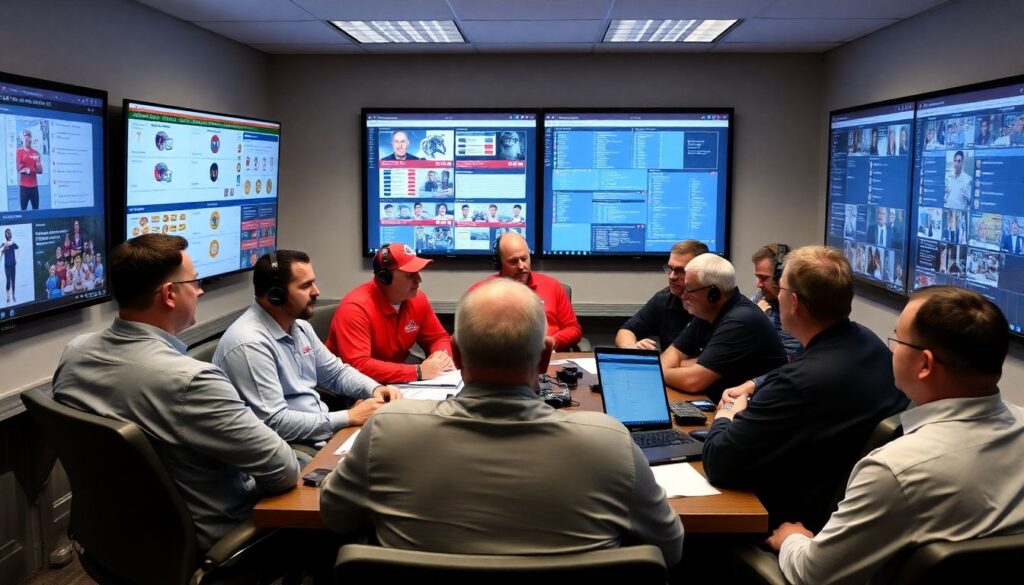
The transfer portal turned roster management from a four-year, high-school-centric pipeline into a blended marketplace of multi-stop careers. Instead of building almost exclusively through high school recruits, staffs now balance prep prospects, junior college players, and proven college performers looking for new opportunities.
In practice, this means every position group is subject to annual disruption. A portal entry instantly becomes a public option for all schools, and staff must weigh talent, scheme fit, culture, academic standing, medical history, and NIL expectations in compressed decision windows. College football transfer portal rankings amplify the noise around these decisions but cannot capture each program's unique context.
The portal also changes timelines. Quarterbacks and other impact starters can alter win totals immediately, while depth players help stabilize practice quality and special teams. For resource-limited programs, the most sustainable path is often targeting multi-year eligibility players who can be developed, rather than chasing the best players in NCAA transfer portal 2024 who command heavy competition and NIL demand.
- Define a clear yearly target for portal additions by class and position before windows open.
- Prioritize players with at least two seasons of eligibility at positions where you cannot reliably win in high school recruiting.
- Separate public hype from internal grades; treat rankings as a data point, not a decision driver.
Immediate Winners: Programs That Capitalized Quickly
Programs that adjusted early to the portal share several operational traits rather than a single schematic or brand advantage. Their edge comes from process: evaluation, speed, alignment with NIL, and roster modeling that anticipates exits before they occur.
- Aggressive yet selective evaluation – Winning staffs built dedicated portal evaluation units that pre-grade potential entries via film and data, then move quickly when names appear, focusing on scheme fit and role clarity over star reputation.
- Coherent NIL messaging – Successful collectives provide predictable, tiered support. This clear structure helps land top transfer portal commitments by school, because players understand expectations and compensation bands up front.
- Transparent depth-chart communication – Portal targets increasingly ask for specific role vision. Winners present honest paths to snaps, special teams, and leadership, and back it with past usage patterns.
- Data-informed position targeting – Instead of filling every minor depth concern, they concentrate portal capital on premium-impact roles (QB, tackle, edge, corner) while backfilling others via high school recruiting.
- Integrated academic and compliance review – Academic, admissions, and compliance teams are looped in on day one, shortening time to enrollment and reducing failed pursuits.
- Options for lower-resource programs – Smaller budgets win by clearly defining a niche (e.g., developmental linemen, older specialists) and pitching multi-year stability instead of bidding wars for headline talents.
- Map your last three classes and identify which positions most benefited from transfers versus high school recruits.
- Build a simple, written NIL/role pitch template that can be customized within hours for any target.
- Create a "fast track" internal path that routes promising portal leads simultaneously to coaches, compliance, and academics.
Immediate Losers: Programs Exposed by the New Market
Portal turbulence has punished programs that relied on inertia and brand power. Several common profiles are repeatedly stressed by high outbound transfers, failed pursuits, or misaligned acquisitions that clog scholarship counts without on-field impact.
- Slow-response evaluators – Staffs that wait for full staff meetings or in-person visits before deciding often lose targets in days. Meanwhile, their own players may quietly explore options, leading to late, unplanned exits.
- Depth-chart inflexibility – Rigid adherence to seniority or previous recruiting rankings can alienate both current players and new transfers. This misalignment shows up clearly in any transfer portal tracker college football rosters tool, where outgoing starters cluster at key spots.
- Overreliance on short-term rentals – Plugging multiple one-year transfers into a position group can leave a void the next season, especially when high school recruiting at that spot has lagged.
- Poor academic or admissions alignment – Pursuing players who cannot realistically clear institutional hurdles wastes time and erodes staff credibility with agents, families, and high school coaches.
- Resource-constrained programs copying power models – Smaller schools that chase marquee names without realistic NIL backing frequently finish as "finalists" without signings, losing time they could spend on attainable fits.
- Audit the last two cycles: how many transfers played meaningful snaps relative to those who occupied scholarships only?
- Identify one or two position groups where you must shift from one-year rentals to multi-year players to avoid yearly rebuilds.
- Document the three most common reasons portal pursuits fail at your school and design screens to catch them earlier.
Recruiting Strategy Shifts and Compliance Implications
Portal-era recruiting blends traditional high school pipelines with targeted college acquisitions. Staffs now recruit their own roster year-round, maintaining communication, clear role definitions, and development plans to preempt surprise entries. Simultaneously, they track potential additions at other schools, building relationships within the bounds of tampering rules.
Compliance teams face a heavier load, as they must monitor contact timing, NIL inducement concerns, academic eligibility on transfer, and conference- or institution-specific restrictions. Even when best players in NCAA transfer portal 2024 conversations dominate media, an ineligible or non-admissible player creates reputational and operational cost if pursued recklessly.
Strategic recruiting advantages in the portal era
- Ability to patch specific schematic needs with experienced players instead of waiting for development arcs.
- Opportunity to re-recruit former prep targets who initially chose different schools, using updated roles and NIL frameworks.
- Flexibility to reshape culture quickly by adding mature leaders at thin position groups.
- For limited-resource programs, a chance to land undervalued athletes blocked on deep rosters at elite schools.
Constraints and compliance guardrails
- Strict transfer windows and conference rules limit when contact and commitments can be formalized.
- Tampering concerns restrict proactive outreach to players not yet in the portal, even if mutual interest exists.
- Institution-specific admissions, credit transfer, and academic standing rules may disqualify otherwise attractive prospects.
- NIL conversations must focus on permissible representations of available opportunities, not promises tied directly to enrollment.
- Schedule quarterly training for coaches on current portal and NIL regulations, including real-case scenarios.
- Create a shared recruiting board that shows high school, JUCO, and portal targets in one view to avoid redundant efforts.
- For schools with lean budgets, formalize relationships with a few trusted high school and JUCO programs as primary pipelines.
Data Snapshot: Mobility Trends, Position Hotspots, and Net Gains
While exact numbers change every year, several patterns emerge from public databases and internal analytics. Mobility levels are highest at offensive skill positions and defensive back, where players can often adapt more easily to new systems. Trench positions show meaningful movement but are constrained by body type scarcity and development timelines.
Programs increasingly study net gains and losses by position and eligibility class, not just raw portal counts. They compare outgoing snaps to incoming snaps, multi-year control, and projected impact. Tools that resemble college football transfer portal rankings and team-by-team dashboards help visualize this, but interpretation still depends on scheme and culture.
| Category | Typical "Winner" Profile | Typical "Loser" Profile | Key Roster Metric |
|---|---|---|---|
| Talent flow | Net positive starters added at premium positions | Net loss of experienced contributors without equal replacements | Change in two-deep experience at QB, OL, CB, WR |
| Eligibility balance | Mix of one-year impact players and multi-year depth | Heavy reliance on one-year rentals at multiple spots | Distribution of classes within each position group |
| Development pipeline | Portal used to complement, not replace, high school recruiting | High school recruiting lagging where portal volume is highest | Snaps played by homegrown vs. transfer players |
| Resource usage | NIL and visits concentrated on clear impact targets | Significant time spent on targets unlikely to clear admissions or NIL hurdles | Hit rate of "priority" targets who actually enroll |
Misinterpretation of these patterns fuels several myths: that all portal activity is good, that more transfers always mean better rosters, or that top transfer portal commitments by school will directly translate to wins. In reality, fit, eligibility, and opportunity shape outcomes more than raw star power.
- Track not just how many transfers you add, but how many cumulative snaps and remaining seasons of eligibility they bring.
- Flag any position room where more transfers than high school signees have been added over multiple cycles for deeper review.
- For budget-conscious programs, prioritize roles where portal hit rates historically translate into playing time, rather than chasing every available name.
Looking Ahead: Predictable Outcomes and Strategic Responses
Portal dynamics are unlikely to stabilize in the near term. As NIL structures mature and waivers evolve, player movement will remain a core feature of roster building. The programs best positioned for the future are those treating the portal as one input in a larger planning model, not a shortcut.
A simple roster model many staffs use resembles pseudocode:
For each position: project exits (graduation + likely portal), set target scholarship count, reserve a small band for portal, and backfill the rest via high school or JUCO. Recalculate after each window using updated portal tracker college football rosters data.
For programs with limited resources, the alternative path is deliberate specialization: identify two or three position groups where you can consistently develop under-recruited players, use the portal sparingly for must-fill needs, and build a reputation as a stable landing spot instead of a stopover.
- Establish written rules for when you will and will not use the portal for each position group.
- Review your last few seasons to identify where portal additions clearly moved the win needle versus merely filled numbers.
- For lower-resource staffs, focus scouting on players with multiple years left who are blocked but productive in limited snaps.
Roster Strategy Self-Audit Checklist
- Do we have a clear, documented portal plan by position and eligibility year, including alternatives for low-resource scenarios?
- Can we explain why each recent transfer addition fits our scheme, culture, and NIL structure better than a high school signee would?
- Are compliance, academics, and recruiting aligned on realistic target profiles before portal windows open?
- Do our internal evaluations ever overrule public rankings when they conflict, and is that process explicit?
- Have we identified one or two position groups where we will consciously limit portal use to protect development pipelines?
Common Practitioner Concerns About Portal Impact
How much should we trust public transfer portal rankings when building our board?
Use college football transfer portal rankings as a starting layer, not a decision rule. They can highlight potential targets but rarely account for your scheme, culture, medical standards, or academic filters. Always re-grade players on your own criteria before committing limited visits or NIL resources.
What is a realistic portal usage level for a smaller-budget program?

Resource-constrained programs usually benefit from a narrow, high-intent approach. Target a few undervalued players with multi-year eligibility at positions where you struggle in high school recruiting, instead of spreading efforts across many high-profile names who are unlikely to enroll.
How do we avoid constant one-year roster patching?
Set position-specific rules on minimum remaining eligibility for portal targets and maintain a healthy high school pipeline at key spots. Use one-year players only when you have a clear succession plan behind them, not as an annual habit.
What data should we track to evaluate whether we are "winning" the portal?
Look beyond headlines about college football teams winning the transfer portal. Track snaps played, starts, and remaining eligibility of incoming transfers compared to those who left. Evaluate hit rate on priority targets and how additions affected depth and performance in specific position rooms.
How can we guard against tampering accusations while still being proactive?
Establish clear rules for when contact can begin, document all communication, and train staff regularly on changing regulations. Focus relationship-building on high school and junior college coaches, and engage potential transfers only after they are officially in the portal.
Where do high school recruiting and the portal intersect most effectively?
They intersect when you maintain long-term relationships. A prep prospect who chose another school may re-enter the market later; keeping genuine contact allows you to re-recruit with updated roles, as long as interactions remain compliant and respect the player's current institution.
How should we think about position priorities in future portal cycles?
Study your past few seasons and league trends to see where portal additions have delivered the most impact. Common hotspots include quarterback, offensive line, and defensive back, but your own scheme may shift those priorities. Build a tiered list by impact potential, not just availability.
Комментарии