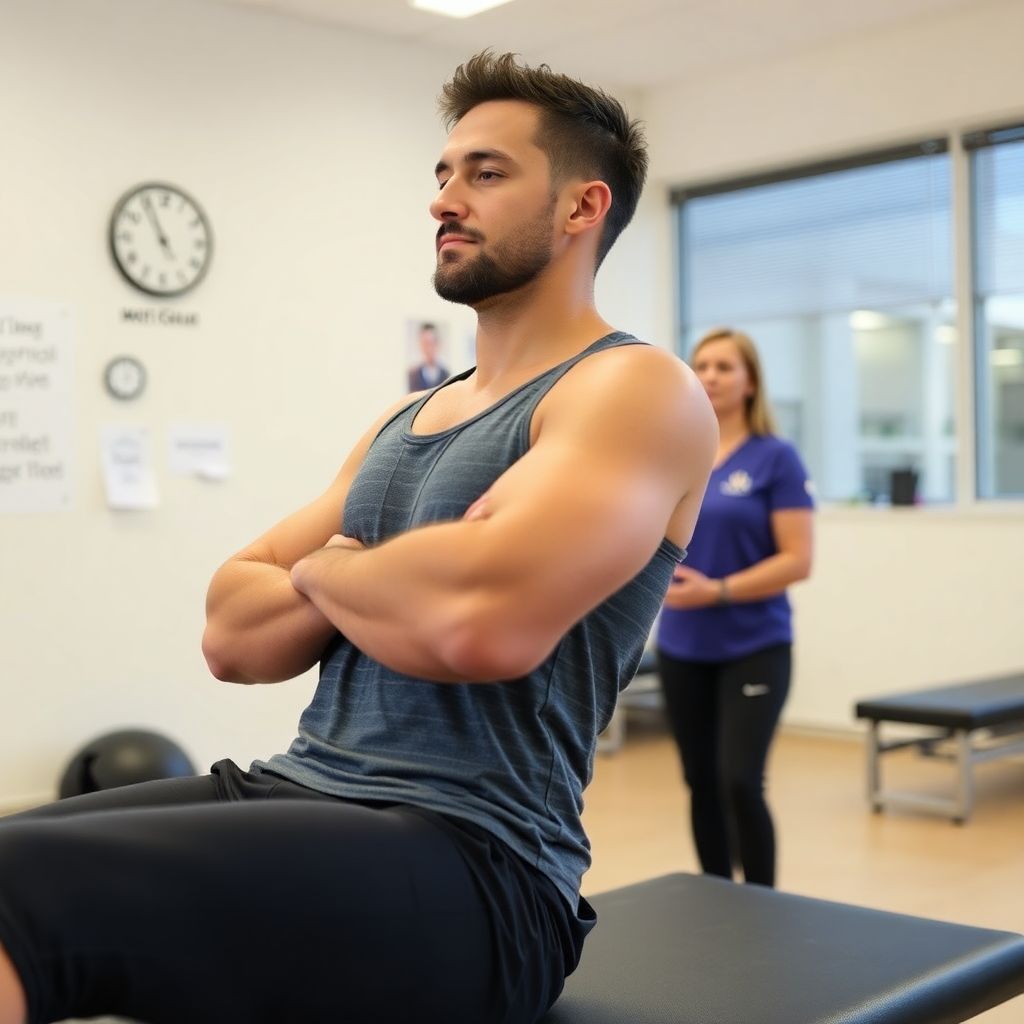
Mental recovery from a major sports injury means treating your mind like part of rehab: stabilizing emotions, protecting your identity as an athlete, and building daily mental routines that match your physical plan. By using simple checklists, clear communication, and realistic goals, you can return with more confidence and resilience.
Locker-Room Essentials: A Mental Recovery Checklist
- Accept that mental rehab is as legitimate as post injury physical therapy programs.
- Schedule regular mental health support for athletes with injuries, not just crisis visits.
- Link every physical session to one small mental skill you will practice.
- Stay connected with at least one teammate and one clinician you trust.
- Track mood, sleep, and pain alongside training milestones.
- Use brief scripts to talk about your injury instead of avoiding the topic.
- Plan for setbacks in advance so they feel expected, not like failure.
Understanding the Psychological Impact of Major Sports Injuries
Quick prep before you dive into the mental side
- Notice one word that best describes how you feel about your injury today.
- Write down your sport, position, and how long you have played.
- List two things you miss most about competing.
- Identify one person who takes your injury seriously and listens.
- Promise yourself you will not judge any reaction as weak or wrong.
A major injury does not only damage tissue; it disrupts your routines, relationships, and sense of self. Many athletes experience shock, anger, sadness, anxiety, or even relief. These reactions are common and usually temporary, but they feel intense because sport often anchors your identity, social life, and daily structure.
This guide is suitable if you are medically cleared to begin or continue rehab, can follow simple written instructions, and are not in immediate crisis. It is not enough on its own if you have thoughts of self-harm, severe depression, or uncontrolled substance use; in those cases, urgent professional support is required.
Typical mental stressors after injury include loss of role on the team, fear of being replaced, worries about scholarships or contracts, and doubts about ever returning to pre-injury performance. These can show up as irritability, withdrawal, trouble sleeping, over-Googling symptoms, or skipping appointments for sports injury rehabilitation near me because facing rehab feels overwhelming.
Case vignette: A college soccer defender tears an ACL. In the first month, she feels useless at practice, stops answering team messages, and spends nights watching highlight videos from before the injury. Understanding that she is grieving a real loss helps her shift from self-criticism to self-compassion and engage more fully in rehab.
Early-Phase Mindset: Coping with Shock, Loss, and Athletic Identity
Simple tools you will need in this phase
- A notebook or notes app for short reflections and tracking.
- Contact information for your medical team and a sports psychologist for injury recovery, if available.
- One quiet spot where you can sit undisturbed for five minutes.
- Two or three trusted people you can text or call when emotions spike.
- A basic understanding of your current medical restrictions and what is safe.
Early on, your task is not to be tough; it is to stabilize. Allowing shock and loss to surface actually protects your long term recovery. Instead of suppressing emotions, label them briefly and pair them with specific coping actions.
Stabilizing your thoughts in the first weeks
- Milestone: You can describe what happened and your current status in two calm sentences.
- Action: Use a repeatable script such as: I had a knee injury in training, surgery went well, and I am focusing on rehab day by day.
Protecting your identity beyond your sport
- Milestone: You can name at least three qualities you value in yourself that do not depend on performance.
- Action: Write a short list like: I am disciplined, a good teammate, and I support others even when I am not playing.
Managing comparison and social media pressure

- Milestone: You reduce social media scrolling about your sport to a specific time window each day.
- Action: Set a simple boundary such as checking team or league news only after rehab is complete for the day.
Quick script if people minimize your injury: Thanks for caring. The medical side is under control, but the mental side takes time too, so I am focusing on rehab and staying patient.
Building a Daily Mental Rehabilitation Routine (practical steps)
Pre-routine checklist before you start
- Confirm your current physical restrictions with your clinician so mental exercises do not conflict with healing.
- Choose two short time slots you can repeat daily, for example morning before rehab and evening before sleep.
- Pick one place for rehab gear and one place for mental tools like your notebook.
- Decide who you will update weekly about your progress, such as a therapist, coach, or family member.
- Prepare one calming activity you can do seated or lying down in case pain flares, such as breathing or music.
- Start with a five-minute grounding warmup
Before physical rehab or post injury physical therapy programs, orient your mind. Sit comfortably, notice five things you can see, four you can feel, three you can hear, two you can smell, and one you can taste.
- Milestone: You can bring your focus to the present within five minutes without escalating anxiety.
- Action: Use this sequence once before and once after any rehab session.
- Label and release emotional tension
Once grounded, silently answer: What am I feeling right now. Choose one or two words such as frustrated or hopeful. Then pair each word with a helpful response rather than judgment.
- Milestone: You can name your mood in under one minute most days.
- Action: Maintain a simple log: Date, main feeling, one thing that helped.
- Align with your rehab plan in plain language
Review your rehab instructions and rewrite them in your own words. For example: Today my job is to complete three sets of these exercises and walk with crutches as instructed, not to be game ready.
- Milestone: You can explain today’s rehab goal clearly to a teammate or family member.
- Action: State your rehab job for the day out loud before you start.
- Use micro-goals to create small wins
Break the day into one to three controllable goals that do not depend on pain level or other people. Examples: follow medication schedule, show up on time, complete prescribed reps with good form.
- Milestone: You achieve at least one small goal on most days, even when symptoms fluctuate.
- Action: Each morning, write three lines: body goal, mind goal, connection goal.
- Practice brief imagery and role rehearsal
Spend two to five minutes imagining yourself completing a current rehab task, not full competition. See and feel yourself staying calm, following instructions, and responding well to mild discomfort.
- Milestone: You can visualize rehab tasks without your anxiety spiking afterward.
- Action: Pair imagery with one slow exhale and a phrase like: I handle this step today.
- Schedule connection huddles
Plan a brief daily check in with a teammate, family member, or clinician. Use it to share one win, one challenge, and what you need tomorrow.
- Milestone: You are not going more than two days in a row without discussing how rehab is going.
- Action: Put a repeating reminder on your phone labeled connection huddle.
- Close your day with a short review
At night, take two minutes to answer three questions: What went well today. What was hard. What will I focus on tomorrow. Keep answers brief to avoid rumination.
- Milestone: You complete this review at least four days per week.
- Action: Keep your notebook near your bed and fill one to three lines only.
Case vignette: A semi-professional basketball player recovering from a shoulder surgery uses a seven step mental routine alongside his physical plan. Within a month he reports less dread before sessions and a clearer sense of progress, even though his physical limitations remain the same.
If you struggle to build this routine alone, consider online counseling for injured athletes to get accountability and personalized adjustments while you recover at home.
Leveraging Team Dynamics: Communication with Coaches, Teammates and Clinicians
Locker-room prep before important conversations
- Clarify your main message in one or two sentences before any meeting.
- Decide what you are not ready to discuss yet, such as long term career decisions.
- Choose a calm time and place whenever possible, not right after a bad scan or game loss.
- Bring written questions so you do not forget them under stress.
- Practice one sentence that asks clearly for what you need.
Healthy communication reduces misunderstandings and protects your role in the group. Instead of withdrawing from the team, you can renegotiate how you contribute while injured.
Checklist to see if your support network is working
- Your coach knows your current medical restrictions and expected timeline in general terms.
- You have told at least one teammate what helps and what does not help when they talk about your injury.
- You attend team meetings or events when practical, even if you cannot train.
- Your rehab staff invite your questions and explain the why behind exercises.
- You feel able to say I am not up for that today without guilt when extra activities are suggested.
- You have discussed emotional reactions with a professional such as a sports psychologist for injury recovery or another qualified therapist.
- Medical appointments leave you clearer, not more confused, about the next steps.
- When you search for sports injury rehabilitation near me, you also pay attention to how clinics address the mental side, not just equipment and facilities.
- You and your coach have a basic plan for roles you can fill during recovery, such as mentoring younger athletes or helping with analysis.
- You can identify at least one person on your team or staff you trust to tell the truth about your progress.
Sample script to open a conversation with your coach: I want to update you on where I am with rehab and how I can still contribute to the team while I am out. Here is what my medical team says, and here is what I think I can handle at practice.
Goal-Setting and Progress Tracking for a Safe Return-to-Play
Preparation before you set or change goals
- Gather your latest guidance from surgeons, physical therapists, and strength coaches.
- Clarify which decisions are medical, which are performance based, and which are yours.
- Decide how often you will review goals, for example every one or two weeks.
- Choose a simple tracking format you can maintain consistently.
- Agree with your clinician on clear no go signs that pause progression.
Effective goals balance ambition with safety. They focus on controllable actions, leave room for natural ups and downs, and integrate both physical and mental markers of readiness.
Common mistakes when planning your return
- Setting only outcome goals such as making the starting lineup, instead of process goals like completing all rehab sessions this week.
- Ignoring mental readiness signs such as excessive fear or avoidance while focusing only on strength and range of motion numbers.
- Comparing your timeline to teammates or online stories instead of your own medical plan.
- Hiding pain or doubt from clinicians or coaches to avoid being held back.
- Changing your return date frequently based on emotion after a good or bad day.
- Skipping regular reviews with rehab staff or not having a clear return to play checklist.
- Assuming full clearance means you must instantly perform at pre-injury level.
- Failing to schedule follow up mental health support for athletes with injuries after return, when pressure often spikes again.
- Not integrating mental skills into late stage drills such as imagery, pre performance routines, and refocusing cues.
Case vignette: A sprinter pushed to race as soon as medically cleared, without a graded progression. After a panic filled first competition, she worked with her therapist and coach to create stepped goals for practice, time trials, and then low stakes meets, which restored confidence gradually.
Mitigating Setbacks: Managing Fear of Reinjury, Fatigue and Motivation Slumps
Prevention checklist for tougher days
- Have a written plan for what you will do if pain spikes or you miss a session.
- Identify three non performance activities that refill your energy, such as hobbies or time with friends.
- Share your setback plan with at least one clinician and one support person.
- Agree with yourself that a setback is data, not a verdict on your future.
Setbacks are expected in long recoveries. The aim is not to avoid them completely, but to respond in ways that protect your body and rebuild trust in it over time.
Alternative response options when things get hard
- Work with a therapist or sports psychologist to design graded exposure to feared movements instead of avoiding them, particularly if fear of reinjury is blocking medically safe progress.
- Shift temporarily from performance focused goals to health maintenance goals when fatigue or life stress is high, emphasizing sleep, nutrition, and basic rehab adherence.
- Use online counseling for injured athletes if in person options are limited or travel and practice schedules make attendance hard, ensuring continuity of mental support.
- Ask your rehab team to adjust post injury physical therapy programs so they include confidence building drills, such as low intensity versions of sport specific actions in a controlled setting.
If your motivation drops for more than a couple of weeks, or if fear leads you to cancel multiple sessions in a row, that is a sign to upgrade your support rather than push through alone.
Practical Answers for Common Mental Hurdles in Recovery
How do I know if my reactions to injury are normal or a sign to seek extra help?
Intense emotions in the first days or weeks are common. Seek extra support if you feel hopeless most of the day, have thoughts of self harm, use substances to cope, or cannot carry out basic rehab tasks despite trying.
What should I look for when choosing a rehab clinic or program?
In addition to medical quality, notice how they talk about the mental side of recovery. When you search for sports injury rehabilitation near me, favor clinics that collaborate with mental health professionals and check in on mood, motivation, and stress regularly.
When is the right time to talk to a sports psychologist for injury recovery?
You do not need to wait until you are in crisis. Consider consulting early to create a mental rehab plan, manage fear of reinjury, and coordinate with your physical therapists and coaches for a smoother return.
How can I stay connected to my team when I cannot train or travel?
Attend meetings, help with film or statistics, and check in individually with teammates. Ask your coach for specific non playing roles so you maintain a sense of belonging and contribution during recovery.
What if I feel guilty for resting or reducing training, even when advised?
Remind yourself that following medical guidance is part of being a disciplined athlete. Rest is not quitting; it is an active decision to protect your long term performance and your teammates’ trust in your readiness.
How do I handle people who give unhelpful advice or pressure me to return too fast?

Use brief boundary scripts such as: I appreciate you caring, but I am following my medical team’s plan. Repeating clear, calm phrases protects your focus without starting arguments.
Can online counseling for injured athletes be as effective as in person sessions?
For many athletes, especially those balancing rehab, school, and travel, online sessions are practical and effective. The key is working with a qualified provider who understands sport culture and can coordinate with your on site rehab team.