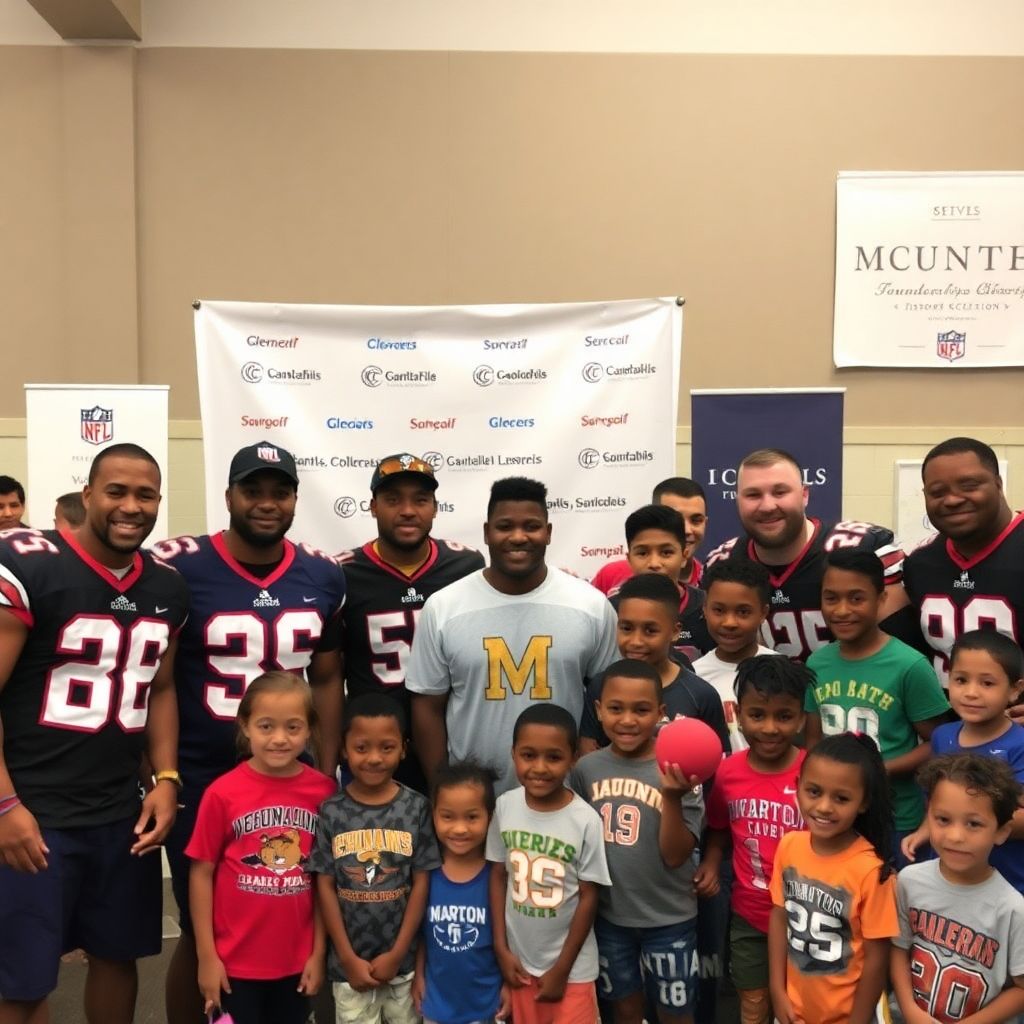
Off-the-field philanthropy by NFL and college players means structured, long-term giving through foundations, scholarships, community programs and advocacy, not one-time gestures. If a player wants lasting impact, then they build clear goals, trusted partners, legal compliance and measurement into their charity work so each season adds to a coherent, sustainable legacy.
Snapshot: Impact Metrics and Motivations
- If a player seeks control and legacy, then a dedicated foundation or fund usually fits better than ad‑hoc donations.
- If community trust is the priority, then partnering with existing local nonprofits often beats starting from scratch.
- If you want visible, repeatable results, then design programs with narrow, trackable goals instead of broad missions.
- If time is limited during the season, then choose fewer, deeper projects rather than many shallow appearances.
- If you hope to attract sponsors, then align causes with clear stories, measurable outcomes and media-friendly events.
- If you are a college athlete, then work through campus compliance and existing charities instead of handling money directly.
How NFL and College Players Structure Their Philanthropic Efforts

Off-the-field philanthropy covers how athletes organize their giving, who manages the money, and how programs are delivered. NFL player charity foundations are typically formal nonprofits or donor-advised funds that let players support causes, run events and grant money while professionals handle administration.
College football player philanthropy initiatives are shaped by amateurism and eligibility rules. If a college athlete wants to launch a project, then they usually partner with an existing nonprofit or their university’s foundation so they never personally control donated funds or violate name, image and likeness (NIL) and compliance rules.
At both levels, efforts range from personal foundations and scholarship funds to player-led campaigns and volunteer work. If a player is early in their career, then starting with collaborations and small, focused projects is safer than immediately creating a standalone organization that demands heavy oversight.
Funding Models: From Foundations to Community Grants
- Personal foundation (player-named nonprofit)
If a veteran NFL player wants maximum branding and program control, then a player-named foundation makes sense, provided they:- Hire an experienced nonprofit attorney and accountant.
- Set up a real board and written bylaws.
- Commit to multi-year funding and involvement.
- Donor-advised fund (DAF)
If a player prefers simplicity over running staff and programs, then a DAF through a community foundation or financial firm is practical:- Money goes into the fund, then grants flow to vetted charities.
- Less admin burden, but less public-facing brand.
- Direct grants to community organizations
If the goal is fast impact with trusted local partners, then giving grants to existing community nonprofits works well:- Nonprofits design and deliver programs.
- Player focuses on awareness, storytelling and fundraising.
- Event-driven fundraising (camps, galas, game-day campaigns)
If a player wants to engage fans and teammates, then using events or pledge drives is effective:- You tie donations to on-field milestones or ticketed events.
- Proceeds flow to a foundation, DAF or partner nonprofit.
- Corporate and brand-supported models
If scale is the aim, then corporate sponsorships with NFL charitable organizations and player foundations can:- Bring in matching gifts, marketing support and volunteers.
- Require clear agreements on logos, messaging and reporting.
- College-campus aligned funding
If a college athlete wants institutional backing, then working through the university foundation or athletic department:- Keeps compliance and accounting centralized.
- Allows alumni and local businesses to support within clear rules.
Program Areas: Education, Health, Justice and Youth Development
If a player cares about opportunity and long-term change, then education is often the primary focus. Programs include scholarships, reading rooms, tutoring and STEM camps. Many NFL player charity foundations host annual back-to-school drives or sponsor college access workshops in their hometowns.
If health and wellness are central values, then initiatives may fund youth fitness, mental health counseling, nutrition programs or hospital partnerships. Players can underwrite clinic days, telehealth access or support research charities, especially in areas that affected their own families.
If social and criminal justice reform motivates the athlete, then efforts might support bail funds, legal aid, reentry programs or civic engagement drives. When players prioritize youth development, they often combine mentoring, flag football leagues, life-skills workshops and safe-space community centers.
For college football player philanthropy initiatives, partnering with youth organizations and schools keeps programming simple and compliance-safe. If a college athlete wants maximum direct contact with kids, then clinics, reading days and campus visits run through an existing nonprofit are usually the most realistic options.
Measuring Outcomes: Evaluation Methods and Success Indicators
If a player wants to prove impact to fans and sponsors, then they must set clear success indicators before programs launch. Measurement can stay lightweight but should connect dollars or time spent to specific, observable changes in people or communities, not just to feel-good stories.
Useful outcome indicators for athlete-led philanthropy
- If the focus is education, then track metrics like program completion, improved grades, graduation or college enrollment for participants.
- If health is the target, then measure service usage (screenings, counseling sessions), behavior changes, or access improvements for underserved groups.
- If youth development is central, then monitor participation, consistent attendance, mentoring matches and reported skills or confidence gains.
- If justice and civic engagement matter, then count voter registrations, legal cases supported, or successful transitions from reentry programs.
- If awareness is the main goal, then use media reach, social engagement and website visits as supporting – not sole – indicators.
Limitations and common measurement pitfalls
- If you only count outputs (people served) and ignore outcomes (life changes), then you risk overstating real impact.
- If data collection is too complex, then staff, volunteers and partners will stop tracking it consistently.
- If evaluation costs rival program costs, then you are over-engineering metrics for a small initiative.
- If you rely solely on self-reported stories, then complement them with at least one quantitative measure.
- If corporate sponsors demand elaborate dashboards, then negotiate a small, focused set of indicators you can realistically maintain.
Legal and Financial Considerations for Athlete-Led Giving
- If a player treats a foundation like a personal bank account, then they risk serious legal trouble; charitable funds must serve public benefit, not private expenses.
- If legal and tax filings are ignored, then even well-meaning charities can lose status or face penalties; annual reporting and governance are non-negotiable.
- If a college athlete directly collects and holds donations, then they may violate eligibility rules; money should route through approved entities, not personal accounts.
- If endorsements and NIL deals support a cause, then contracts must clearly separate personal income from charitable funds to avoid confusion and tax issues.
- If family or friends run the organization without experience, then bring in professional advisors; good intentions do not replace compliance or solid bookkeeping.
- If you promise specific uses of funds publicly, then spending must match those promises to avoid donor complaints and reputational damage.
Scaling Influence: Partnerships, Media and Long-Term Sustainability
If a player wants their giving to outlast their playing career, then they need partners, not just personal effort. Partnerships with college athlete-led nonprofits, local organizations and national charities expand reach, share expertise and create continuity when teams or rosters change.
If the goal is to grow quickly and credibly, then combining corporate sponsorships with NFL charitable organizations and community groups is powerful. Brands bring resources and platforms, established nonprofits bring infrastructure, and players bring authenticity and attention.
Mini case-style scenario: building a sustainable initiative
If an NFL player from a small town wants to improve reading levels, then a realistic pathway might look like this:
- If the player is early in their career, then start with a summer reading camp hosted by an existing local nonprofit library or youth center.
- If the pilot goes well, then create a donor-advised fund, directing appearance fees and fan donations, with the nonprofit running the program.
- If multi-year results show stronger reading scores, then consider launching a named foundation, hiring a part-time director to expand to neighboring communities.
- If national brands show interest, then negotiate sponsorships that fund more sites while keeping program design grounded in the original community model.
Decision-style guidance: choosing the right structure
If you:
- Have limited time and experience, then favor partnerships and DAFs over standalone foundations.
- Have a clear, narrow mission and strong advisory team, then a player foundation can work well.
- Are still in college, then focus on awareness, volunteerism and collaborations with approved charities instead of handling money directly.
End-of-section self-check: designing for the long term
- If you stopped playing tomorrow, then would your programs keep running through partners or structures you have built?
- If media attention faded, then would your initiative still have stable funding and leadership?
- If a sponsor left, then would your core programs survive without major mission drift?
Quick checklist for players and advisors
- If you cannot explain your cause, structure and partners in two minutes, then simplify your plan before launching.
- If your giving is mostly one-off events, then pick one focus area and design a repeatable annual program.
- If you do not receive regular financial and impact reports, then establish basic reporting with whoever manages your funds.
- If fans and media ask how to donate to NFL player charities connected to you, then provide a clear, public link to a vetted foundation or partner page.
- If you feel pulled into too many causes, then say no more often and prioritize depth over breadth for the communities you know best.
Practical Answers on Starting and Supporting Player Philanthropy
How should an NFL player decide between a personal foundation and partnering with an existing charity?
If you want brand control and are ready for governance and staff, then a personal foundation fits. If you prefer speed and low admin, then partner with established nonprofits or use a donor-advised fund that grants to them.
What is the safest way for college athletes to run philanthropy projects?
If you are a college athlete, then route efforts through your school’s foundation, athletic department or a vetted nonprofit. Avoid personally handling donations, and always clear ideas with compliance staff first.
How can fans find trustworthy NFL player charity foundations to support?
If you want to support a player’s cause, then look for official links on team or league sites, check nonprofit registries, and read basic financial and program information before giving. When unsure, donate through well-known partner charities linked to the player.
What makes corporate sponsorships helpful instead of distracting?
If a sponsor aligns with the cause and accepts clear impact goals, then they can add funding, reach and volunteers. If they demand excessive branding or control, then protect the mission and be ready to decline or renegotiate.
How can a player start measuring impact without a full-time analyst?
If resources are limited, then pick two or three simple indicators, such as participants served and completion or progression rates. Ask partner nonprofits to collect the data and share short, regular summaries you can communicate to fans and sponsors.
What role should family and friends play in a player’s charity?
If relatives are involved, then give them roles that match their skills and surround them with independent advisors. Keep financial oversight and legal compliance with professionals to avoid conflicts and maintain credibility.
How do partnerships with college athlete-led nonprofits actually work?
If you join or support these groups, then expect them to collaborate with campus offices and external charities. Activities usually center on volunteering, awareness and fundraising routed through approved entities, not independent money management by students.