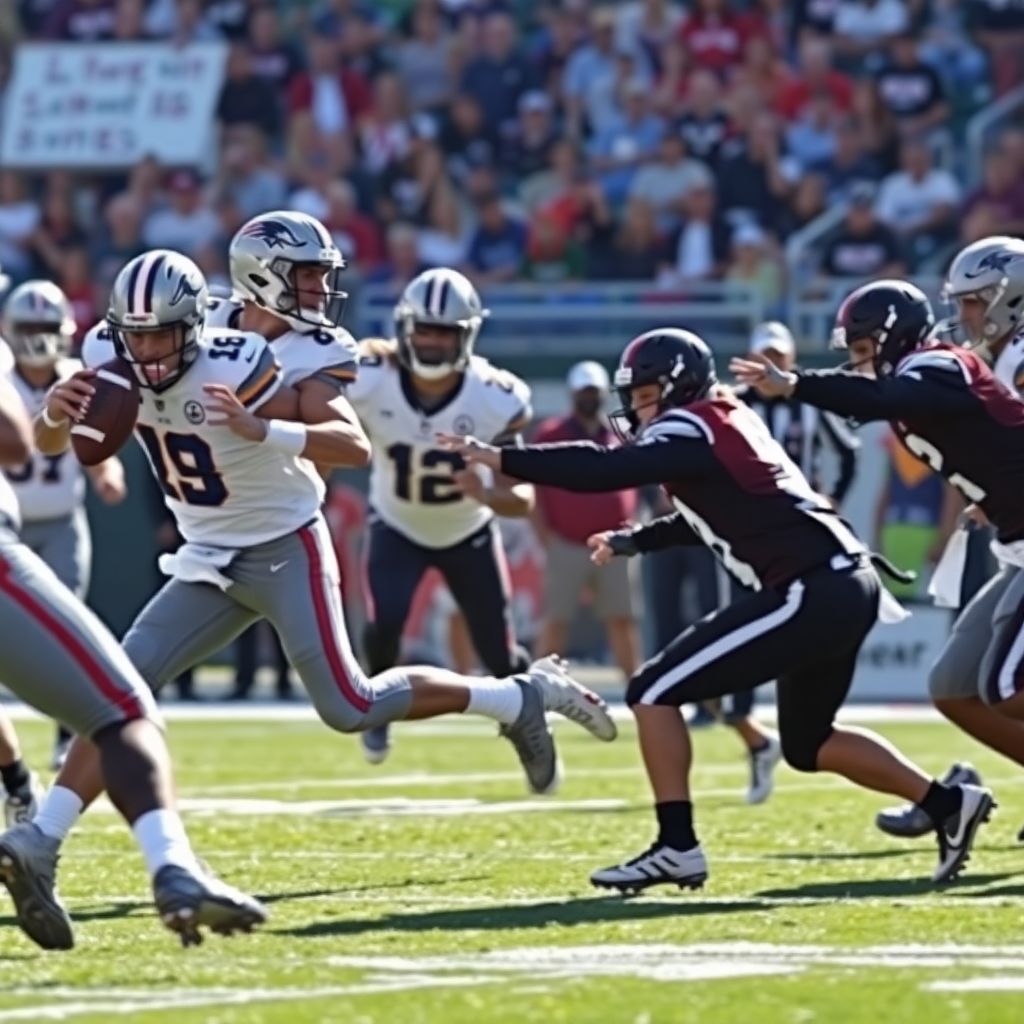
Dual‑threat quarterbacks force defensive coordinators to defend 11 offensive players on every snap, not 10 plus a handoff machine. Their ability to execute designed runs, extend plays, and punish soft rush lanes demands adjusted coverage rules, disciplined rush plans, flexible personnel groupings, and a weekly practice script built specifically for QB run and scramble control.
Core Implications for Defensive Game Planning
- Your base coverages and pressures must be tweaked so rush lanes and coverage landmarks survive when the QB escapes.
- Every weekly plan needs a clear answer for zone read, QB draw, and scramble drill, not just the pass game.
- Personnel groupings must balance speed (pursuit) with size (tackle power‑read and QB counter).
- Situational calls in the red zone, third down, and two‑minute must assume the QB can run.
- Film grading should track QB rush yards allowed, missed contain, and scramble first downs as core defensive KPIs.
- Practice plans need dedicated periods that feel like a live quarterback run defense playbook, not a token walkthrough.
Evolution of the Dual‑Threat Quarterback: Key Traits and Tactical Trends
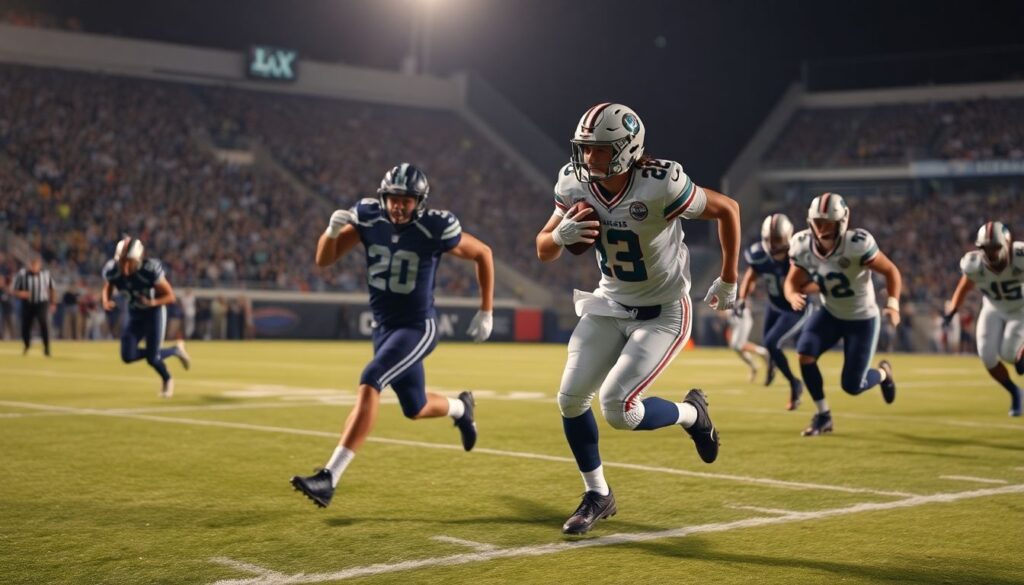
A dual‑threat quarterback is a starter who is both a legitimate passing threat and a primary ball carrier in the run game. The offense does not just survive his runs; it is built to feature QB keepers, options, and scrambles as core calls, not emergencies.
Modern spread systems, plus better athletes coming from a dual threat quarterback training program background, mean coordinators now see game plans where the QB is optioning an end, reading an overhang, or attacking numbers on the perimeter. Offenses force defenses to decide: protect the box against QB run, or cover space against RPOs and vertical shots.
Key traits you should anticipate when building defensive strategies to stop mobile quarterbacks:
- Functional arm talent: enough accuracy and velocity to hit quick game, RPOs, and deep shots when safeties cheat.
- Designed run ability: can carry power‑read, counter‑read, draw, GT counter, and bootleg keepers effectively.
- Scramble efficiency: recognizes man vs zone, understands rush lanes, and turns broken plays into explosives.
- Processing vs pressure: handles simulated pressures and replacement blitzes without panicking into sacks.
In short, when facing this profile, you are not just adjusting a coverage; you are defending an extra running back aligned at quarterback depth on every snap.
Coverage Design: How Rushing QBs Break Traditional Concepts
Classic coverage structures were built assuming the QB is static. Once the QB becomes a real runner, several stress points appear.
- Man coverage and turned backs: With eyes locked on receivers, man coverage vacates the second level. Dual‑threat QBs exploit this with scrambles on long down and distance. Action: pair man calls with a low‑hole rat or spy and clear rush‑lane rules.
- Spot‑drop zones and soft seams: Spot drops can leave large, unoccupied seams when defenders expand with routes. The QB can hitch, then split zones on a scramble. Action: coach pattern‑match rules and re‑route techniques to slow releases and keep second‑level depth.
- Coverage vs QB draw: Two‑high coverages on passing downs invite QB draw and delayed QB runs. Action: use creepers/sim pressures where a second‑level defender adds late so the box count never feels light to the QB.
- RPO conflicts on overhangs: Overhang defenders are forced to choose between fitting the QB run and honoring glance, bubble, or stick routes. Action: call coverages that rotate the safety into the fit or insert a nickel as a fast fill player, not a pure coverage piece.
- Scramble drill rules: In off‑coverage, DBs may stare at the QB and drift, opening late windows. Action: teach a scramble‑drill decision tree: nearest deep works to top off routes, nearest short squeezes to plaster, backside corner walls off crossers.
- Red‑zone condensation: In condensed space, traditional zones leave open QB draw lanes if LBs over‑drop. Action: coach shallower drops, collision rules, and an automatic QB‑run alert when backs release wide.
Mini‑diagram (man coverage with rat helping on QB run):
   C      S      C
      N      R
      $   M (rat)
         Q
         R
Corners in man, nickel in man, safety over top, MIKE as low‑hole rat with eyes on QB. Rush must maintain contain to funnel escapes back inside to the rat player.
Pass Rush Principles vs. Mobility: Containment, Spy, and Disguise
Against mobile passers, your front mechanics matter as much as your coverage call. Think in terms of scenarios you will actually face on game day.
-
Third‑and‑medium vs empty:
If you call a wide, upfield edge rush, the QB steps into a massive B‑gap lane. Instead, coach a four‑lane rush: two contain players, two interior rushers on level with the QB. A spy can be added from depth, but only if he is disciplined and fast enough to close space.
-
Zone read vs four‑man rush:
On zone read, the unblocked end is the read key. If he screams down the line for the back, the QB keeps with an escort. Your answer: a slow‑play or surf technique on the end, plus a scraping linebacker outside, turning the QB back inside to help.
-
Boot and sprint‑out game:
Pure edge pressure opposite the boot is wasted. Structure your call so the force/contain player is aligned to the QB launch side. Tag cover‑3 or match coverages that roll with the boot to keep eyes on the QB and routes.
-
Simulated pressure vs max‑protect shot:
Dual‑threat QBs love max‑protect shots when they expect zero coverage. Instead of true zero, bring simulated pressure (four‑man rush, two from second level) with late rotation to a middle‑field‑closed shell. The look says “pressure” but the structure still has post help.
-
Spy usage on elite runners:
A spy is useful only if he is a better tackler in space than your base zone structure. Overusing a spy can remove a valuable hook‑curl defender. Use the spy as a change‑up on key downs or against QBs who repeatedly beat contain, not as a default answer.
-
Four vs five‑man pressures:
A fifth rusher can close space faster, but it also removes a zone‑vision defender. Blend calls: some four‑man with tight lanes, some five‑man fire zones, and a few creepers that feel like pressure to the QB but still have seven in coverage.
Basic four‑lane rush visual:
 C   E   T   T   E   C
        Q   •
  Lane 1 2  3   4
Ends own lane 1 and 4 (contain), tackles own 2 and 3 (interior). Nobody crosses face late without replacing.
Personnel Choices and Formation Responses to Mobile Signal‑Callers
Dual‑threat QBs change how you select personnel packages and set the front versus spread formations.
Advantages of different defensive personnel choices
- Base with bigger LBs: Better versus QB power and counter; can dent pullers. Useful against heavy run‑first spread option teams whose online course defending spread option quarterbacks material focuses on inside gap schemes.
- Nickel (5 DBs): Adds speed and coverage flexibility versus RPOs, bubbles, and perimeter option. Best when the QB is more of a scrambler than a designed power runner.
- Dime (6 DBs): Situational versus pure pass downs when scramble is the only real QB run threat. Effective if you have one DB who tackles like a linebacker.
- Big nickel (3 safeties): Hybrid answer: enough size in the fit, enough coverage skill vs slots and TEs. Strong against 11 personnel spread that tags QB draw and glance RPO.
- Sub‑packages with a rush LB: Let you treat the QB like a running back on passing downs by placing your best space tackler as a contain or spy player.
Limitations and trade‑offs you must respect
- Too light vs QB power: If your nickel or dime cannot hold up versus a pulling guard and lead back, the offense will spam QB GT counter until you adjust.
- Too heavy vs tempo spread: Big base bodies struggle with lateral flow and no‑huddle pace; fatigue leads to late fits and missed tackles on the QB.
- Over‑specialized subs: Package players who only fit one role (spy, edge) restrict your call sheet and make you predictable to savvy play callers.
- Front‑side alignment errors: Versus 3×1 and 2×2, misaligning your front (wrong 3‑tech or mis‑set over/under) can give the offense free numbers for zone read or QB draw.
- Ignoring the boundary: Many offensive coordinators script QB runs into the boundary for shorter edges and easier numbers. If your boundary corner and safety cannot tackle, your structure is broken before the snap.
Simple alignment reminder vs 3×1 with the QB as a run threat:
 3 WR      T G C G T    X
       E  T   N   E
          M   W   S
             C   C
Plan which LB or safety is the designated extra fitter to the trips side and how the backside end plays the QB.
Situation‑Specific Adjustments: Red Zone, Third Down, and Two‑Minute
Certain situations magnify dual‑threat stress. Many defensive mistakes come from carrying normal rules into abnormal contexts.
- Red zone myth: “Tighter space helps us”
Reality: with shortened coverage drops, the QB gets quicker access to QB draw and sprint‑out. Mistake: bailing into soft, two‑high structures. Adjustment: use heavier fronts, one‑high coverages, and clear QB‑run alerts when RBs align wide or stack. - Third‑and‑long myth: “Make him a passer”
Reality: dual‑threat QBs often create explosives on third‑and‑7+ via scrambles. Mistake: calling deep, loose zones with wide rush lanes. Adjustment: pair three‑deep, three‑under fires or simulated pressures with four‑lane rush rules and a low‑hole player ready to trigger on QB draw. - Two‑minute myth: “They do not want the QB hit”
Reality: many offenses are willing to run draw, QB sweep, or scramble drill in two‑minute if you give light boxes. Mistake: staying in dime with tiny boxes and no spy. Adjustment: keep at least one bigger body who can tackle the QB in bounds and burn clock. - Short‑yardage myth: “Sneak and inside zone only”
Reality: spread option teams often tag QB power read, speed option, or naked boot. Mistake: selling out inside and ignoring edges. Adjustment: set firm edges with force players and use inside linebackers to overlap over the top of double teams. - Backed‑up myth: “They will be conservative”
Reality: coordinators trust their dual‑threat guy to get them out of bad field position with designed QB runs. Mistake: calling soft coverage and light boxes on first down. Adjustment: treat first‑and‑10 backed up like a mobile QB run down; call sturdy structures and tackle the QB early.
Think of every situational call through the lens: “If the QB takes off right now, who has him, and where do we want the tackle to happen?”
Evaluation and Practice: Film Metrics, Drills, and Walkthroughs
Defending mobile quarterbacks is about repeatable process, not one‑off tricks. Your film work, metrics, and practice plan must align.
On film, chart at minimum:
- QB designed runs by concept (zone read, power read, draw, counter, speed option).
- Scrambles by direction and down‑and‑distance.
- Explosive gains created after broken contain or missed tackles.
- Formations and motions that signal QB keep tendencies.
Then translate that into a practice script that feels like a targeted quarterback run defense playbook rather than a generic team period. Use your scout QB to mirror depth, tempo, and ball handling from film, especially against spread option structures you would see in an online course defending spread option quarterbacks.
Sample weekly drill block (pseudo‑plan):
Mon: 10 min - Edge surf vs zone read (DL & OLB)
Tue: 12 min - Scramble plaster drill (DB & LB)
Wed: 12 min - QB draw / spy fit vs 2x2 & 3x1
Thu:  8 min - Red zone QB run circuit
Fri:  6 min - Walkthrough of top 5 QB run calls
If your staff attends a coaching clinic dual threat QB defense session or studies a dual threat quarterback training program from an offensive perspective, translate their favorite QB concepts into your own defensive teach tapes and walkthrough scripts.
End‑of‑Week Self‑Check for Coordinators
- Do we have a clearly defined answer versus the opponent's top three designed QB runs?
- Can every defender explain our rush‑lane rules and scramble‑drill responsibilities?
- Have we repped our top third‑down and red‑zone calls against live QB run looks?
- Does our personnel plan match the QB's true run style: power runner, perimeter option, or scramble‑first?
- Are our film cut‑ups and practice periods focused more on QB tendencies than on formation lists?
Coordinator Concerns: Quick Clarifications
Do I always need a spy against a dual‑threat quarterback?
No. A spy is a tool, not a base answer. Use it selectively on key downs or against QBs who repeatedly beat contain. Often, disciplined four‑lane rush and sound zone vision are more valuable than burning a defender as a full‑time spy.
Is man coverage off‑limits versus mobile quarterbacks?
Man coverage is still useful, but it must be paired with a plan for QB scramble. That usually means a rat or hole player with eyes on the QB, firm contain rules, and clear coaching on how quickly underneath man defenders can transition to tackle when the QB takes off.
How many dual‑threat specific calls should be in my game plan?
Carry a small menu you can rep well: a couple of base structures with QB run fits, one or two pressures tailored to their favorite concepts, and clear situational calls. Volume is less important than how well your players understand their rules when the QB becomes a runner.
What if our personnel is slow at linebacker?
Use more nickel or big‑nickel to add speed and leverage safeties who tackle well in space. Adjust your fronts so defensive linemen handle more of the inside‑run burden, freeing second‑level players to run and overlap instead of taking on pullers in tight quarters.
How should I practice scramble drill with the secondary?
Build a dedicated period where the QB breaks the pocket on command and receivers react with pre‑taught scramble rules. DBs must practice plastering, matching vertical threats, and triggering downhill to tackle when the QB crosses the line of scrimmage.
Can I use the same plan for every mobile quarterback we face?
You can keep a common language and core structures, but the details must change based on the QB's strengths. A power runner requires heavier boxes and edge‑setters; a scramble‑first player demands tighter rush lanes and more vision coverage.
Where should I start if I have never built a QB run plan before?
Begin by charting all QB runs and scrambles from your opponent's last few games, then pick three favorite defensive calls that fit those concepts. Script daily practice reps for those calls until your players can clearly explain fits, rush lanes, and scramble rules.