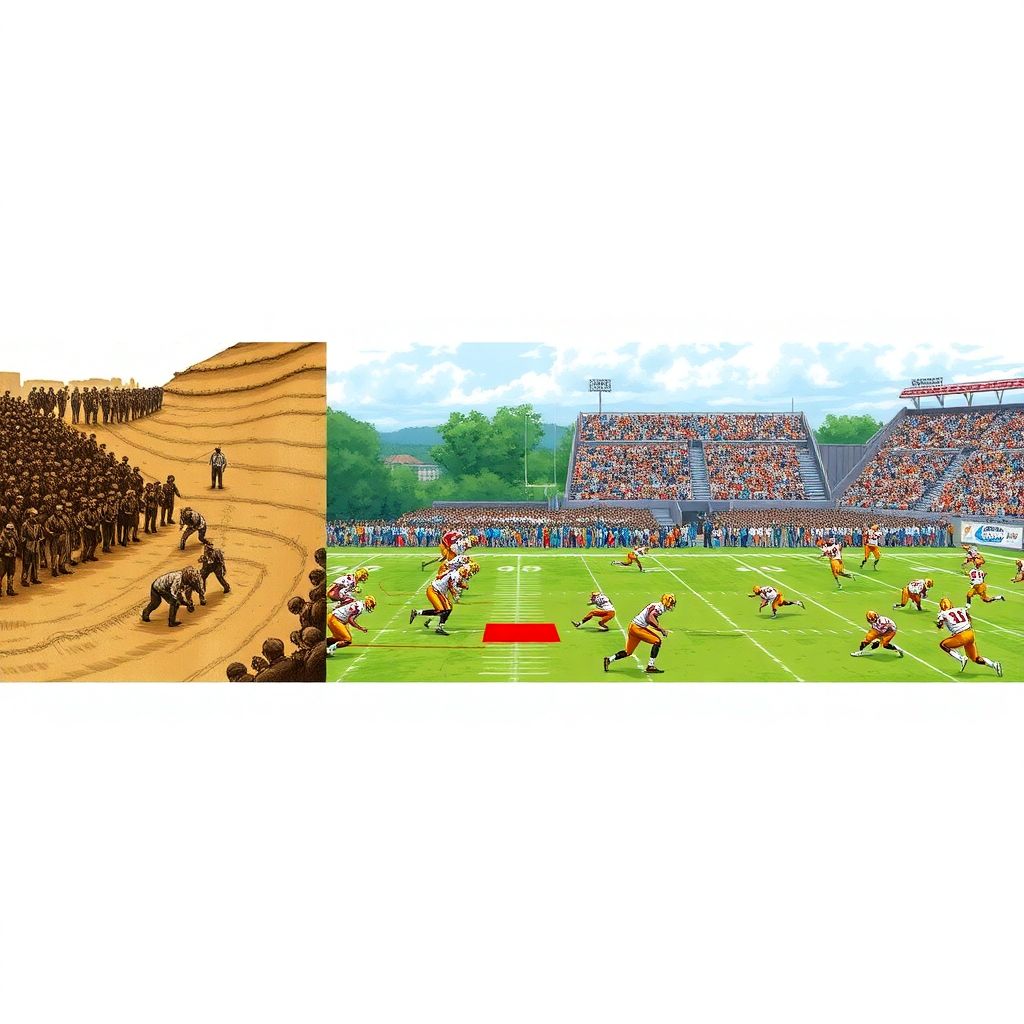
From Ground-and-Pound to Air Raid: What Actually Changed
From Power Football to Early Spread Concepts
In the early decades of college football, offenses were built around raw physical dominance: tight formations, fullbacks leading iso runs, and guards pulling on power and counter. The strategic logic was simple – out‑hit the defense, control the clock, shrink variance. Passing existed, but mostly as a constraint play or desperation move. Over time, rule tweaks favoring the forward pass, wider hashes, and scholarship limits pushed coaches toward spacing and efficiency instead of sheer mass. The option era, from the wishbone to the I‑option, was the first big step away from static ground‑and‑pound, forcing defenses to defend width and assignment football, which quietly laid the foundation for later spread systems and the modern obsession with matchups in space.
The Rise of the Spread and the Air Raid
By the 1990s and 2000s, offensive innovators realized they could turn the entire field into a math problem. The spread shotgun, four‑wide sets, and tempo-based attacks were designed to isolate weak defenders and simplify reads for the quarterback. The Air Raid, in particular, stripped the passing game down to a small menu of concepts with multiple tags, relying on repetition and quarterback‑receiver chemistry more than thick playbooks. Instead of grinding for three yards and a cloud of dust, coaches chased yards per attempt, success rate, and explosive plays. Hybrid systems emerged, blending power run schemes with spread spacing, giving us today’s landscape where even “pro‑style” college teams use RPOs, empty formations, and quick game built on classic Air Raid principles.
Necessary Tools for Studying and Installing Modern Offenses
Digital Resources, Playbooks, and Film

To truly understand the evolution of college offenses, you need more than highlight reels; you need cut‑ups, coaching tape, and structured learning materials. Most staffs now build their own digital libraries, but a coach or serious fan can start with resources like a well‑organized college football offense playbook pdf and companion video. High‑quality end‑zone and wide‑angle film lets you study splits, stems, protection IDs, and defensive adjustments in real time. Many clinics release recordings, so you can pause and rewind while coaches diagram reads on screen. The key is systematizing what you watch: track formations, motions, and core concepts so you can see how a scheme applies its rules against different coverages rather than just memorizing isolated plays.
Staff, Data Tools, and On‑Field Equipment
Modern offensive evolution is also a story of infrastructure. Even at the college level, you need a small analytics stack to chart tendencies, explosives, and situational performance; that might be as simple as a spreadsheet or as advanced as integrated tracking and video platforms. Tablets or laptops on the practice field let coaches adjust scripts on the fly and tag reps for later review. Headsets, wristbands, and streamlined signal systems are critical for tempo offenses that call two plays at once. On‑field, simple tools like route trees on laminated cards, mesh nets for quarterback accuracy work, and portable cameras to film from end zone and sideline angles help translate theory into muscle memory, closing the gap between what’s on paper and what happens on Saturdays.
Step-by-Step Process of Transitioning an Offense
Evaluating Personnel and Philosophical Fit
Before a staff jumps from a traditional pro‑style system to a spread or Air Raid look, it needs a brutal personnel audit. What does your quarterback actually do well: full‑field progressions, quick game, or QB run? Are your linemen better at vertical pass sets or double‑team drives? This evaluation shapes your install plan more than any trend on social media. Expert consultants often begin with three questions: how do you want to score, how fast do you want to play, and what can your roster realistically execute in‑season? Only after that do they recommend resources like a foundational spread offense playbook download or specific drill progressions. The evolution isn’t about copying what a playoff team runs; it’s about aligning your identity with your players’ profiles.
Installing Spread and Air Raid Elements
Once your philosophy is clear, installation should move from core to fringe, not the other way around. Start with a handful of base formations and two or three run schemes, then layer in quick game, screens, and a small menu of dropback concepts. Coaches who’ve sat in an air raid offense coaching clinic online often note that the real secret isn’t the plays themselves, but the ruthless simplicity of teaching them. You want every concept tied to rules and pictures, so players recognize patterns rather than memorize diagrams. Early practices should emphasize routes on air, skeleton periods, and blitz pickup with clear protection calls. As comfort grows, add tags, motions, and tempo variations, always checking that your quarterback’s mental load stays manageable.
Integrating RPOs, Tempo, and Hybrid Concepts
The modern evolution phase is blending spread spacing with old‑school physicality. After your base pass game and runs are stable, you can graft on RPOs that read overhang defenders or backside safeties, turning traditional inside zone into a triple‑threat play. Tempo then becomes a weapon to trap defenses in vanilla looks, but only if you can signal, align, and snap without procedural chaos. Experts advise building “families” of plays – same formation and motion, multiple outcomes – so defenses can’t key tendencies. Here, it helps to study the best books on modern college football offenses, noting how top programs package constraints. Over time, your system should feel like a language, where adding a new word doesn’t require rewriting the whole dictionary for your players.
Troubleshooting Common Problems in Modern Offenses
When the Passing Game Stalls
Even well‑designed Air Raid or spread attacks hit stretches where completions dry up and protections crack. The first troubleshooting step isn’t calling trick plays; it’s returning to your day‑one answers. Rewatch film and chart whether issues stem from coverage recognition, protection breakdowns, or route detail. Many veteran coordinators use a simple filter: protection first, quarterback eyes second, route integrity third. If your QB is facing free runners, scheme tweaks won’t matter. If protection is solid but throws are late, you may need to streamline progressions or lean into mirrored concepts. Sometimes the fix is as basic as re‑emphasizing spacing landmarks and route depths that drifted over the season, turning “covered” receivers back into viable options against standard zone structures.
Handling Defensive Adjustments and Injuries
Defenses inevitably adapt, spinning safeties late, inserting simulated pressures, and mugging interior gaps to disrupt timing. At the same time, injuries can hollow out the depth that made your original plan feasible. This is where external perspective can help; many programs quietly rely on football offensive scheme consulting services to self‑scout their tendencies and suggest low‑cost adjustments. That might mean shifting to more bunch and stack sets to free receivers, or incorporating heavier personnel to protect a young offensive line. The guiding principle is solving problems with rules, not exceptions. If a defensive answer forces your QB into guesswork, revise the read or change the presentation. Sustainable evolution means your offense bends under stress without losing its core structure or identity.
Expert Recommendations for Coaches and Players
Building a Sustainable Offensive Identity
Experienced offensive coordinators tend to converge on a few shared recommendations. First, study widely but install narrowly: learn from different eras and systems, yet keep your call sheet lean on game day. Use resources like a well‑curated college football offense playbook pdf or a targeted spread offense playbook download as reference libraries, not shopping lists. Second, over‑invest in quarterback development; footwork, pre‑snap identification, and post‑snap processing determine whether your scheme looks brilliant or broken. Third, commit to continuous education – staff members rotating through an air raid offense coaching clinic online one offseason, then a run‑game or protections summit the next. Above all, teach concepts as frameworks, so players understand why a play exists, how it evolved, and how it adapts, turning them into problem‑solvers rather than play‑rememberers.