The two‑minute drill has changed a lot in the last few years. What used to be mainly about guts and arm talent is now a live experiment in data, communication tech and micro‑specialized coaching. In 2026, when we talk about “inside a two‑minute drill from the coach’s perspective”, we’re really talking about a high‑speed decision‑making lab that starts long before kickoff and continues into the post‑game film room.
Below is a step‑by‑step look at how modern coaches plan, call and evaluate the two‑minute situation, with practical warnings and tips for newcomers to this side of the headset.
—
Pre‑Game: Building a Two‑Minute Identity
Before a team can execute anything under pressure, the staff needs a clear identity for its two‑minute offense. This goes beyond printing a two minute drill offense playbook and sticking it in the quarterback’s wristband. In 2026, most staffs define what they want to be in these situations through data: tempo profile, target depth, personnel tendencies, and QB risk tolerance. Analytics departments cut the last two or three seasons into “end of half” and “end of game” segments and show exactly which route families, protections and formations travel best under time stress. The coordinator then trims the overall scheme into a small “crisis package” that the whole sideline recognizes instantly.
Key components of a modern two‑minute package
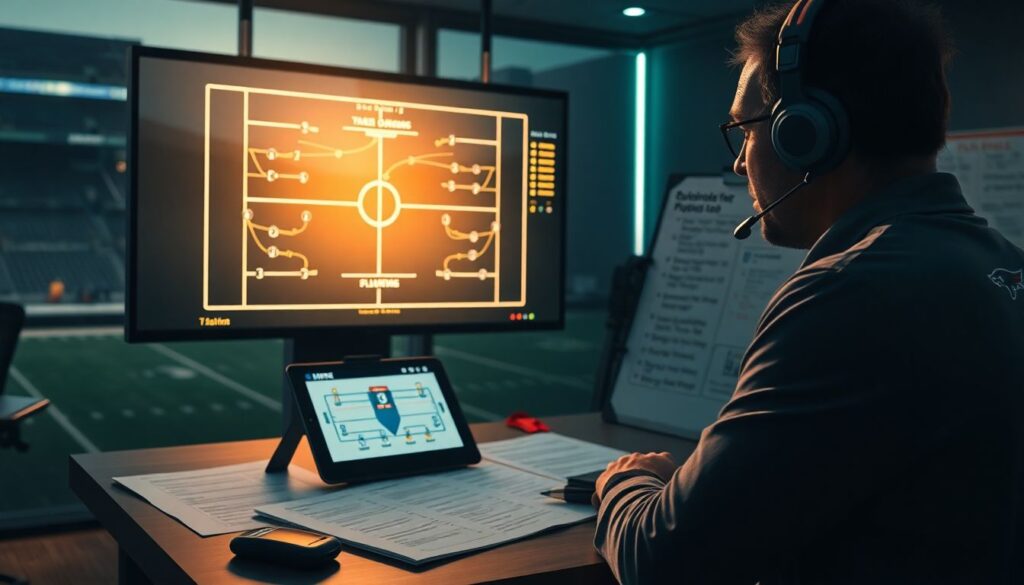
A contemporary two‑minute package is not just a list of favorite pass plays. It is a tightly integrated mini‑system with baked‑in constraints and answers versus common coverages. Most top programs now keep a dedicated installation document—sometimes the same file that ends up circulating as an “american football coaching strategies pdf” during the offseason clinic circuit—where each core call is annotated with clock rules, substitution notes and defensive alerts. The philosophy is simple: under two minutes, thinking must shrink and anticipation must expand. Every player should know, without prompting, which plays are “clock‑friendly,” which are “timeout‑dependent,” and which are “game‑on-the-line, must‑have” calls.
—
Step 1: Pre‑Snap Planning Before the Game Clock Starts
Two‑minute success starts long before the offense jogs onto the field. The head coach and play‑caller use Thursday or Friday meetings to script scenarios: down‑and‑distance clusters, score states, timeout counts, and field zones. In 2026, this process is heavily driven by probability models that simulate thousands of end‑game drives. The staff studies these simulations to predict the most likely starting field positions and defensive responses. From there, they define a small number of “openers” and “pivot plays” that will drive the first 3–5 snaps of any two‑minute sequence, so there is less emotional noise when the real moment arrives.
Checklist for pre‑game two‑minute planning
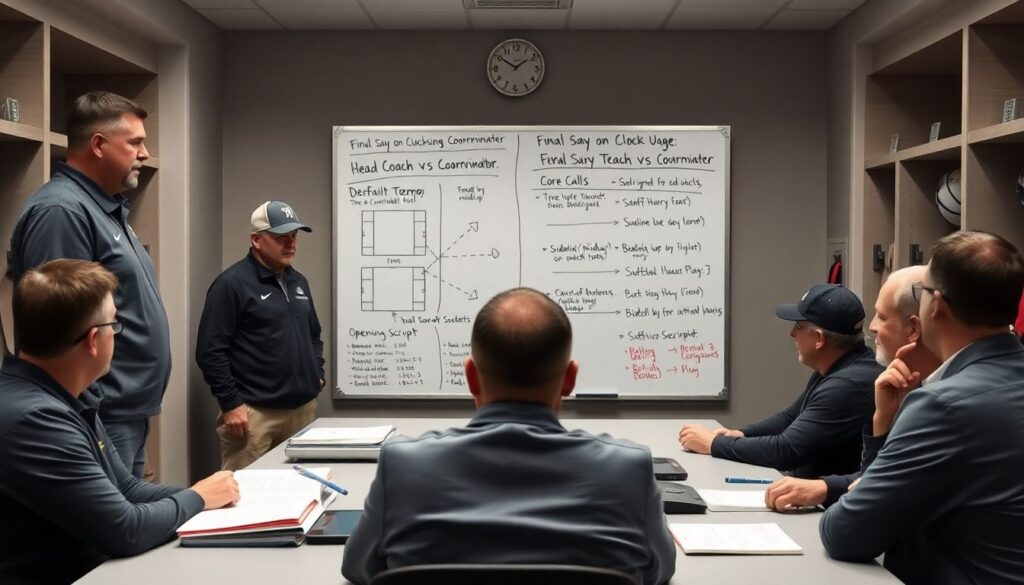
– Clarify who owns final say on clock usage: head coach or coordinator
– Define a default tempo (true hurry‑up vs “controlled fast”)
– Label core calls as “sideline”, “middle”, or “out‑of‑bounds” plays
– Script 2–3 opening concepts for common situations (behind by 3, tied, behind by 7)
– Assign staff roles: spotter, clock tracker, substitution gatekeeper
—
Step 2: Sideline Communication and Role Clarity
Once the game hits the two‑minute mark, communication structure becomes just as important as scheme. Modern staffs divide responsibility so the play‑caller is not drowning in data. Typically, an analyst in the booth tracks defensive personnel and coverage trends, a quality control coach monitors the clock and timeout situation, and another assistant oversees substitution mechanics and ball security alerts. With 2026’s expanded communication rules in some leagues, teams now exploit in‑helmet audio right up to the cut‑off, using concise code words rather than full sentence instructions, minimizing the chance of misheard calls in a loud stadium.
Common communication failures to avoid
– Multiple assistants shouting conflicting information into the headset
– No clear “clock voice,” leading to panic spikes or wasted seconds
– Overly complicated verbiage that forces the QB to repeat calls in the huddle
– Last‑second personnel changes that trigger illegal substitutions
– Forgetting to remind the QB of “must clock” or “must run a play” thresholds
—
Step 3: On‑Field Vision – What the Coach Actually Watches
From the sideline or the box, an experienced coach is not ball‑watching during the two‑minute drill. Instead, they are scanning structural cues: defensive front spacing, rotation timing, safety depth, and leverage on the primary receiver. In 2026, many coordinators rely on a data‑driven “bias sheet” that lists the opponent’s favorite two‑minute calls by field position and hash. When the defense lines up, the coach quickly matches the live picture against these probabilities. The person on the headset in the booth calls out high‑risk tells (“double mug looks”, “boundary corner soft at 10”) so the play‑caller can switch from “safe increment” plays to “strike now” concepts if a mismatch appears.
—
Step 4: Play Selection – Balancing Risk, Clock and Field
Selecting plays in the two‑minute window is a constant balancing act between yardage, time, and turnover risk. Coaches tend to sort calls into three broad buckets: clock‑control plays, chunk plays, and kill‑shot calls. In a modern football two minute drill training program, quarterbacks are trained to recognize which bucket each call belongs to, so they understand the coordinator’s intent without needing a lecture every snap. The coach factors in timeouts, hash location, and the kicker’s realistic range—often updated in real time based on warm‑up notes and wind reports—before choosing the next call. The priority is to maintain drive momentum while never letting the clock become the opponent’s twelfth defender.
Practical rules of thumb for play‑callers
– With 2–1:20 and ≥2 timeouts: mix intermediate routes with selective checkdowns
– With <1:00 and ≤1 timeout: emphasize sideline access and clock‑stopping routes
- Do not call deep, slow‑developing concepts if the pass rush has taken over the game
- Pair every “shot” call with an outlet read that gets the ball out quickly
- Avoid runs that require complex pulling or motion unless the OL executes them flawlessly
---
Step 5: Managing Tempo and Player Psychology
Tempo is not just about snapping quickly; it is about controlling emotional bandwidth. A good coach knows when to let the QB run “green tempo” (full hurry‑up autonomy) and when to slow the huddle for a single, clear coaching point. In 2026, sports psychology has a bigger footprint: several teams assign a performance coach to help establish “reset routines” that players use after big swings, like a long completion or a near‑turnover. On the sideline, the head coach sets the emotional tone—calm but urgent—so the offense feels compressed focus rather than panic. Gestures, posture, and even where the coach stands can influence how the unit perceives the moment.
—
Step 6: Clock, Timeout and Boundary Management
Clock manipulation is the hidden curriculum of the two‑minute drill. From the coach’s perspective, every decision—spike, timeout, sideline throw, scramble—has an expected time cost and yardage return. In modern analytics environments, staffs pre‑load decision charts that say, for example, when it is correct to spike on first down versus run a quick play, or how many seconds you can afford to bleed before calling your last timeout. The coach must constantly combine these pre‑computed guidelines with live context: player fatigue, crowd noise, and the defense’s substitution patterns that might justify letting the clock run to prevent fresh pass rushers entering.
Typical clock‑related coaching mistakes
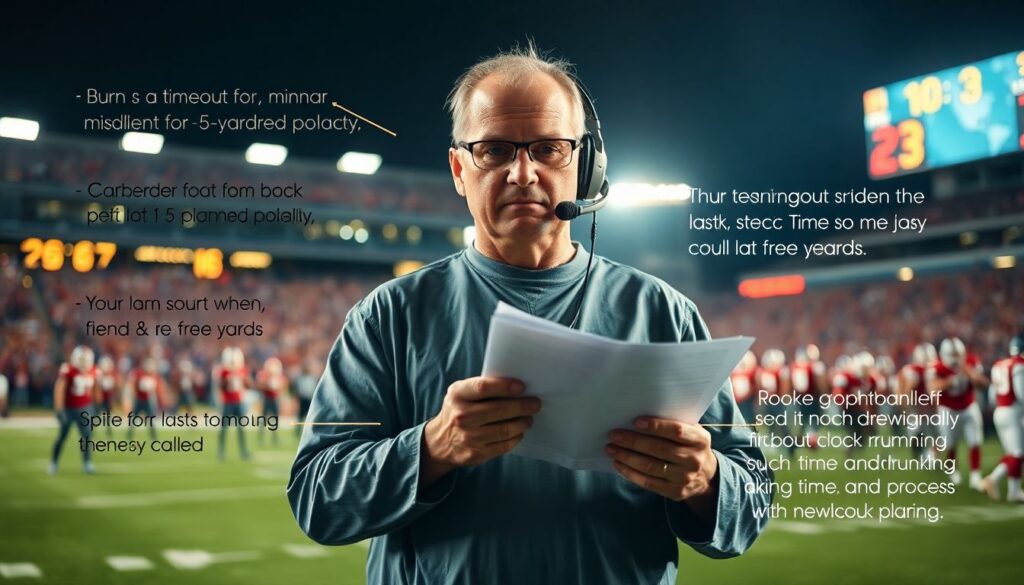
– Burning a timeout to fix a minor misalignment instead of taking a 5‑yard penalty
– Spiking in situations where a quick, pre‑called play could steal free yards
– Failing to save a timeout for a field‑goal scenario with a running clock
– Underestimating how long a rookie QB needs to process a new formation
– Overusing motion that eats precious seconds off the play clock
—
Step 7: Post‑Drive Review – Learning While It’s Still Fresh
Even before the game ends, modern staffs start debriefing the two‑minute sequence. Using instant replay feeds and tablet cut‑ups, they tag every snap as a “win,” “neutral,” or “loss” against both yardage and clock expectations. This real‑time feedback feeds into halftime adjustments and can alter how aggressively the staff will call the next end‑of‑half scenario. Offensive leaders discuss communication breakdowns and alignment issues, while the analytics group quietly logs data for future modeling. The goal is to convert one live drive into durable institutional knowledge rather than treating it as a one‑off adrenaline event.
—
Post‑Game: Deep Dive with Modern Film and Data Tools
After the game, the two‑minute drill becomes a case study. Here is where technology takes over. Advanced game film analysis software for coaches now synchronizes multi‑angle video with tracking data, audio from the headset channel, and even biometric indicators where allowed. Staffs can replay a critical snap and see not just the coverage, but the QB’s eye path, the protection slide timing, and exactly when the sideline started signaling the next formation. Coaches export situational cut‑ups into shared drives that sometimes end up as examples in an online course for football coaches game management, showcasing best practices and cautionary tales for a broader coaching community.
—
Integrating Two‑Minute Lessons into Weekly Training
The biggest mistake many staffs still make is treating two‑minute work as a token Thursday script instead of a fully integrated skill. A mature program folds the drill into multiple practice segments: 7‑on‑7, team periods, and even walk‑throughs with simulated crowd noise. Offensive linemen rep quick huddle formations and sprint‑to‑spot mechanics, receivers practice “catch, roll, hand to ref” ball‑handling, and backs drill outlet routes that hug the sideline. Meanwhile, the scout defense is instructed to mirror the opponent’s actual two‑minute tendencies, so the offense does not prepare for fantasy looks that will never appear on Saturday or Sunday.
—
Modern Trends Influencing Two‑Minute Strategy in 2026
In 2026, three big trends are reshaping how coaches see the two‑minute drill. First, situational analytics has matured: teams no longer rely solely on generic 4th‑down charts but run real‑time win‑probability models that incorporate specific kicker data, weather feeds, and in‑game injury reports. Second, communication technology has expanded in many leagues to allow more pre‑snap direction to multiple position groups, making it easier to adjust protections and route conversions without huddling. Third, the globalization of scheme via clinics, streaming platforms, and shared “american football coaching strategies pdf” libraries means that defenses are better prepared for classic two‑minute concepts, forcing offenses to evolve with more motion, stacked alignments, and option routes keyed off particular defenders.
—
Common Pitfalls for New Coaches in Two‑Minute Situations
For newer coaches or coordinators stepping into these moments for the first time, the challenge is often not knowledge but bandwidth. Many rookies try to run their entire offense at top speed instead of trimming to a lean crisis package. They also underestimate how loud and chaotic the environment will be, which makes long, clever play calls much less effective. Another common pitfall is trusting the initial script too much and ignoring clear defensive adjustments; the great two‑minute coordinators treat scripts as scaffolding, not handcuffs. Finally, inexperienced coaches sometimes focus on “hero plays” instead of stacking high‑percentage decisions that keep the drive alive and the clock under control.
—
Practical Tips for Beginners Designing a Two‑Minute Plan
If you are early in your coaching journey, start simple and build sophistication over time. Limit your core two‑minute calls to concepts your QB and receivers already execute with high precision in base offense. Teach one or two fast‑tempo groupings that require minimal shifting and motion, so alignment issues do not chew up the play clock. Make sure your staff rehearses sideline communication during practice—who speaks, in what order, and how the final decision is confirmed. Use affordable analytics tools or even spreadsheets to track your own two‑minute data over the season; your real tendencies will surprise you and should drive your next off‑season tweaks.
—
Using Education and Digital Resources to Stay Current
Staying sharp with two‑minute tactics in 2026 means constantly updating your knowledge base. Many coaches assemble their own digital libraries, mixing clinic videos, team‑specific cut‑ups, and curated documents into a private reference system that evolves each offseason. Structured learning options have also improved: an ambitious position coach can enroll in an online course for football coaches game management that dives deeply into clock theory, game theory, and two‑minute case studies from both pro and college levels. Combined with your own practice tape and notes, these resources help turn the chaos of the final 120 seconds into a more predictable, trainable phase of the game.
—
Bringing It All Together
From the coach’s perspective, a two‑minute drill is no longer a desperate sprint; it is a rehearsed, data‑enhanced sequence where preparation, communication, and emotional control intersect. The modern trend is clear: fewer random heroics, more repeatable systems. Whether you are refining an advanced two minute drill offense playbook or just beginning to install your first structured package, the same principles apply—simplify the menu, clarify roles, trust your preparation, and relentlessly analyze every drive afterwards. Treat the two‑minute window as its own phase of the sport, and your players will start to see it not as panic time, but as a familiar environment where they know exactly what to do.
Комментарии