Why spread offenses forced defensive coaches to rethink everything
Defensive coordinators didn’t suddenly become worse at their jobs; offenses simply changed the rules of engagement. Over the last decade, average FBS scoring has hovered around 28–30 points per game, and in the most aggressive Power Five programs with tempo and spacing, it often climbs past 35. High-powered spread systems stretch the field horizontally with bubbles and quick outs, then punish overcommitment with vertical shots and RPOs. If you sit in traditional two‑high shells, they run the ball into light boxes; if you load the box, they throw into grass. So modern defensive strategies to stop spread offense start from one honest premise: you can’t erase everything, you have to decide exactly what you’re willing to give up and enforce that trade-off all four quarters.
From “bend but don’t break” to “disrupt and confuse”
The old answer was soft zone, keep the ball in front, rally and tackle. Against a true space-and-pace attack, that mostly leads to 12‑play touchdown drives and gassed defenders. Coordinators are shifting to disruption: simulated pressures, creepers, and late-rotating coverages. One camp prefers constant post‑snap movement—show light boxes, spin safeties down, fire slot corners—to confuse QB reads without always bringing extra rushers. Another camp focuses on pattern‑match principles that turn zone into man after the snap, squeezing windows without living in pure man coverage. Learning how to defend against high powered spread offense now means designing coverage that lies pre‑snap and tells the truth only after the quarterback has already committed to a bad decision.
Comparing structure: odd fronts vs hybrid nickel worlds
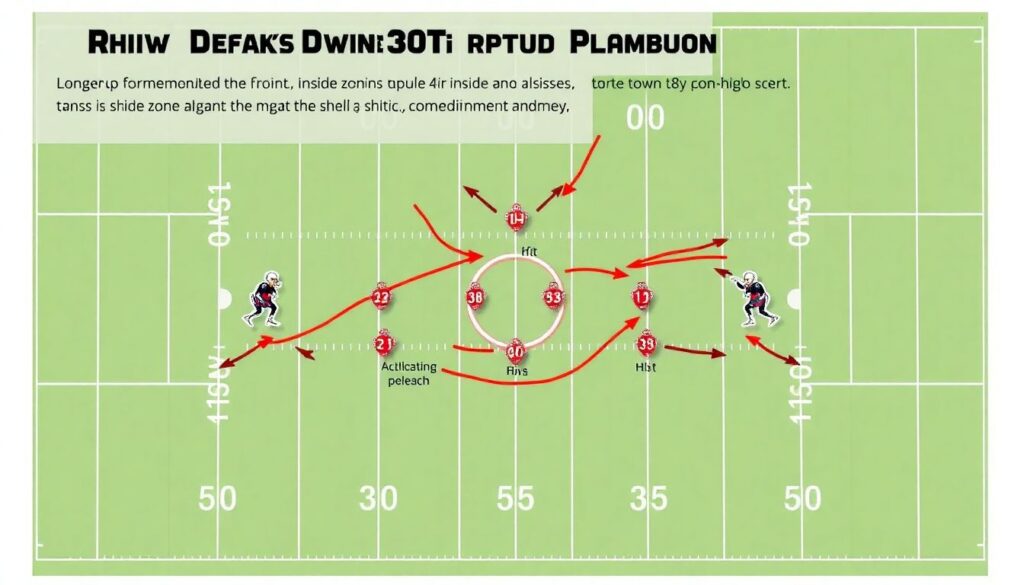
When coaches debate the best defensive formations vs spread offense, the argument often starts with fronts. Three‑down “tite” or “mint” fronts (4i‑0‑4i) are built to choke inside zones and RPOs while still keeping both safeties high. They suit programs with longer, versatile defensive linemen and safeties who tackle like linebackers. On the other side, four‑down nickel and “peso” packages emphasize true edge rushers and a hybrid nickel who can cover the slot and still fit the run. The odd-front crowd accepts fewer pure pass-rush wins in exchange for better run fits and coverage flexibility, while the four‑down coaches bet on pressure and negative plays. The smart coordinators aren’t doctrinaire: they shift between both families within the same drive, framing it as a toolbox rather than a religion.
Data-driven tweaks: what the numbers say actually works
Analytics have cut through a lot of old myths. Charting from college and pro levels shows explosive plays, not time of possession, drive the scoreboard. That’s pushed defensive coordinators to call more split-safety coverages like quarters and cover 6 on early downs, even against the run, because they limit deep balls and force offenses to stack short gains. Pressure tendencies are changing too: instead of constant five‑ and six‑man blitzes, coaches favor four‑man simulated pressures that look aggressive in protections but keep seven in coverage. Internal studies at several FBS programs show completion percentages against sim pressure can drop by 8–12% because protections slide incorrectly and reads feel muddy. Stats are no longer just postgame trivia; they’re steering weekly game plans and even which techniques are drilled on Tuesday.
Teaching and communication: the real separator
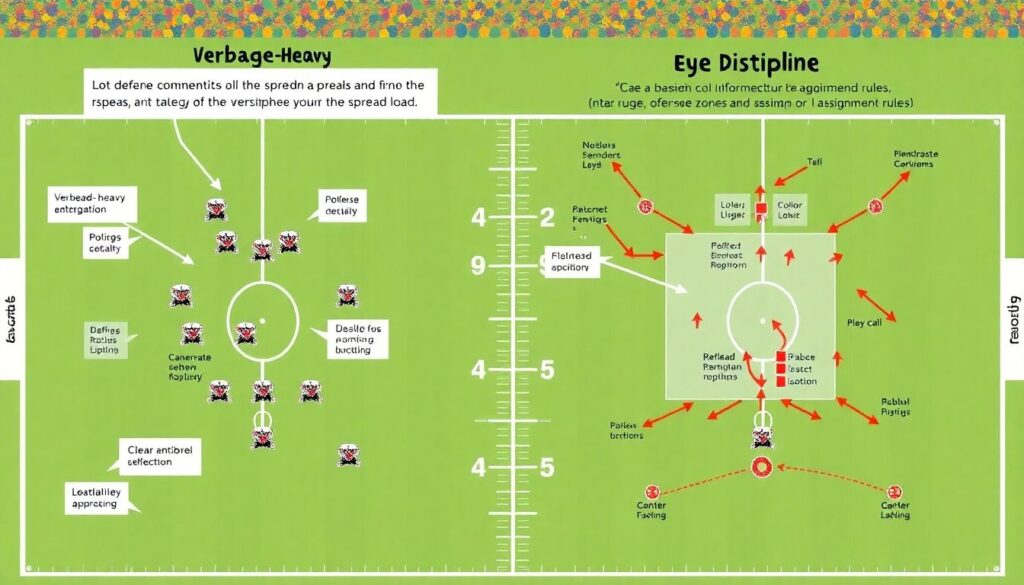
Scheme gets the headlines, but coaching tips for defending spread offense usually start with communication and eye discipline. One approach is verbiage-heavy: every motion and formation has a built‑in call, giving players precise answers but demanding high mental bandwidth. Another is rules-based: defenders learn a small set of universal rules tied to their position—“if #2 is vertical, do this; if he’s under, do that”—which travel from week to week. The rules-based systems are easier to play fast in tempo situations, while the detailed systems can smother specific opponents when there’s time to prepare. The best coordinators merge both, using broad rules as a base and layering in a few opponent‑specific wrinkles, then rep them in simulated tempo periods so calls become automatic noise, not new stress.
Future trends: positionless defenders and evolving playbooks

Looking forward five to ten years, the forecast is more “positionless” defense. As spread systems continue stealing concepts from the NFL and even CFL, coordinators are recruiting long, interchangeable bodies—players who can play safety in base, nickel in sub, and spin down as overhangs versus heavy sets. Expect more three-safety packages, more simulated pressures that attack protection rules, and a heavier marriage between coverage and front in the football defensive playbook against spread offense. With tracking data, staffs will tailor calls not just to offensive structure but to specific receiver speed, quarterback scrambling tendencies, and preferred route depths. That personalization will separate the elite units: game plans less about generic Xs and Os, more about what bothers *this* quarterback on *this* read.
Money, resources, and the wider industry ripple effect
Adapting to high-powered spread offenses is expensive. Programs are pouring budget into analysts who self-scout tendencies and break down opponent route distributions. NFL teams are hiring former college coordinators fluent in spread worlds, inflating salaries and reshaping career paths. On the grassroots side, 7‑on‑7 circuits produce quarterbacks and receivers who live in spacing concepts from age 14, forcing high schools to invest in coverage coaching just to stay competitive. Clinics, online courses, and consulting businesses built around defensive strategies to stop spread offense have become a niche economy: coordinators selling cut‑ups, teaching modules, and remote breakdowns. The net effect on the industry is a constant arms race, where defensive innovation is not just a tactical duty but a budget line, a recruiting pitch, and a career-defining specialty.