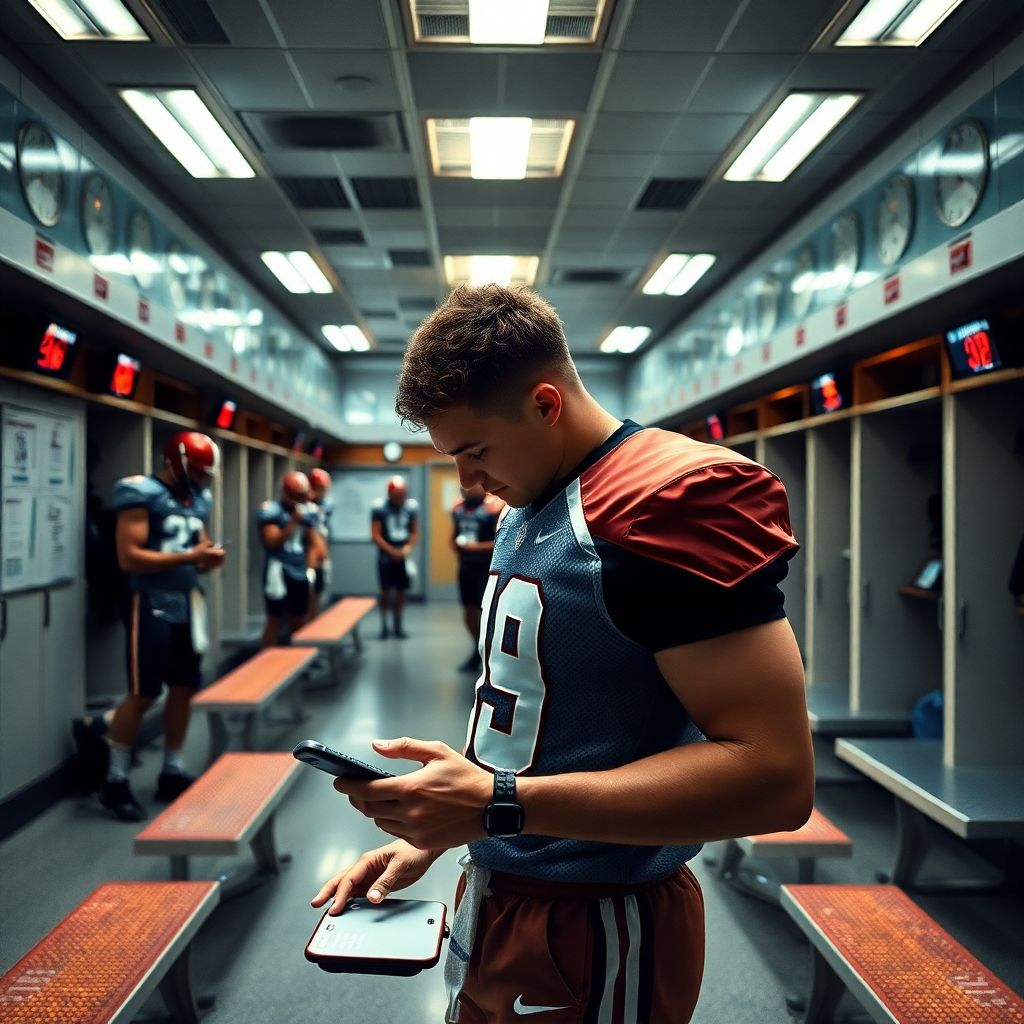
Most people think a walk-on’s day starts with the first whistle. It actually starts the night before, when you decide you’re going to give the scholarship guys hell in practice tomorrow. The alarm hits at 5:15 a.m., and there’s no “snooze buffer” like in high school—your internal clock is synced with the strength coach’s stopwatch. You check bodyweight, log sleep in an app, hit a fast carb + protein combo, and mentally scroll today’s depth chart scenarios: scout team looks, special teams reps, maybe two snaps with the twos if someone tweaks a hamstring. A day in the life of a college football walk-on player is less about cinematic locker-room speeches and more about small, repeatable systems: hydration, film tags, recovery windows, and the constant internal negotiation between classes, practice, and not burning out.
Morning: Walk-On Mindset Under Pressure
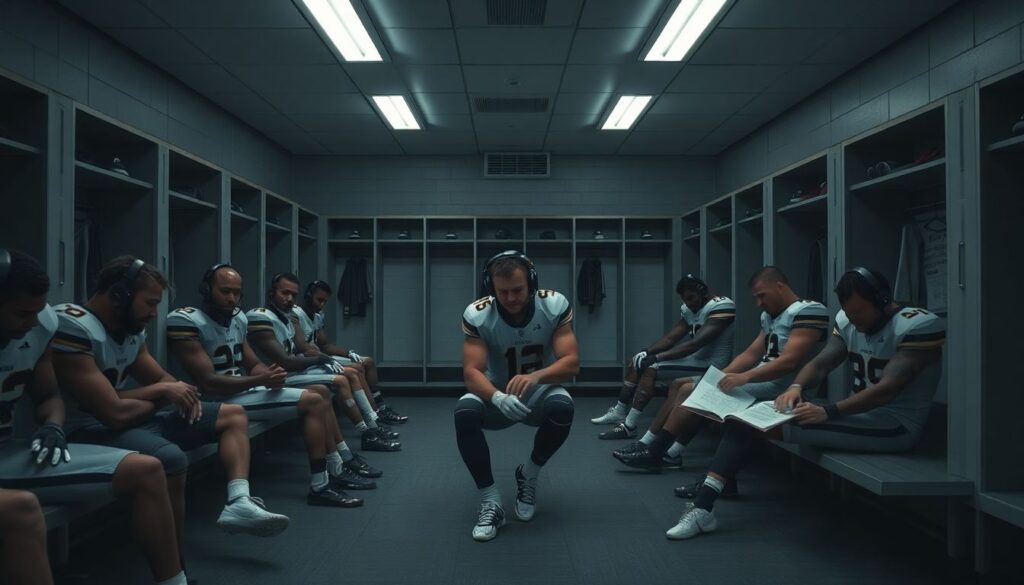
The locker room at 6 a.m. is a lab. Every detail is a data point: who’s taped early, who’s quietly watching last week’s cut‑ups on their phone, who’s still waking up. As a walk-on, you treat this like an unpaid internship in elite performance engineering. Your job isn’t just “don’t screw up”; your job is to be so reliable that coaches subconsciously index you under “solution, not risk.”
Think of morning workouts as your daily answer to the question “how to become a college football walk on and actually stay on the roster.” You’re not competing only on speed or bench press; you’re competing on error rate, learning velocity, and resilience. Scholarship guys may have more margin for off days; you operate with virtually none. One unconventional tactic: after lifting, record a 30‑second voice memo summarizing how your body feels and what you learned technically that morning—hip angles on zone steps, hand placement in pass pro, eye discipline in press coverage. Over a semester, those memos become your personalized biomechanics and mindset log, letting you spot patterns long before the training staff does.
Training Load and Microcycles for Walk-Ons
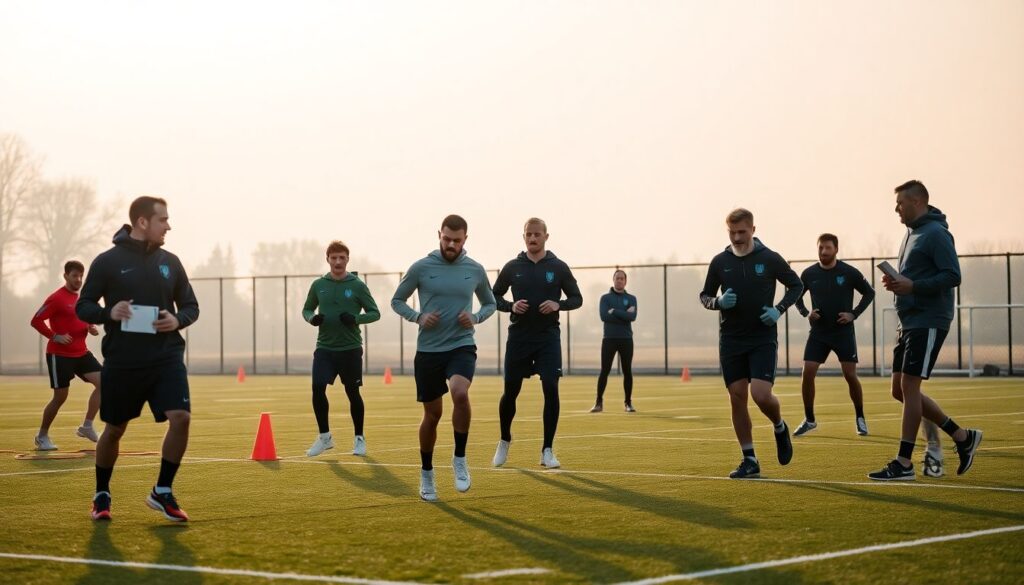
By 7 a.m., the warm‑up has shifted from “wake the body” to “stress‑test the system.” The prescribed work is the same for everyone, but how you interpret it separates durable walk‑ons from short‑term bodies. Smart players treat official sessions like the core of a microcycle and build their own “shadow” college football training programs for walk ons around that: extra prehab, targeted acceleration work, and position‑specific skill blocks that don’t trip the fatigue alarms.
On paper, the schedule looks rigid: lift, meetings, practice. But the best walk-ons treat it as a framework they can fine‑tune. Example: instead of ego‑lifting on leg day, a DB walk-on might add isometric holds for hamstring robustness and contrast sprints for game‑speed transfer, knowing that scout team periods will already overload eccentric braking. Track sleep, HRV, and RPE like a sports scientist; you are, effectively, your own performance department. An underrated move: swap low‑value social scrolling for 20 minutes of position‑specific YouTube film—NFL cut‑ups, clinic talks, breakdowns—annotating them in a simple note system (situation, alignment, keys, technique, result). That’s how a “nobody” begins to operate with starter‑level football IQ.
Navigating Recruiting and Tryouts Like a System Designer
Remember: just because you’re already on the team doesn’t mean you’re done navigating the ecosystem that produced you. A lot of walk-ons underuse college football recruiting services after they arrive, assuming those platforms are only for high school stars. Flip the script. Use them to benchmark yourself: measurables, verified times, film notes from neutral evaluators. This isn’t about chasing offers you don’t have; it’s about reverse‑engineering why you didn’t get them and closing those gaps with intention.
If you’re eyeing a roster spot at another program or helping a younger teammate figure out college football walk on tryouts 2026, think like a project manager. Build a timeline backward from the tryout date: physical preparation phase, film creation phase, coach contact phase. When evaluating the best colleges for walk on football opportunities, go beyond brand names and ask hard data questions: How many walk‑ons have earned scholarships in the last five years? Do they actually play, or just fill scout team depth? What’s the special teams culture—do they trust walk‑ons with live bullets on kickoff and punt? Construct a simple spreadsheet with these metrics; treat your career like a multi‑year product launch, not a lottery ticket.
Side Projects and Off-Field Wins
Between classes and practice, most walk-ons just try to survive. The smarter ones build “edge projects” that compound. These are small, self‑directed initiatives that make you more valuable to the team and more marketable later—whether or not football fully works out.
Think of a teammate who started as a buried‑depth‑chart walk-on WR and quietly turned himself into the unofficial analytics coordinator. He learned basic Python, pulled play‑by‑play data, and built simple efficiency charts for route concepts the offense ran on third down. Coaches didn’t hand him a whistle, but they started asking for his cut‑ups in staff meetings. That “unpaid side project” did three things: made the playbook more efficient, got him invited into higher‑level conversations, and built a portfolio that later landed him a GA spot. Your version could be a better scouting report format for opponents, a shared Google Drive of labeled film clips for your position group, or a nutrition playbook tailored for freshmen who arrive with bad habits. Successful projects don’t always look glamorous; they look useful.
Learning Infrastructure and Resources That Actually Matter
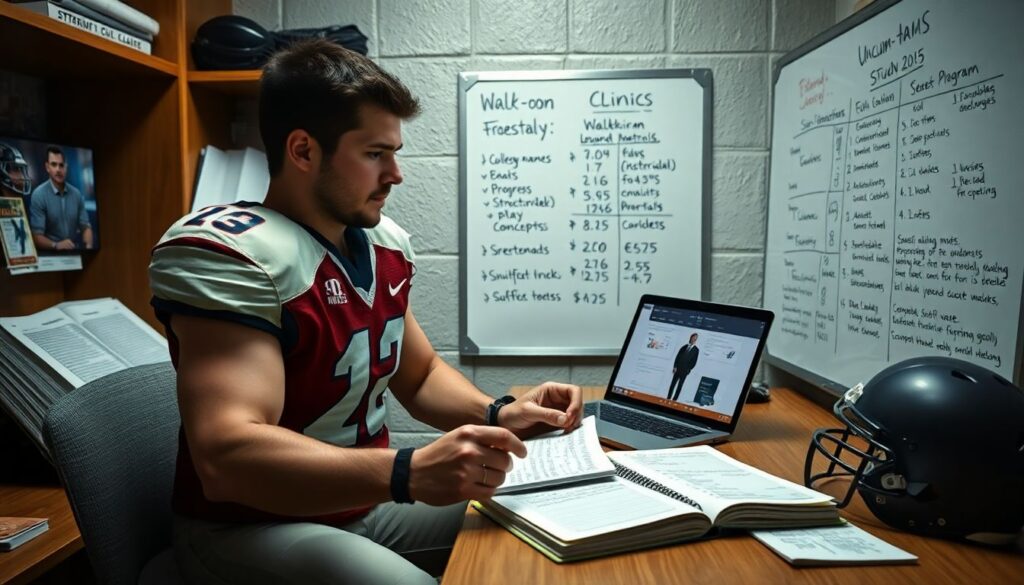
Walk-ons who last treat learning like strength training: progressive overload, structured deloads, clear metrics. For pure football, build a curriculum: clinic tapes from position coaches you respect, playbook concepts distilled into flashcards, weekly self‑quizzes on terminology and coverage or front IDs. For the bigger picture, map out resources—podcasts with strength coaches, online biomechanics courses, even open syllabi from sports science departments at the best colleges for walk on football opportunities. Connect what you hear in team meetings with what leading researchers say about load management, sprint mechanics, and cognitive fatigue.
Don’t ignore the digital tools. Beyond the typical highlight edits, design a personal “development dashboard”: a shared document tracking weekly goals, key metrics (sprint splits, bodyweight trends, missed assignment rate), and qualitative notes from coaches. If your school doesn’t provide enough structured support, look at external platforms that act almost like independent college football recruiting services: they can help you reassess your market value if you enter the portal or pursue a different level. Combine that with targeted online modules on topics like sports psychology, sleep optimization, and leadership communication. Over time, you stop being just a walk-on trying to hang on, and become a fully self‑directed athlete‑engineer, capable of designing your own path through, and beyond, the game.