Why off-field impact matters more than ever
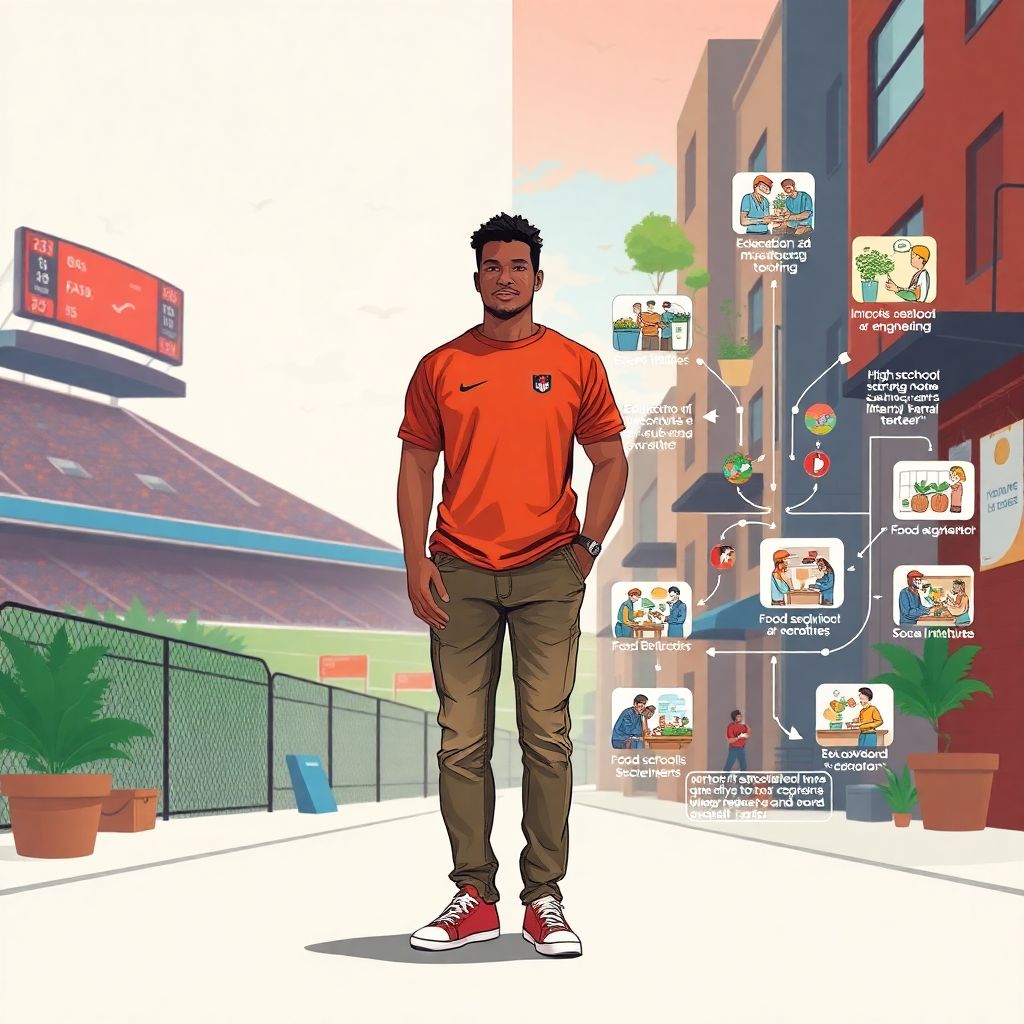
When fans talk about the NFL, they usually quote yardage, passer rating and win–loss records. But if you look just a bit beyond the box score, you’ll see a parallel ecosystem: player-led foundations, mentoring projects, food security programs and social equity campaigns that quietly shift real-life indicators like graduation rates and access to healthcare. That’s the actual “off the field impact” we’re unpacking here: structured, measurable community work delivered by athletes who understand their public influence as a form of social capital. In practice, this means treating a player’s brand like an engine for long-term community development rather than one-off photo ops, and applying fairly strict project management logic to what many still view as feel‑good charity appearances.
Impact off the field is no longer a side quest; it’s part of the job description.
Step 1. Map the ecosystem: who’s doing what and why
Before designing anything new, it helps to understand the current landscape of nfl players community outreach programs. You’ve got team-operated community relations departments, league-wide platforms like “Inspire Change,” independent player foundations, and ad hoc campaigns run via agents and marketing teams. Around that, there’s a dense layer of NGOs, schools and city agencies looking for credible partners. The key insight: almost every successful long-term initiative sits at the intersection of these actors, not inside one silo. So if you’re advising a player or planning a new program, start with an ecosystem map: list local stakeholders, existing initiatives, funding pipelines and media channels. This map becomes your baseline for avoiding duplication, identifying white spaces and plugging into what’s already working on the ground.
Don’t skip this scan; guessing usually leads to redundant projects.
Red flag: vanity projects with no community demand
One of the most common mistakes is launching a foundation or a camp just because “everybody has one.” If the initiative isn’t based on a real needs assessment and doesn’t plug into local infrastructure, you get a vanity project: nice logo, inspiring slogan, minimal impact. You’ll see glossy photos, but no defined theory of change, no KPIs, and no continuity once the season gets busy or the player changes teams. Communities notice this pattern quickly, and trust erosion is hard to reverse. Before anything goes public, you should be able to answer in one sentence: what problem are we solving, for whom, and how will we know it’s actually getting better in 12–24 months?
Step 2. Define a tight mission instead of “helping everybody”
A lot of players start with huge, fuzzy goals: “I want to help kids,” “I want to give back,” “I want to stop violence.” The intention is good, the strategy is missing. A more technical, but way more effective, approach is to define a narrow mission with a clear target population and metrics. For example: “Increase the percentage of high-school seniors in Ward X who complete FAFSA forms by 20% in three years,” or “Provide consistent weekend nutrition to 1,000 elementary school students in District Y.” This kind of specificity sounds less epic, but it’s what separates feel-good from evidence-based work. It also helps align sponsors, nonprofits and team PR, because everyone can see what “success” looks like and where their resources plug in.
Sharp focus beats broad slogans every single time.
Beginner tip: steal from proven models, not from slogans
If you’re just starting out, don’t try to innovate on everything at once. Borrow program blueprints that already have data behind them: mentoring frameworks from Big Brothers Big Sisters, food distribution logic from Feeding America, STEM pipeline models from established education nonprofits. Then layer the player’s story and local context on top. This lets you focus creative energy on delivery and engagement rather than reinventing basic program architecture. It’s not less original; it’s just less wasteful.
Step 3. Choose the right structure: foundation, fund, or partnership
The default move has been to create a 501(c)(3) foundation with the player’s name on it. That works in some situations, but it’s not the only, or even always the smartest, option. You can set up a donor-advised fund, embed a signature program inside an existing nonprofit, or build a recurring grant-making mechanism that channels money into small, community-led groups. Each structure has different compliance costs, governance needs and risk profiles. For a player with a short career window and limited admin bandwidth, leveraging existing infrastructure is often more rational than building a fully independent entity. In technical terms, you’re optimizing for impact per unit of organizational overhead rather than for branding visibility.
The less you spend on bureaucracy, the more you can allocate directly to services.
Warning: underestimating governance and compliance
A foundation is not just a logo on a step-and-repeat. It’s a regulated entity with reporting obligations, board responsibilities and real legal exposure. One common failure pattern is putting friends and family on the board with no clear roles, no conflict-of-interest policy and no financial controls. This is how funds get misallocated, audits go badly, and reputations take hits. Bringing in a part-time compliance officer or partnering with a fiscal sponsor might feel “uncool,” but it dramatically reduces downside risk and protects the player’s core career. Governance is boring until something goes wrong; then it becomes everything.
Step 4. Design initiatives like products, not photo ops
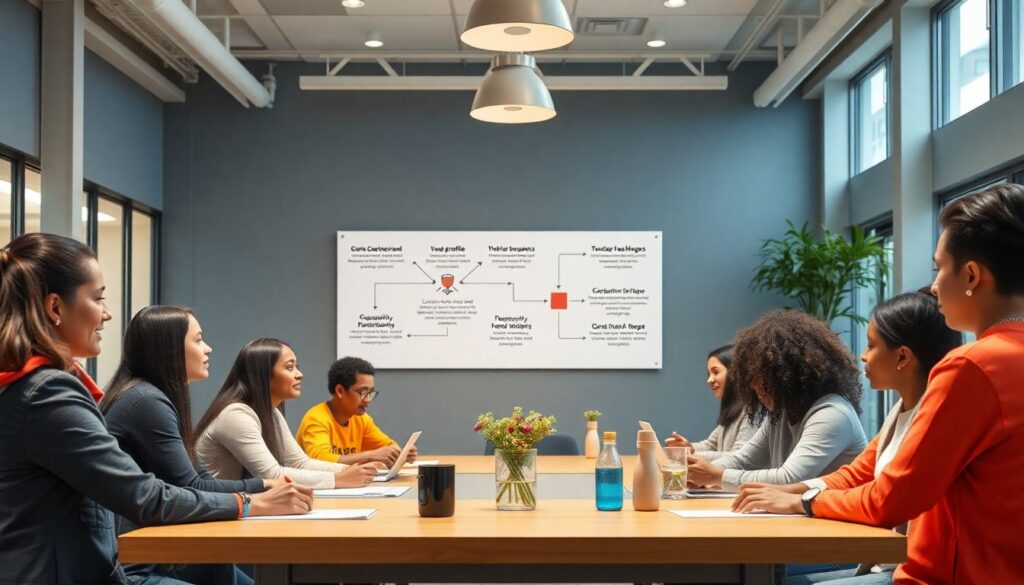
Think of each community initiative as a product: it needs a user profile, value proposition, delivery mechanism, feedback loop and version updates. Instead of asking, “What kind of camp should we run this summer?”, reframe to: “What recurring service or experience could we provide that residents would miss if it disappeared?” That might be a year-round literacy support track, a micro-grant program for neighborhood coaches, or structured internships tied to local employers. This mindset also changes how you view nfl player charity events 2024: instead of isolated galas or golf tournaments, they become activation points in a longer user journey—onboarding volunteers, collecting data, fundraising for multi-year commitments, and testing new formats for community interaction.
Events are features in a larger system, not the system itself.
Unconventional angle: “shadow seasons” and micro-franchises
Here’s a nonstandard concept: build “shadow seasons” that run opposite to the NFL calendar. During the offseason, the player is visible; during the regular season, the program operates on semi-autopilot using trained local leaders. To support this, treat your best volunteers and partner coaches as a micro-franchise network: common brand, shared playbooks, local autonomy. Instead of one huge annual event, create small, repeatable touchpoints—monthly skills labs, parent workshops, neighborhood cleanups—run by this distributed network. The player then becomes the amplifier and connector, not the bottleneck.
Step 5. Funding smarter: from sponsors to co-ownership
Money usually comes from a few channels: personal contributions, fan donations, grants and corporate partners. The standard model is logo-for-checks: brand pays, gets photos, leaves. There’s room for something more strategic here. When you think about corporate sponsorship nfl charity initiatives, imagine them as joint ventures: co-designed programs with shared KPIs, data transparency and multi-year commitments. For example, a financial-services partner funds a three-year financial-literacy pipeline across several cities, with the player’s foundation acting as the cultural bridge and recruiter. In return, the brand gets authentic engagement and credible impact metrics instead of vague “impressions.” That’s closer to a co-owned social product than a simple sponsorship.
If a sponsor can leave after year one with zero disruption, the partnership wasn’t deep enough.
Beginner tip: cap the event-to-core budget ratio
A practical rule of thumb: don’t let fundraising events consume more than a certain percentage of your annual budget (say, 20–25%). If most of your cash, time and creative energy goes into one gala, golf outing or celebrity game, impact gets fragile and seasonal. Build recurring revenue instead: small monthly donors, payroll giving from team staff, performance-based grants. Use big events mainly to seed that recurring engine.
Step 6. Working with agents, teams and leagues without losing control
Agents, team PR departments and league offices can massively amplify reach—but they also have their own incentives: brand safety, schedule protection, and sponsor alignment. To avoid mission drift, treat them as stakeholders in a clear governance framework. Draft a simple memorandum that codifies non-negotiables (target population, data privacy, political neutrality rules, etc.) and “nice-to-have” elements (media coverage, cross-promotion, player appearances). When you book nfl players for charity appearances through agents or team channels, ensure there’s a standard brief: who is hosting, what’s the purpose, what’s the safeguard against tokenism, and how is follow-up handled. That way, every appearance becomes part of a coherent portfolio instead of a random calendar filler.
Coordination upfront prevents awkward backpedaling later.
Warning: misalignment between on-field brand and off-field cause
It’s tempting to chase whatever issue is trending on social media. But if the cause doesn’t align with the player’s lived experience or public persona, it rings hollow. Fans and community members sense performative activism quickly. Misalignment also creates messaging strain: you’re constantly trying to justify a story that doesn’t quite fit. Anchoring initiatives in authentic biography—hometown challenges, family health history, own education path—reduces this risk and strengthens long-term credibility.
Step 7. Measurement: from “we did good things” to hard evidence
Impact measurement doesn’t have to be academic, but it does need discipline. Move beyond vanity metrics like “social media reach” or “number of photos taken with kids.” Define baseline indicators (reading scores, attendance, food insecurity levels, clinic visits), gather pre-program data, then track change over time. That might mean building simple dashboards in a spreadsheet or using low-cost CRM tools for nonprofits. When nfl foundations and player-led charities integrate even basic monitoring and evaluation practices, they gain two critical assets: credibility with funders and a feedback loop to improve program design. Over a few years, you can actually prove that your tutoring cohort graduates at higher rates or that your health screenings detect issues earlier than the local average.
Evidence turns good intentions into scalable models.
Unconventional idea: player-led “impact labs”
Instead of locking into one program model for ten years, use an “impact lab” approach. Run small pilots each offseason in partnership with local universities or data-focused nonprofits: try a new mentorship app, a neighborhood micro-grant program, or a hybrid virtual camp for kids in rural areas. Collect data, iterate, and only scale what actually works. The player’s public profile becomes an R&D accelerator for social solutions, not just a megaphone.
Step 8. Storytelling without slipping into hero narratives
Media wants heroes; communities need partners. When telling stories, flip the script: center local leaders, families and youth as protagonists, with the player as an enabler. Practically, that means documenting process (planning meetings, resident input, small failures) as carefully as results. It also means being transparent about funding sources, limitations and long-term plans. For brands and journalists, this narrative is actually more interesting than generic highlight reels—it shows systems thinking, not just generosity. Well-crafted storytelling also makes it easier to book nfl players for charity appearances that feel substantive: panels with youth organizers, site visits with city officials, co-working sessions with teachers, not just ceremonial check handoffs.
If people walk away talking more about the community than the celebrity, you’re doing it right.
Beginner tip: build a small “impact content” stack
At minimum, maintain: a one-page program brief, a set of short case stories, a running log of metrics, and a quote bank from participants. This small content stack helps you respond quickly to media, grant opportunities and sponsor requests without scrambling every time. It also keeps internal alignment tight—everyone on the team can describe the work the same way.
Step 9. Risk management and reputation protection
Player careers are volatile: injuries, trades, performance dips, or public controversy can hit suddenly. A robust community initiative needs to be architected so it survives those shocks. Put non-player leaders out front, diversify funding, and design governance so that one person’s brand doesn’t define the whole enterprise. Scenario-plan for crises: what happens to the scholarship program if the player is injured and misses a season? How do you handle a sponsor leaving mid-cycle? Who speaks publicly if the player is dealing with a personal issue? Thinking through these contingencies in advance isn’t pessimistic—it’s part of responsible system design, especially when real people rely on the services.
Sustainability is a design choice, not a lucky outcome.
Warning: mixing personal lifestyle with charity operations
Blurred boundaries—using charity staff as personal assistants, charging questionable travel to the foundation, or cross-wiring business deals with nonprofit decisions—create both ethical and legal risks. Maintain strict separation between personal brand expenditures, for-profit ventures and nonprofit budgets. Independent accounting and external audits may feel overcautious, but they’re a powerful shield for everyone involved.
Step 10. Future-facing: pushing beyond traditional models
Looking forward, the most interesting off-field work will likely move beyond the “camp + gala” template into more systemic interventions. Think player-backed community investment funds targeting affordable housing near stadiums, equity stakes in local startups tied to workforce training, or open-source curricula co-created with schools and tech partners. As data literacy spreads among athletes and agents, you’ll also see more players insisting on real-time dashboards for their causes, not just year-end highlight reels. There’s room, too, for more experimental formats in nfl player charity events 2024 and beyond: collaborative hackathons around city issues, citizen-assembly style dialogues moderated by players, or cross-sport coalitions channeling resources into a few big structural bets.
The core shift is from generosity to architecture: building durable systems, not just moments.
Final advice for newcomers
Start smaller than you think, measure sooner than feels comfortable, and partner more than your ego would like. Anchor the work in specific community needs, not in branding goals. Treat off-field impact with the same rigor as a playbook: diagnose, design, test, adjust. When that mindset takes hold, nfl players community outreach programs stop being side projects—and start functioning as serious, adaptive infrastructure for the cities and neighborhoods that cheer on Sundays.